A significant shift in leadership has occurred for the nation’s premier sports body. The entire executive committee, including its president, stepped down on April 28, 2026.
This move prompted immediate action from the country’s authorities. The following day, the government decided to assume direct control of the administration.
Public and official pressure had been mounting for some time. The national team’s repeated struggles on the international stage fueled demands for a major overhaul.
In response, the Sports Ministry invoked national sports law. This legal step allows for the formation of a temporary governing panel to oversee operations.
This event marks a critical juncture for the sport locally. Past cycles of crisis, including suspensions and claims of financial problems, highlight the need for stable and transparent management.
The Immediate Change: Government Takes Control After Mass Resignation
A nearly three-hour meeting on April 28, 2026, concluded with the top brass of the sport’s governing body submitting their resignations. The following 24 hours saw the national government step in to assume direct command.
Resignation of President Shammi Silva and Executive Committee
President Shammi Silva convened a special executive committee meeting that lasted close to three hours. By its end, the entire group of office bearers had collectively agreed to step down.
This decision meant Shammi Silva left his post with 11 months still remaining in his fourth term. A board official stated the committee resigned to “make way” for new interim management.
Sports Ministry Invokes Law to Assume Administrative Functions
The very next day, Sports Minister Sunil Kumara Gamage took decisive action. He invoked specific powers under the national sports law.
Sections 31 and 34 of Sports Law No. 25 of 1973 provided the legal basis. This move temporarily brought all administrative functions of the national body under the Ministry of Youth Affairs and Sports.
The minister’s action created a clear, temporary chain of command. It was a direct response to the sudden leadership vacuum.
Official Acceptance of Resignations by Sports Minister
Minister Gamage formally accepted the resignations submitted by Silva and the committee. This act finalized the end of that administration’s tenure.
The government’s swift intervention showcased its readiness to stabilize the situation. Control shifted seamlessly from the elected executive committee to the state ministry.
This sequence of events marked a definitive pivot in the sport’s governance. It set the stage for the formation of an interim committee to guide future reforms.
Mounting Pressure: The Path to the Board’s Exit
Direct intervention from the head of state played a pivotal role in facilitating a smooth transition of power within the sport’s governing body. The final decision to resign followed a sustained period of criticism from multiple fronts.
This pressure had been building for months, creating an environment where significant change became inevitable.
President Anura Kumara Dissanayake’s Role in Negotiating an Exit
President Anura Kumara Dissanayake personally engaged to ensure a peaceful exit. Over the weekend before the mass resignation, he held direct discussions with then-chairman Shammi Silva.
The talks focused on finding a way forward that would avoid public conflict. President Anura Kumara sought a stable transition to address the growing crisis.
His involvement signaled the highest level of government concern. It underscored the seriousness of the issues facing the national sports body.
Allegations of Financial Irregularities and Mismanagement
Specific allegations of financial irregularities formed a core part of the discontent. Reports of mismanagement within the administration had circulated for some time.
These claims prompted official scrutiny and damaged public trust. They contributed to a perception of deep-rooted problems needing urgent correction.
Internal disputes also caused friction. Controversies over granting No Objection Certificates for players to join leagues like the IPL 2026 were cited as examples of poor administration.
Fitness controversies involving key team members further highlighted operational issues.
Public and Government Frustration Over Team Performance
On-field results amplified the calls for accountability. The national team‘s early exit from the T20 World Cup 2026, which it co-hosted, was a major disappointment.
Public frustration over match results turned into direct criticism of the leadership. The government’s contemplation of action began as early as March 2026.
This was partly due to formal complaints received from players about board governance. The collective underperformance was seen as a symptom of broader structural failure.
The state’s perspective was clear: it wanted a fresh start for the sport’s management. This goal required removing the existing committee to enable comprehensive reforms.
The combination of high-level political negotiation, serious allegations, and sustained public pressure created an unstoppable force. This multifaceted pressure directly led the board to its final decision to step down.
An Era Ends: The Tenure of President Shammi Silva
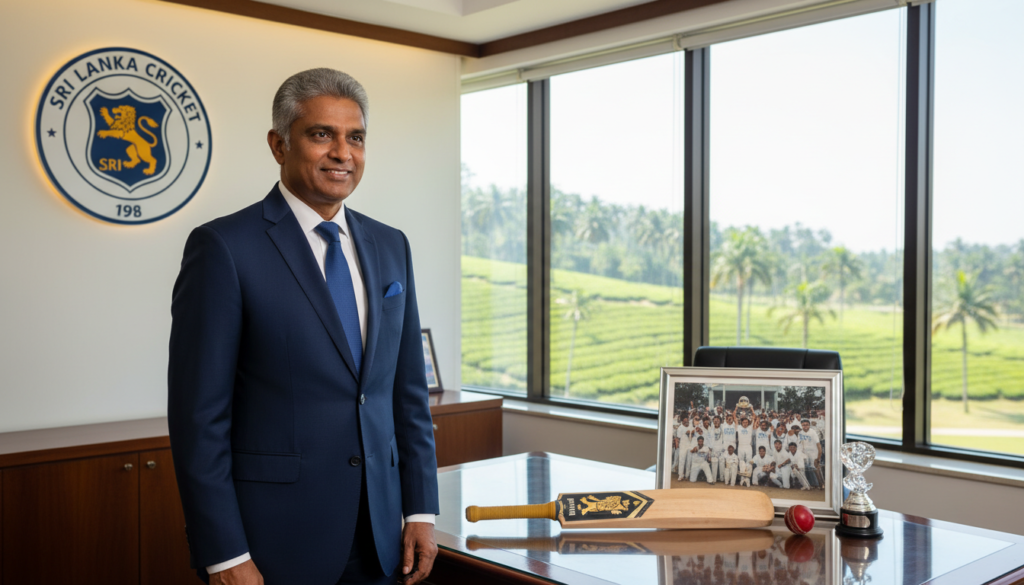
The exit of the long-serving president marked a definitive close to an era defined by both continuity and controversy. His seven-year command of the national body represented one of the most extended periods of stable, if often debated, leadership in recent memory.
Seven-Year Leadership and Uncontested Re-elections
Shammi Silva first won the presidency in 2019 through a majority vote. This victory began a long tenure at the top of the sport’s administration.
He was re-elected without opposition in 2021, 2023, and again in 2025. These uncontested wins signaled a period of consolidated authority within the executive committee.
For seven years, his office steered the organization through various challenges. This included global tournaments and internal disputes.
Silva’s Dual Role as Asian Cricket Council President
His influence extended beyond national borders in 2025. Shammi Silva assumed the presidency of the Asian Cricket Council (ACC).
He succeeded Jay Shah in this prominent regional role. This position placed him at the forefront of the sport’s governance in Asia.
Holding both national and regional offices highlighted his significant standing. It was a notable point in his career.
The Abrupt End of a Fourth Term with 11 Months Remaining
His fourth consecutive two-year term was cut short unexpectedly. The resignation left approximately 11 months of his mandate unfulfilled.
This sudden conclusion contrasted sharply with the stability of his earlier re-elections. The decision to step down was finalized during a special committee meeting.
It brought an immediate end to his long chapter in charge. The move paved the way for the government’s temporary takeover of administrative functions.
His departure concludes a significant span in the history of the country’s wealthiest sporting institution. The focus now shifts entirely to future reforms and a new phase of management.
Recurring Crisis: A History of Governance and Suspension
For years, the administration of the country’s premier cricket body has been caught in a cycle of controversy and external intervention. This pattern provides crucial context for the recent change in leadership.
Past events show a clear struggle for stable and clean governance. The latest upheaval is part of this long-running story.
The 2023 ICC Suspension for Political Interference
In November 2023, the sport faced a major international rebuke. The International Cricket Council (ICC) imposed a suspension on the national board’s membership.
The suspension was a direct response to political interference in the board’s affairs. Global cricket’s governing body took this serious step to enforce its rules on autonomy.
The penalty was lifted in January 2024. This happened only after the country’s authorities gave firm assurances that the board would run without government meddling.
This episode was a stark warning. It highlighted how internal issues could damage the nation’s standing in world cricket.
Long-Standing Allegations of Corruption Within SLC
Beyond international sanctions, the institution has long been shadowed by claims of wrongdoing. Allegations of corruption and financial mismanagement are not new.
These persistent claims have included:
- Questionable contracting and procurement processes.
- Mismanagement of funds from tournaments and sponsorships.
- Nepotism and conflicts of interest in appointments.
Such allegations have eroded public and player trust over time. They created constant pressure for investigations and overhauls.
Each new scandal reinforced the perception of a deep-rooted problem. This made comprehensive reform seem repeatedly necessary.
The Wealthiest Sporting Body’s Struggle with Stability
A striking paradox defines this history. The organization is the wealthiest sports body in the country, generating significant revenue.
Yet, it has consistently failed to achieve institutional stability. Financial power has not translated into strong, transparent governance.
This disconnect between resources and reliability is a core part of its troubled legacy. Past controversies directly contributed to the loss of credibility that triggered the recent scrutiny.
The historical pattern is clear: crisis leads to temporary intervention, followed by a return to the status quo. The recent board resignation fits squarely into this recurring cycle.
Understanding this past is key to evaluating the current transition. It shows why a fundamental shift, not just a personnel change, is often demanded.
Sri Lanka Cricket Enters New Governance Phase: What Happens Next?
The government’s takeover sets in motion a critical process of rebuilding and reform for the national cricket body. Immediate steps are now focused on creating a stable, temporary structure to manage affairs.
This transitional period aims to address deep-rooted problems. The goal is to restore confidence among players, fans, and the global community.
Formation of an Interim Committee for Structural Reforms
A new interim committee will be appointed shortly. Its primary mandate is to find solutions to current issues and implement structural reforms.
This panel is expected to include experienced figures from outside the usual circles. Reports suggest it may be led by a former investment banker and opposition politician.
Establishing clear governance protocols is a critical task. Regaining the trust of all stakeholders depends on transparent operations from day one.
Consultations with the ICC to Avoid Further Sanctions
The national authorities are in direct contact with the International Cricket Council. These consultations are vital to ensure all changes follow global guidelines.
A key objective is to avoid another suspension for political interference. Maintaining a good standing with the ICC is non-negotiable for the sport’s future.
This dialogue helps align local reforms with international best practices. It protects the national team’s participation in upcoming events.
Aim for Professionalism and Credibility in Administration
The overarching aim is to bring professionalism and credibility back to the administration. Stability in management is seen as the foundation for on-field success.
This includes improving systems for handling player commitments. Clear policies for No Objection Certificates for leagues are a priority.
The transition presents a clear opportunity for systemic improvement. It is a chance to break from past cycles of crisis.
The focus is on building a resilient and accountable sporting institution for the future.
The Road Ahead for Sri Lankan Cricket
This transitional moment offers a crucial window to implement lasting reforms and break from past instability. The immediate focus must be on establishing a stable and transparent administration. This is the foundation for ending the recurring cycle of crises.
On-field success for the national team is directly tied to this improved governance. A professional environment allows athletes to thrive. It requires clear policies on fitness, schedules, and league commitments.
Rebuilding trust with players is equally critical. Their concerns must be heard and addressed systematically. This fosters a unified effort toward common goals.
The government and the newly formed interim committee have a pivotal steering role. Their task is to guide the sport toward long-term credibility. Leveraging the institution’s financial strength for sustainable development is a key opportunity.
This collective effort from all stakeholders can support a fresh start. The recent leadership change marks a critical new phase. It presents a genuine chance for meaningful and lasting improvement in the nation’s premier sports body.