The coming period represents a pivotal juncture for this island nation’s financial future. Recent projections from the Asian Development Bank set the scene. They forecast economic growth moderating to 4.0% in 2026, with inflation accelerating to 5.2%.
External pressures, including spillover from conflict and higher global energy prices, define the challenge. These factors could strain household incomes and the nation’s external buffers. The economy has shown clear signs of stabilization after a difficult period.
The focus must now shift to building genuine, structural resilience. Is the country merely in recovery, or is it becoming truly resistant to future crisis? This is the central question for achieving long-term stability.
Sustained policy attention and deeper reforms are essential. As the World Bank sees Positive Sri Lanka growth in, the foundation for this next phase is being laid. The narrowing window of 2026 is the time for the government and the central bank to secure these gains.
Sri Lanka’s Economic Recovery: Signs of Stabilization Are Clear
Tangible signs now confirm the island’s economy is moving firmly from crisis management to a phase of measurable recovery. Multiple key indicators show concrete progress, providing legitimate relief and building a foundation of macroeconomic stability.
Key Indicators Showing Progress: Reserves, Tourism, and Exports
By the end of February 2026, gross official reserves stood at USD 7.284 billion. This is the highest level recorded since the crisis began. It acts as a critical buffer, restoring confidence for both citizens and foreign investment.
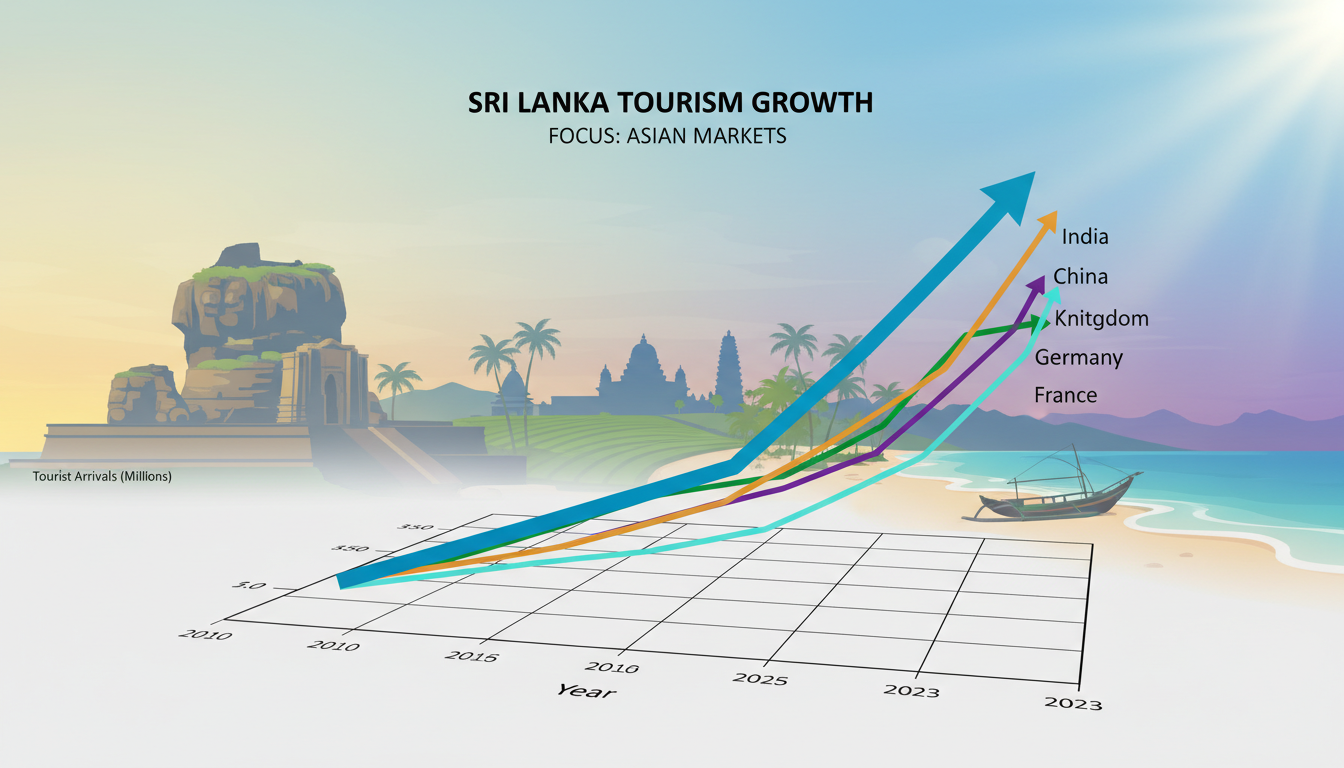
The tourism sector continues its record run. Arrivals built on 2025’s total of 2.36 million visitors. This influx is a vital source of foreign exchange for the services sector.
Total export earnings reached USD 17.2 billion in 2025. This marked a 5.6 percent increase from the previous year. Strong performance in trade is a direct driver of economic growth.
Remittances have remained robust. Recent quarters have also seen the external sector record current-account surpluses. These flows further strengthen the nation’s financial position.
The 2026 Budget Projections: Primary Surplus and Declining Debt
The government’s 2026 budget projects a primary surplus. It also forecasts a decline in the debt-to-GDP ratio toward 96.8 percent. This is a clear sign of returning fiscal discipline.
Such targets align with engagement with international financial institutions. The Central Bank of Sri Lanka and the government have achieved this stabilization through policy adjustments. Upgraded credit ratings reflect this improved sentiment.
This fiscal consolidation, part of a broader growth strategy, provides a platform. The worst of the crisis appears to be in the past. The focus must now shift to securing these gains for the long term.
Beyond the Headlines: The Persistent Vulnerabilities Underneath
While macroeconomic indicators show improvement, a closer examination reveals enduring fragilities within the national economy. Stabilization does not equal transformation. Several structural weaknesses persist, threatening genuine long-term resilience.
Concentrated Exports and Lagging Productivity
Export composition remains heavily concentrated. Textiles, garments, and services like tourism still dominate earnings. This reliance on a few traditional sectors leaves Sri Lanka exposed to global demand shifts and prices volatility.
Productivity indicators show only modest improvement. Labor productivity and total factor productivity gains are slow. Real wages in many areas still lag behind pre-crisis peaks.
This impacts international competitiveness. Lower efficiency and capacity constrain growth potential. It also affects household incomes and spending power.
These underlying issues influence forward momentum. The IMF and World Bank have revised growth projections for 2026 downward to a range of 3.1-4.5 percent. This reflects moderating economic momentum.
Concentrated income streams and low productivity collectively undermine true economic resilience. They represent identifiable policy challenges for the nation.
The SME Backbone: Facing Credit and Market Access Challenges
Small and Medium Enterprises (SMEs) form the backbone of the economy. They contribute approximately 52 percent of GDP and over 45 percent of employment. Their systemic importance is undeniable.
Yet, many face significant constraints. Credit access remains a major hurdle. Formal finance is often out of reach, raising borrowing costs.
Limited integration into global value chains is another barrier. SMEs struggle with access to international supply chains and markets. This restricts their trade potential and growth.
The fragility of this vital sector poses a broader risk. Strengthening SME capacity is crucial for building a more diversified and resilient economic foundation.
Defining True Economic Resilience: More Than Just a Fast Rebound
Resilience in economics transcends short-term stabilization. It is about building immunity to future shocks.
An economy can post respectable GDP growth after a crisis while remaining vulnerable. Its foundations may stay narrow and short-term. True economic resilience is a structural quality, distinct from cyclical recovery.
This concept moves beyond common headlines. It focuses on creating an economy that can withstand external pressures. The goal is sustainable stability for all citizens.
The Four Pillars: Diversification, Productivity, SME Empowerment, and Long-View Planning
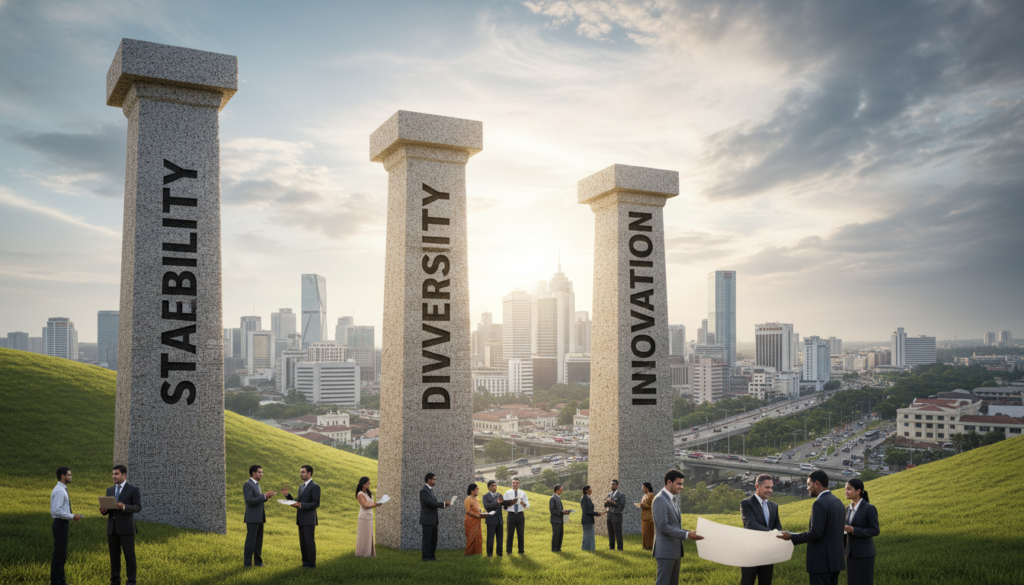
Genuine resilience rests on four practical pillars. Each addresses a core structural weakness.
First, diversification of income streams is critical. Sri Lanka must broaden its export base beyond textiles and tourism. New sectors can provide a buffer against global demand shifts.
Second, stronger domestic productivity is non-negotiable. Investments in technology and skills raise output per worker. This boosts international competitiveness and real wages.
Third, empowering Small and Medium Enterprises (SMEs) is vital. These businesses need better access to finance and markets. Creating an enabling environment unlocks their capacity for job creation.
Fourth, stable systems need long-view planning. This means institutionalizing policies that look beyond electoral cycles. Anticipatory planning prepares for climate events or policy reversals.
Progress on these fronts requires consistent government support. It also demands strategic allocation of capital. The national budget must reflect these long-term priorities.
For instance, deeper integration into global value chains can help. It allows local firms to move up the ladder. This is a key part of a holistic economic outlook.
Without these pillars, growth remains fragile. The nation could be locked in a cycle of repeated stabilization. True transformation requires building all four elements together.
The Danger of a “Recovery-Only” Mindset
A narrow focus on immediate rebound carries significant risk. This mindset prioritizes quick, measurable indicators for political credit.
Reserve levels and tourist arrivals are important. Yet, they do not signify deep structural health. An exclusive focus here can create a false sense of security.
The practical challenge in Sri Lanka‘s political context is continuity. Electoral cycles often disrupt long-term policy implementation. This time inconsistency undermines investor confidence.
A “recovery-only” approach leaves the economy exposed. It remains vulnerable to external commodity prices and sudden shocks. Each new crisis would require another painful stabilization phase.
Genuine resilience connects directly to citizen outcomes. It means sustainable wages and resilient public finances. It leads to steadily rising living standards for people across Sri Lanka.
The discourse must elevate beyond daily headlines. Building a durable economy is the ultimate goal. It is the only path to lasting prosperity for the island nation.
Asia’s Connected Future: A Regional Wake-Up Call from Samarkand
A major regional meeting highlighted the accelerating pace of connection and competition across Asia. The 59th Annual Meetings of the Asian Development Bank (ADB) convened in Samarkand this May.
The theme was “Crossroads of Progress: Advancing the Region’s Connected Future.” Discussions focused on cross-border infrastructure, digital innovation, and energy links.
Sustainable finance and regional policy harmonization were also key. The ADB’s message was clear: integration is power. Nations failing to build stable governance may struggle in Asia’s fast transformation.
ADB’s Vision: Integration, Technology, and Institutional Maturity
The bank’s vision extends beyond traditional trade corridors. It now centers on digital infrastructure, artificial intelligence, and smart regional supply chains.
These elements are becoming central to economic power and resilience. The ADB stressed innovative financing to mobilize private investment for climate projects.
Long-term coordination between countries is essential. This requires mature institutions and consistent systems.
The goal is a region where technology and innovation lower costs and boost efficiency. Stable policy frameworks attract the capital needed for this connected future.
Sri Lanka’s Juncture: Potential vs. Political and Governance Hurdles
This regional shift places Sri Lanka at a symbolic crossroads. The island possesses clear advantages. Its strategic location and educated workforce offer strong potential for integration.
Yet, the ADB’s warning resonates deeply here. The nation’s challenge is fundamentally institutional and political, not merely economic.
Ongoing political instability and governance concerns create policy inconsistency. This undermines the long-term coordination needed to attract major investment.
Inefficiencies in public services and struggles with fiscal discipline raise costs for businesses and citizens. They also affect prices and hurt capacity.
Samarkand presents both an opportunity and a stark warning. It is a chance to leverage multilateral partnerships for deeper reforms.
Conversely, it highlights the risk of falling behind. Can Sri Lanka connect to these new networks of trade and technology?
Or will political hurdles and weak systems lead to economic marginalization? The answer will shape the nation’s growth trajectory for years to come.
Why 2026 Is the Pivotal Year for Sri Lanka’s Economic Path
A critical juncture emerges from the convergence of new external pressures and domestic policy choices. The analysis of stabilization, vulnerabilities, and regional shifts leads to a single, pressing question.
Can the nation’s leadership secure recent gains and build a stronger foundation? The answer will be determined in the months ahead.
Moderating Growth and Rising Inflation: The ADB’s 2026 Forecast
The Asian Development Outlook provides a clear numerical snapshot. It projects economic growth for Sri Lanka to moderate to 4.0% in 2026.
At the same time, inflation is forecast to accelerate sharply to 5.2%. This dual dynamic presents a complex policy challenge.
The primary driver of higher prices is external. Spillover effects from conflict in the Middle East and elevated global energy costs are key factors.
These forces directly impact household finances. Private consumption is expected to remain the main growth driver. However, rising inflation will likely reduce purchasing power for many families.
Private investment is forecast to recover only gradually. Heightened uncertainty, both globally and domestically, makes businesses cautious.
This forecast defines the immediate economic landscape. It moves beyond the initial recovery phase into a more delicate balancing act.
A Narrowing Window: The Convergence of External Shocks and Reform Fatigue
The positive momentum from stabilization now meets fresh headwinds. This creates what analysts term a “narrowing window” for action.
On one side are hard-won gains like improved reserves and fiscal discipline. On the other are external shocks and the risk of domestic reform fatigue.
The convergence of slower expansion, rising living costs, and ongoing vulnerabilities is potent. It risks eroding the progress made since the crisis.
ADB Country Director Shannon Cowlin has issued a direct caution. She stated, “this is not the moment to ease up on reforms.” The comment underscores the timing.
The year 2026 represents a fundamental test. It will reveal whether the country can maintain budget discipline and advance structural changes.
This must happen even as the immediate emergency recedes from public view. The political will to continue difficult adjustments will be crucial.
Sri Lanka stands at a fork in the road. One path leads toward genuine resilience and durable stability. The other leads back to a fragile equilibrium, vulnerable to the next shock.
The choices made on debt management, tourism sector development, and public spending will set the direction. The window to choose the stronger path is open, but it is narrowing.
The Path Forward: From Stabilization to Structural Transformation
The practical roadmap for lasting prosperity involves focused action on key economic foundations. Moving beyond stabilization requires implementing the four pillars of resilience.
Accelerating export diversification is crucial. Sri Lanka must develop high-value agriculture, ICT-enabled services, and niche manufacturing. This builds diversified income streams and strengthens trade.
Driving domestic productivity needs investment in skills and technology. Linking vocational training to industry needs boosts efficiency and supports long-term growth.
Empowering SMEs forms the backbone of economic resilience. Expanding targeted credit facilities and digital platforms improves their access to finance and global value chains.
Strengthening stable systems demands maintained fiscal discipline and better public services. Institutionalizing multi-year planning ensures policy consistency and coordination.
As ADB Country Director Shannon Cowlin noted, scaling up efficient public investment sustains the recovery. Executing reforms with government support is key.
A truly crisis-resistant economy is a practical goal. It would raise living standards for all citizens and secure a durable future for the nation.