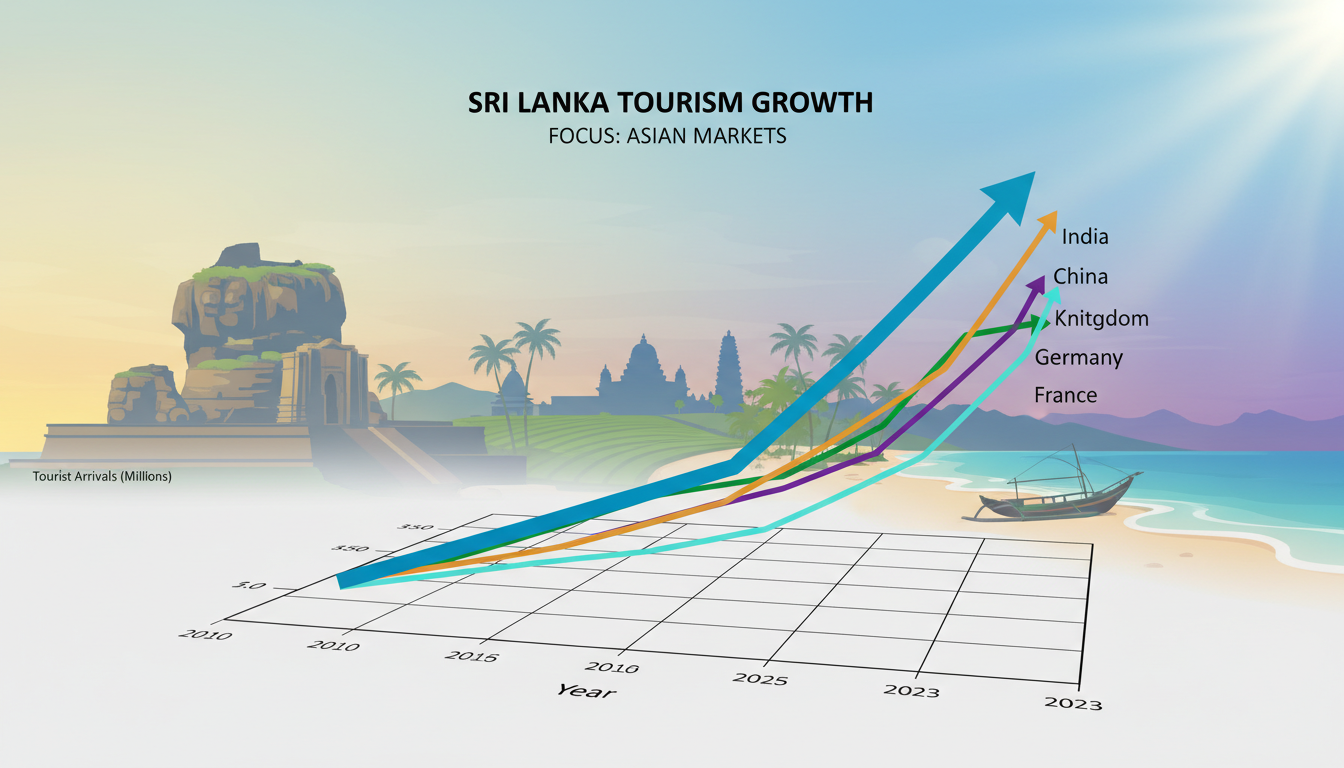
The island nation’s travel industry reached a historic milestone last year. International visitor numbers climbed to a new all-time high.
Official data shows the country welcomed 2.36 million international guests. This figure surpasses the previous peak of 2.33 million set back in 2018.
This achievement marks a significant point in the nation’s post-crisis recovery. It aligns with resurgent travel demand across the Asian region. Policy efforts, like the extended visa-free travel initiative, have supported this momentum.
However, a key paradox emerged. Tourism revenue grew only 1.6% year-on-year to $3.2 billion. Record volume did not translate into proportionally higher income.
Recent regional economic forums have emphasized connectivity and integration as growth drivers. They noted the need for coherent policy to fully capture such opportunities.
This article will explore the arrival data and the drivers behind the resurgence. It will analyze the challenge of modest revenue growth. Finally, it will outline the path toward sustainable, high-value travel development.
Sri Lanka Tourism Hits Record Arrival Numbers in 2025: The Milestone Data
Data from the national tourism authority provides a detailed breakdown of last year’s visitor influx. The figures offer a clear picture of the recovery’s scale and the changing profile of international guests.
Surpassing the Pre-Pandemic Peak
Official statistics confirm 2.36 million arrivals for the 2025 calendar year. This number officially surpasses the previous high of 2.33 million set in 2018.
It marks a full recovery from the pandemic and subsequent crises. Weekly reports published throughout the year showed steady inbound traffic.
These reports highlighted consistent growth, with notable peaks during traditional holiday seasons.
Top Source Markets and Visitor Trends
The composition of visitor demographics reveals key trends. India maintained its position as the single largest source of visitors by volume.
Traditional European markets, however, played a critical role in terms of revenue. Guests from these regions typically stay longer and spend more per day.
The top source markets for the year were:
- India
- United Kingdom
- Germany
- Russia
- France
Patterns in length of stay and travel purpose showed diversification. While leisure travel dominated, business and MICE (Meetings, Incentives, Conferences, Exhibitions) segments showed promising growth.
Seasonal fluctuations were evident, with the winter months attracting the highest number of tourists from colder climates.
This data paints a picture of a travel sector that has not only recovered but is also evolving. Understanding these trends is vital for future strategy.
Drivers Behind the Tourism Resurgence
A combination of restored stability, aggressive promotion, and major international events fueled the growth. Several interconnected factors explain how the sector achieved its historic numbers.
Post-Crisis Recovery and Regional Travel Rebound
The nation’s gradual emergence from economic crisis restored confidence. International travelers and tour operators regained trust in the destination’s stability.
Regional travel across Asia experienced a strong rebound. Increased flight connectivity and pent-up demand made journeys easier. More visitors from neighboring countries chose to explore the island.
This aligns with broader regional themes. The Asian Development Bank emphasizes the power of integration for economic resilience. Cross-border cooperation strengthens travel networks across the continent.
Strategic Marketing and Event-Led Boost
The Tourism Development Authority launched targeted campaigns. These initiatives promoted the destination’s diverse attractions to key markets.
Mega-events demonstrated capacity for world-class hospitality. The ICC Men’s T20 World Cup in Colombo was a standout example. Hotels reached 100% occupancy with room rates jumping from $300 to nearly $500.
A Rs. 2 billion global PR and digital marketing campaign is planned today. This interim effort will target India, the UK, Germany, China, Japan, and Australia. The goal is to sustain momentum and attract higher-spending visitors.
These drivers worked together. Improved stability, strategic promotion, and external trends created perfect conditions. The result was a resurgence that exceeded all expectations.
The Revenue Paradox: Record Arrivals vs. Modest Earnings Growth
Behind the celebration of record-breaking visitor figures lies a more complex financial story. The sector earned $3.2 billion in 2025. This was only a 1.6% increase from the $3.17 billion recorded the year before.
Understanding the Revised Spending Calculation
A major statistical revision helps explain this gap. In August 2025, authorities updated the estimated average daily tourist spend.
The figure was revised down from $171 to $148. This change was based on a new, more accurate survey of visitor habits.
Tourism Minister Vijitha Herath clarified the situation. He stated that earnings had not actually reduced. The perceived slowdown was purely a result of the changed calculation method.
Strategic Pivot to High-Value Segments
This paradox has triggered a clear strategic shift. Officials are now explicitly moving from chasing volume to capturing value.
Deputy Minister Ruwan Ranasinghe outlined the new focus. The goal is to attract guests with higher spending power. Target segments now include:
- MICE (Meetings, Incentives, Conferences, Exhibitions)
- Indian wedding tourism
- Luxury, wellness, and wildlife travel
- Sports and adventure tourism
The Asian Development Bank is providing consultancy for a long-term plan. This links tourism policy to broader institutional reform.
The underlying concern is clear. Without increasing per-visitor expenditure, the nation risks the death of high-yield growth. This strategic pivot is the industry’s direct response to that challenge.
The Path to Sustainable High-Value Tourism Growth
Moving forward, the industry’s focus must shift decisively from quantity to quality. The official goal is to surpass $4 billion in earnings. This development is significant news for the local economy.
Reaching that target requires lifting the average daily visitor spend. For Sri Lanka, success hinges on major upgrades to tourism products and strict service standards. Better sector regulation is also essential.
The task today is to execute a cohesive long-term strategy. Real power comes from stable governance and policy continuity, as highlighted in recent regional forums.
Avoiding the death of this major economic opportunity depends on sustained political will. The future vision is of a destination fully integrated into regional travel networks, building on strong early-2024 momentum.