The Public Utilities Commission of Sri Lanka (PUCSL) has announced a major adjustment to power tariffs. An 18% increase will apply to domestic users consuming over 180 units each month. This change takes effect in May 2026 and also impacts industries, hotels, and government offices.
This decision has ignited a national conversation about affordability. Many citizens worry about higher monthly bills adding pressure to strained household budgets.
In response, the government has pledged substantial financial support. A Rs. 15 billion subsidy aims to shield low-usage homes. A broader package, including fuel aid, brings total planned monthly assistance to Rs. 30 billion.
This article examines the reasons behind the tariff change. It will detail the specific impacts on different user groups and the promised support measures. The analysis includes the wider economic picture and the role of international bodies like the IMF, which emphasizes cost recovery paired with social protection. This adjustment is part of an ongoing series of quarterly reviews. Sri Lanka’s energy sector now faces a critical balance between fiscal sustainability and public welfare.
Breaking: PUCSL Announces 18% Electricity Tariff Increase for High-End Users
A targeted adjustment to utility rates was unveiled by Sri Lanka’s energy regulator this week. The Public Utilities Commission of Sri Lanka (PUCSL) confirmed an average 18% rise in electricity tariffs on May 10.
This change is designed to impact specific groups. It primarily affects high-end domestic users and certain commercial and institutional sectors.
New Rates Effective for Second and Third Quarters of 2026
The new rates start on Monday, May 11, 2026. They will apply throughout the second and third quarters of the year.
This move addresses an urgent fiscal need. The regulator cites an estimated revenue shortfall of about Rs. 38 billion in the power sector.
The decision is part of a structured review process. It aims to ensure the financial health of the national grid without widespread disruption.
Government Offices and High-Consumption Sectors Bear the Brunt
PUCSL Chairman K.P.L. Chandralal identified the sectors facing the full increase. All government institutions, industries, hotels, and places of worship are included.
The threshold for impact is consumption over 180 units per month. Domestic households and entities above this limit will see their bill climb.
Only about 5% of large-scale consumers fall into this category. The commission designed the policy to minimize public impact.
Small and medium-sized industries are shielded from the rise. Lower-category hotels also receive protection, unless their usage is exceptionally high.
The PUCSL stresses its dual commitment. It seeks to protect consumer rights while ensuring the long-term viability of the energy sector.
Understanding the Triggers: Three Key Factors Behind the Latest Hike
A perfect storm of fiscal gaps, volatile commodity markets, and unfavorable weather patterns led to this decision. The PUCSL Chairman cited three specific, interconnected pressures. These forces created a persistent need for tariff adjustments to maintain the system’s financial health.
Revenue Shortfall and Mounting Sector Debt
The primary trigger is a significant financial gap. The utility faces an estimated revenue shortfall of about Rs. 38 billion.
For some time, consumer tariffs have failed to cover the full supply cost. This mismatch has led to steady financial losses. These losses threaten the operational viability of the entire power sector.
Mounting debt also limits future investment in grid maintenance and upgrades. The new rates aim to stop this cycle of accumulating deficits.
Increased Fuel Costs and Global Oil Market Volatility
International market movements directly impact local bills. Rising global oil prices increase the cost of fuel used for thermal power generation.
Recent volatility, exacerbated by geopolitical tensions like the Middle East conflict, adds uncertainty. Supply chain pressures further complicate planning. These external shocks make fuel procurement more expensive and less predictable.
Since thermal plants supply a major part of the nation’s energy, these higher costs must be reflected in tariffs.
Dry Weather and Reliance on Costly Thermal Power
Nature plays a crucial role in Sri Lanka’s energy equation. Prolonged dry weather has severely reduced hydropower output.
Hydropower is typically a cheaper source of electricity. When its contribution falls, the national grid must dispatch more power from thermal plants. These plants run on diesel and coal.
Thermal generation is far more expensive. This forced reliance raises the overall cost of producing power. That higher generation cost is ultimately passed on to consumers.
The three factors—fiscal, fuel, and climate—interact, creating continuous pressure. The regulator’s tariff determination is forward-looking. It must account for these variables to ensure future cost recovery and prevent deeper debt.
Who is Affected? A Breakdown of the Tariff Impact
A detailed breakdown reveals which sectors and households will see their monthly expenses rise significantly. The regulator’s approach is not uniform. It applies increased rates selectively based on consumption levels and entity type.
Households Consuming Over 180 Units Per Month
The primary group facing the 18% rise is domestic consumers. This applies to any home using more than 180 units of power in a billing cycle.
For a typical middle-class family, this could mean a substantial jump in their monthly bill. If a household’s current charge is Rs. 10,000, the new rate would add approximately Rs. 1,800. This direct hit to disposable income underscores the cost-of-living pressure.
This threshold is designed to target higher-usage homes. The policy aims to minimize the effect on the majority of families.
Industries, Hotels, and Places of Worship Face Higher Bills
Commercial and institutional users are also in focus. All industries, hotels, and places of religious worship consuming above the 180-unit mark will see the full increase.
Including government offices in this hike serves a specific purpose. It aims to incentivize energy efficiency within the public sector. Reducing waste helps contribute to overall cost recovery for the national system.
For these entities, higher operational costs are likely. Affected businesses may need to adjust their own pricing, potentially affecting goods and services.
SMEs and Low-Consumption Hotels Granted Temporary Shield
Recognizing the fragility of smaller businesses, the regulator built in protections. Small and medium-sized enterprises (SMEs) are shielded from the immediate price hike.
Similarly, hotels categorized as H1 and H2 will not face an increase. This applies unless their power use reaches excessively high levels as defined by the commission.
This temporary safeguard is crucial for economic stability. It allows smaller players time to adapt without a sudden financial shock.
The tariff structure is fundamentally progressive. It places a larger burden on higher-consuming entities while safeguarding vulnerable consumers and small businesses. This design seeks to balance fiscal needs with social and economic protection.
Government Rolls Out Rs. 15 Billion Subsidy to Cushion the Blow
To mitigate the immediate impact on citizens, authorities have unveiled a dual-subsidy package worth billions. The Cabinet has approved a total Rs. 30 billion in monthly assistance for an initial period of three months.
This intervention is split into two equal parts. Each part targets a different but connected pressure point for the public.
- Rs. 15 billion for power bill support
- Rs. 15 billion for fuel price stabilization
Targeted Relief for Consumers Using Under 90 Units
The first part of the package is finely targeted. It is designed for domestic consumers who use less than 90 units of power per month.
This group is often considered low-income or lifeline users. For them, the subsidy aims to completely offset the new tariff adjustment.
The goal is to preserve their access to essential energy. Their monthly bill should see little to no increase despite the broader changes.
Parallel Fuel Subsidy Aims to Stabilize Broader Prices
The second subsidy tackles a wider economic concern. It allocates funds to prevent a sharp rise in petrol and diesel prices.
Officials state this measure will stop an estimated increase of at least Rs. 100 per liter. Stabilizing transport and logistics costs helps contain inflation across the economy.
This move protects both households and businesses from a second wave of price shocks.
Cabinet Approval for Combined Rs. 30 Billion Monthly Support
The combined value represents a significant fiscal commitment by the government. The Rs. 30 billion monthly outlay is a short-term measure to manage social impact.
Its temporary nature is clear. The support is scheduled for three months as longer-term sector reforms proceed.
Reports indicate both the power utility and fuel companies have prepared business plans. These plans aim to offset future losses, signaling a shift toward financial sustainability.
These subsidies reflect Sri Lanka’s attempt to balance necessary fiscal corrections with immediate social protection. The strategy acknowledges the high cost of living while working to stabilize the national energy sector.
IMF Weighs In: Balancing Fiscal Sustainability with Social Protection
The International Monetary Fund has articulated a clear stance on Sri Lanka’s recent utility adjustments. IMF Mission Chief for Sri Lanka, Evan Papageorgiou, outlined the institution’s perspective.
This view centers on a dual mandate. It calls for necessary fiscal corrections paired with robust protections for the most vulnerable citizens.
Cost Recovery Essential to Prevent Future Fiscal Burdens
Papageorgiou stated a fundamental principle. Power tariffs must reflect the true cost of supply.
This cost recovery is vital for maintaining fiscal sustainability. It prevents utility losses from accumulating and becoming a future burden on the government.
The rationale is economic. When a utility covers its costs, it can plan investments and maintain service quality.
It avoids a damaging feedback loop. Chronic deficits lead to poor infrastructure, which hurts the broader economy.
Emphasis on Targeted, Temporary Support for Vulnerable Households
The IMF strongly emphasizes coupling any tariff adjustment with social protection. This support must be well-designed and directed at those most in need.
Papageorgiou highlighted the need for targeted, temporary aid. This approach focuses resources efficiently.
The fund has approved the Sri Lankan government’s recent relief package. This includes the Rs. 100 billion package and top-ups to the Aswesuma welfare scheme.
Such measures aim to cushion the immediate impact of higher prices on family budgets.
The “Lifeline” Tariff Buffer for Low-Income Consumers
A built-in safeguard exists within the tariff structure itself. It is known as the “lifeline” buffer.
This provision shields low-income households consuming very little power. Specifically, it applies to homes using up to around 90 kilowatt-hours per month.
For these consumers, any increase is much smaller. The design recognizes that energy is an essential service.
This buffer, combined with direct subsidies, forms a layered safety net.
The IMF also notes that external shocks, like the Middle East conflict, complicate this balance. The institution’s stance provides international validation. It affirms the need for both tough fiscal reforms and compassionate welfare policies in Sri Lanka’s current context.
The Middle East Conflict: An External Shock Amplifying Sri Lanka’s Crisis
Beyond domestic fiscal gaps and dry weather, a distant conflict is reshaping Sri Lanka’s economic calculus. The International Monetary Fund identifies the Middle East conflict as a very significant external shock for the nation.
This geopolitical turmoil has serious implications for growth, exports, and the cost of living. It is considered one of the most severe shocks since the 2022 economic crisis.
IMF Identifies Conflict as a Major Economic Disruption
The IMF’s assessment underscores the gravity of the situation. The instability disrupts global trade routes and commodity markets.
For Sri Lanka, this translates into immediate and future risks. The nation’s fragile recovery is exposed to new waves of volatility.
This external factor complicates all domestic policy planning. It adds a layer of uncertainty that was not fully present before.
Impact on Growth, Exports, Remittances, and Energy Costs
The conflict’s impact flows through several key channels. The most direct is via global oil markets.
Disruptions lead to higher and more volatile fuel prices. This directly increases the cost of generating power, as thermal plants rely on these imports.
Broader economic consequences are also significant:
- Potential slowdowns in international trade and reduced export revenues.
- Fluctuations in vital worker remittances from the region.
- Increased transportation and logistics costs nationwide.
These effects collectively squeeze the economy. They make the task of stabilizing household budgets even harder.
Tariff plans submitted before the conflict’s escalation are now outdated. They did not account for current oil prices and supply assumptions.
Consequently, a new tariff submission will be necessary. The IMF will evaluate this updated proposal to reflect the changed reality.
This shock highlights the urgent need for energy sector reform. Building resilience against global volatility is now a top priority.
Managing this external threat requires careful calibration. Macroeconomic policy must work in tandem with targeted social safety nets to protect citizens.
PUCSL’s Stance: Protecting Consumer Rights and Sector Viability
Professor K.P.L. Chandralal, Chairman of the Public Utilities Commission, presented a detailed rationale for the recent tariff determination. He framed the Commission’s action as a responsible step taken after careful analysis of sector data.
The official position seeks to address public concern while outlining a path for long-term stability.
Chairman Chandralal Defends the Decision as Necessary
The Chairman stated the adjustment was a data-driven necessity. It directly responds to the identified revenue shortfall threatening the entire power system.
He emphasized the PUCSL’s dual mandate. The regulator must protect the rights of consumers while ensuring the financial viability of the energy sector.
This balance is critical for maintaining a reliable national grid. Without it, service quality would decline, hurting consumers and the economy in the long run.
Call for Transparency in Fuel Procurement and Pricing
A major part of the Chairman’s address focused on fuel procurement. He underscored the urgent need for formal Fuel Supply Agreements with the Ceylon Petroleum Corporation and Lanka Coal Company.
These FSAs are not just paperwork. They would ensure cost efficiency and security of supply for thermal power plants.
Clear pricing mechanisms within such contracts are vital. They allow for more predictable tariff calculations, benefiting everyone.
Professor Chandralal expressed clear frustration. Enforcement orders issued by the PUCSL regarding these agreements have not been implemented.
This inaction has prompted the commission to consider legal steps. The goal is to compel compliance and establish a transparent foundation for fuel pricing.
The current tariff change is part of this larger regulatory effort. It aims to build a sustainable model for Sri Lanka’s power sector.
To further this goal, the PUCSL has committed to public engagement. It plans to hold hearings focused specifically on generation fuel costs.
The Commission’s stance positions it as an independent navigator. It works between the immediate need to shield consumers and the systemic requirement for a healthy, investable energy sector.
Legal Action Looming Over Delayed Fuel Supply Agreements
A legal confrontation is brewing between Sri Lanka’s energy regulator and its state-owned fuel suppliers. The Public Utilities Commission (PUCSL) is moving to enforce long-pending contracts critical for the nation’s power system.
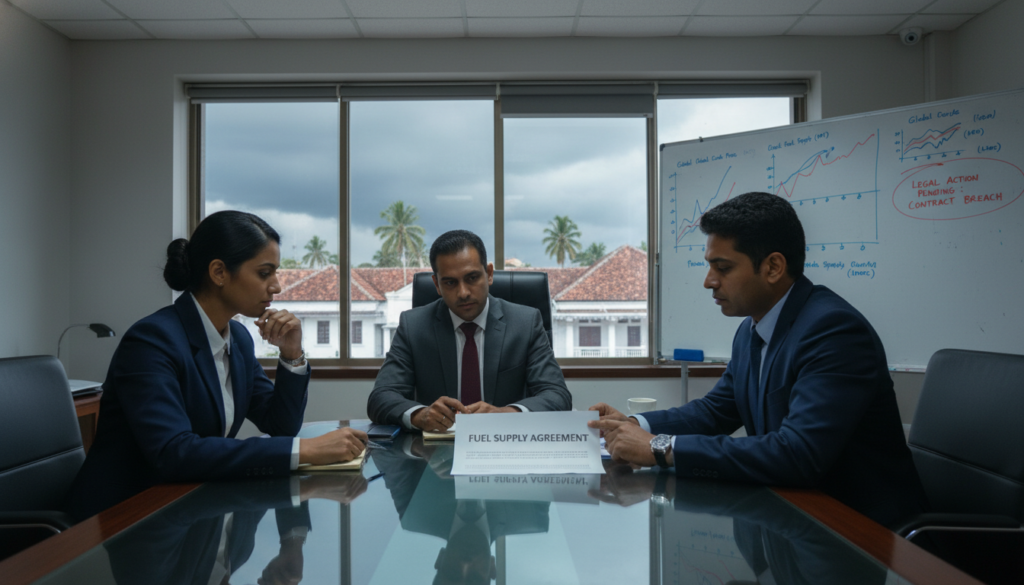
This dispute centers on formal agreements for diesel, petrol, and coal. Their absence creates uncertainty in thermal power generation planning and costs.
Enforcement Orders Issued to CPC and Lanka Coal Company
The utilities commission has taken a firm step. It issued a formal enforcement order to the Ceylon Petroleum Corporation (CPC) and the Lanka Coal Company.
This directive demands both entities enter into legally binding Fuel Supply Agreements (FSAs). These contracts would govern the supply and distribution of fuel for thermal plants.
To date, compliance has not been forthcoming. The state suppliers have not implemented the order, despite its importance for sector stability.
This inaction has prompted the PUCSL to consider initiating legal proceedings. The goal is to compel the signing of these crucial documents through a court mandate.
Ensuring Security and Cost Efficiency in Power Generation
Fuel Supply Agreements are not mere paperwork. They are foundational for a reliable and affordable energy sector.
These contracts guarantee a secure and scheduled flow of fuel. This allows for precise power generation planning and prevents sudden shortages.
More importantly, FSAs establish transparent pricing mechanisms. Without them, procurement lacks oversight, and costs can become inflated.
This inefficiency directly impacts the final electricity bill for consumers. The recent tariff adjustment is partly a response to these uncontrolled fuel expenses.
Resolving this impasse is a crucial step for the Sri Lankan power system. A court order would set a precedent for regulatory authority.
It would also create a more accountable supply chain. This move aims to build a sustainable model for the nation’s energy future.
Public Hearings Planned for Greater Tariff Transparency
Transparency in energy pricing is set to improve as the national commission schedules public consultations on tariff formulation. The Public Utilities Commission of Sri Lanka (PUCSL) chief has announced this initiative.
These public hearings will focus on how power bills are calculated. Their goal is to demystify the complex process for ordinary citizens.
The sessions aim to present detailed cost data openly. They will also gather feedback from stakeholders before final decisions are made.
Building public trust is a key objective. This is especially vital after consecutive adjustments that strain household budgets.
A major focus will be scrutinizing fuel procurement costs. These expenses are a primary driver of the final tariff paid by consumers.
Such participatory regulatory practices are common in many nations. They represent a move toward more open governance in Sri Lanka’s utilities sector.
The hearings will likely involve multiple parties. Presentations are expected from the Ceylon Electricity Board (CEB) and independent power producers.
Consumer associations and industry representatives will also have a platform. This inclusive approach ensures diverse viewpoints are heard.
This initiative aligns with the PUCSL’s core mandate. The commission must act as a fair arbiter between consumer interests and utility financial needs.
While hearings may not prevent future cost adjustments, they can foster a better-informed public debate. The conversation will center on energy affordability and long-term sector sustainability.
A Recurring Burden: This Hike Follows Recent March Increase
A pattern of regular adjustments is emerging in the nation’s power sector pricing. The May 2026 change continues a clear trend that began just weeks earlier.
In March 2026, the PUCSL approved across-the-board increases for all consumers. These ranged from 10% to 13.5%, with higher brackets facing steeper rises.
This means the latest tariff change arrives barely a month after the previous one. For many bill payers, it feels like a relentless financial pressure.
Continuation of a Trend in Quarterly Tariff Adjustments
The regulator is shifting toward a system of more frequent reviews. Quarterly adjustments allow prices to better reflect real-time generation costs.
This approach aims to prevent massive, sudden hikes that shock household budgets. Instead, smaller, more regular changes smooth out the financial impact over time.
Public perception, however, is challenging. Many citizens view back-to-back increases as an unfair burden. Businesses and families still recovering from economic crisis feel particularly strained.
There are clear advantages to this method. It reduces utility losses and maintains sector viability. The financial health of the power system improves with regular cost recovery.
The downside is uncertainty for consumers. Planning monthly expenses becomes harder when utility costs can change every few months.
This trend aligns with IMF recommendations for fiscal sustainability. The international lender emphasizes regular adjustments to prevent massive debt accumulation.
This represents a sharp break from past practice. For years, Sri Lanka kept energy tariffs artificially low through subsidies.
That approach eventually led to massive sector debt and crisis. The current model seeks to avoid repeating that history.
Sri Lankans may need to acclimatize to this new reality. More dynamic, cost-reflective pricing appears to be the path forward for the nation’s power sector.
The Broader Aswesuma Top-Up and Rs. 100 Billion Relief Package
President Anura Kumara Dissanayake announced a comprehensive aid program targeting key sectors of the economy. This Rs. 100 billion relief package is a central part of the government’s comprehensive economic programme.
It aims to tackle cost-of-living pressures that extend far beyond monthly utility bills. The plan operates alongside recent subsidies for power and fuel.
Extending Support to Fisheries and Small-Scale Farmers
The massive package has three core components. Each is designed for a specific group hit hard by inflation.
First, it provides direct cash top-ups to the existing Aswesuma welfare scheme. This offers more support to identified low-income households.
Second, it introduces fertilizer subsidies aimed at small-scale farmers. This helps control production costs for essential food items.
Third, it allocates assistance for the fisheries sector. This group struggles directly with high fuel prices for their boats.
The targeting is deliberate. It addresses poor families, agricultural producers, and fishermen in one coordinated move.
Government’s Multi-Pronged Approach to Cost-of-Living Pressures
This broad package integrates with the specific Rs. 30 billion subsidy for power and fuel. Together, they form a multi-layered government response.
The International Monetary Fund views this approach positively. It agrees with the principles of being targeted, temporary, and well-designed.
Such aid cushions the poor without undermining broader fiscal goals. The IMF has encouraged this strategy for Sri Lanka.
Successful implementation faces real challenges. Accurately identifying all beneficiaries is complex.
Ensuring the timely disbursement of funds and subsidies is another critical task. Bureaucratic delays could weaken the package’s impact.
This effort represents a social contract. Difficult economic reforms are accompanied by state support for those most in need.
The success of these relief measures is crucial. They are key to maintaining social stability during this period of economic adjustment.
Regional Context: Lessons from the ADB on Energy Integration
The recent Asian Development Bank meetings presented a compelling vision for a connected energy future. High-level talks at the 59th ADB Annual Meetings in Samarkand this May focused on regional progress.
The central theme was “Crossroads of Progress: Advancing the Region’s Connected Future.” Discussions strongly emphasized cooperation as a source of resilience and strength.
This regional perspective offers important lessons. It contrasts with the domestic challenges currently facing Sri Lanka’s power sector.
Samarkand Meetings Highlight “Integration is Power”
A key mantra emerged from the forum: “Integration is Power.” This concept was applied directly to energy security and stability.
Delegates argued that interconnected grids and shared resources enhance national systems. Isolated networks are more vulnerable to shocks.
The meetings highlighted how Asia’s energy systems are becoming more linked. This trend is seen as critical for sustainable development.
For a nation like Sri Lanka, these ideas are highly relevant. The country’s current grid operates largely in isolation.
The ASEAN Power Grid Model and Regional Cooperation
A successful example cited was the ASEAN Power Grid. This initiative allows member countries to trade electricity across borders.
It optimizes the regional generation mix. Countries can export surplus power or import during shortages.
The benefits for participants are significant:
- Reduced costs through efficient use of resources.
- Increased use of renewable energy across the network.
- Better emergency response and system stability.
- Attraction of cross-border investment in generation and transmission.
This model stands in sharp contrast to Sri Lanka’s situation. The island’s isolated grid is exposed to domestic fuel shortages and climate variability.
Local price shocks become more difficult to manage without regional alternatives. The ADB meetings also stressed supporting elements.
Digital innovation and sustainable finance are vital for modernizing infrastructure. These areas are directly applicable to Sri Lanka’s needs today.
The regional discourse provides a clear alternative vision. Sri Lanka’s energy future could be based on connectivity rather than isolation.
Exploring regional partnerships may also offer long-term stability. It could help diversify the nation’s power supply and mitigate risks.
Sri Lanka at a Crossroads: Institutional Challenges vs. Regional Progress
At a moment when regional neighbors are charting ambitious paths toward integrated energy futures, Sri Lanka finds itself mired in foundational institutional struggles. This gap between aspiration and reality defines the nation’s current predicament.
The contrast with themes from recent regional forums is stark. It highlights a critical divergence in priorities and execution capability.
Contrast with Asian Focus on Policy Continuity and Long-Term Execution
Discussions at forums like the Asian Development Bank meetings emphasize “Integration is Power.” Leading economies prioritize policy coordination and institutional maturity.
Their goal is to harness regional cooperation for stability and growth. This requires long-term vision and consistent follow-through.
Sri Lanka’s situation presents a different picture. The nation wrestles with protracted political instability and a history of policy reversals.
This inconsistency scares away the private investment needed for modernizing the energy sector. It perpetuates a cycle of short-term crisis management.
Governance and Debt Restructuring as Foundational Hurdles
Core institutional challenges create a difficult environment for progress. These foundational issues must be resolved for any lasting change.
Sri Lanka’s key hurdles include:
- Protracted political instability affecting policy direction.
- Governance deficits and accountability gaps in state institutions.
- The slow, complex process of debt restructuring.
- A pattern of inconsistent policymaking that erodes trust.
These factors directly undermine long-term planning for the power sector. They deter investment in new generation and renewable energy projects.
The result is persistent inefficiency. The nation’s energy woes, like delayed fuel supply agreements and frequent tariff adjustments, are symptoms of these broader governance failures.
High operational costs and financial losses in the utility system are a direct consequence. Without strong institutions, technical solutions struggle to take root.
The implication is clear. Until questions of governance and economic direction are settled, Sri Lanka may struggle to fully benefit from regional energy partnerships.
The nation possesses inherent advantages. Its strategic location, human capital, and existing multilateral relationships remain underutilized.
Internal fragmentation and a lack of coherent strategy hold back these assets. This time of adjustment presents a critical choice.
Sri Lanka stands at a crossroads. The path forward requires choosing between continuing ad-hoc crisis management or embarking on genuine institutional reform. Catching up with regional peers depends on this foundational shift.
Public Reaction and the Growing Debate Over Affordability
Across kitchen tables and social media platforms, a heated national conversation is unfolding. The regulator’s latest decision has generated a spectrum of public sentiment.
Reactions range from weary resignation to vocal anger. This is especially true among middle-class and fixed-income families.
The debate centers on one core question: how to manage essential monthly expenses when key utility costs rise.
Concerns from Middle-Income and Fixed-Income Earners
A specific grievance is emerging from a large group. Many households that consume just over the 180-unit threshold feel unfairly penalized.
These are not necessarily wealthy families. They may have essential needs like medical equipment or multiple family members working or studying from home.
For them, the bill increase represents a direct hit to a carefully balanced budget. Pensioners and others on fixed incomes express deep anxiety.
The impact extends to commerce. Small business owners and industries facing higher operational costs worry about their next steps.
They fear being forced to raise prices for goods, reduce staff, or lose competitiveness. This could weaken the broader economic recovery.
Calls for Deeper Structural Reforms in the Energy Sector
Calls for action are growing louder. Civil society groups, trade unions, and opposition politicians demand more substantial relief.
Many are urging a reconsideration of the hike’s magnitude. The public discourse is shifting from short-term aid to long-term solutions.
A growing chorus insists that temporary subsidies are not enough. They are calling for deep structural reforms within the Ceylon Electricity Board and the wider energy sector.
Common suggestions from analysts and the public include:
- Reducing technical and commercial losses in transmission and distribution.
- Combating corruption and lack of transparency in fuel and equipment procurement.
- Accelerating approvals and investment in solar, wind, and other renewable projects to lower generation costs.
- Improving demand-side management through energy efficiency programs.
There is palpable frustration. Repeated tariff adjustments feel like a recurring punishment for consumers.
This persists while perceived inefficiencies within the state utility and ministry are seen as unaddressed. The public mood questions why households must always bear the brunt.
Public acceptance of future electricity cost adjustments will depend heavily on visible progress. People need to see tangible efforts on these reform fronts.
A sense of shared sacrifice is crucial. Citizens are more likely to support necessary measures if they believe the system itself is becoming more efficient and accountable for all.
The Path Forward: Modernization, Investment, and Policy Clarity
Charting a sustainable course for Sri Lanka’s power sector requires moving beyond reactive measures to proactive, strategic planning. The cycle of crisis and adjustment can be broken with a clear vision focused on three pillars: infrastructure modernization, attracting investment, and unwavering policy clarity.
This path demands difficult but necessary choices. It involves building a system resilient to global shocks and affordable for all households.
Need for Predictable Tariff Frameworks to Attract Investment
A stable and transparent tariff system is the bedrock for progress. Private investors need confidence that their capital in new power plants will yield fair returns over time.
Unpredictable pricing adjustments create uncertainty. This scares away the very funding needed for new generation capacity, especially renewable projects.
The current quarterly review method aims for cost reflection. To truly attract investment, a longer-term regulatory framework is essential.
Such a framework would signal serious commitment to sector reform. It would make Sri Lanka a more attractive destination for international energy companies.
Accelerating Renewable Energy to Reduce Fuel Dependency
Diversifying the generation mix is the most effective shield against global fuel price swings. Every new solar park or wind farm reduces reliance on imported oil and diesel.
Accelerating approvals for such projects is critical. Bureaucratic delays have historically stalled clean energy deployment.
Small-scale distributed power, like rooftop solar, also plays a key role. It empowers consumers and eases strain on the national grid.
Modernizing the grid with smart technology is a parallel need. Smart grids reduce technical losses, manage demand better, and seamlessly integrate variable renewable sources.
Regional cooperation offers another avenue for stability. As highlighted at the ADB meetings, cross-border electricity trade can provide backup supply and optimize costs.
Sri Lanka should actively explore such partnerships in the long term. Integration into a regional network could enhance energy security significantly.
Underpinning all these steps is governance reform. Finalizing the long-delayed fuel supply agreements is a immediate test.
Depoliticizing utility management and ensuring the PUCSL’s regulatory independence are equally vital. These actions build the institutional trust needed for lasting change.
International partners like the Asian Development Bank can provide crucial support. They offer technical assistance and innovative blended finance for major infrastructure projects.
The ADB has stressed mobilizing private capital for climate adaptation and the energy transition. Sri Lanka should leverage this expertise.
The journey ahead requires consistent political will and a clear long-term vision. These elements have often been in short supply but are now indispensable for a brighter energy future.
Every citizen’s monthly bill and the nation’s economic health depend on the choices made today.
Sri Lanka’s Energy Future Hinges on Tough Choices Today
Ultimately, the recent utility adjustments reveal a systemic challenge beyond monthly billing cycles. They stem from revenue shortfalls, high fuel costs, and climate impacts. This is worsened by Middle East instability.
The government’s targeted subsidies and the IMF’s emphasis show a necessary balance. This approach aims to shield vulnerable households while fixing sector finances.
Sri Lanka’s path diverges from regional energy integration. Today’s choices on tariffs, renewables, and governance will decide between recurring crisis and sustainable progress.
The debate is a referendum on coordinated action for long-term stability.