After a prolonged period of severe economic difficulty, a cautious optimism is beginning to take hold. The nation has faced significant challenges, but recent data suggests a potential turning point.
Authoritative forecasts provide a factual baseline for this shift. The Asian Development Bank projects the country’s economy to record moderate growth of 1.9% in 2024. A further expansion to 2.5% is anticipated for 2025.
This follows two consecutive years of contraction. Green shoots of recovery emerged in the second half of 2023, a positive signal for the nation and the wider region.
This article offers a balanced, trustworthy overview of this developing story. It will explain the key indicators now stabilizing and analyze the factors critical for sustainable performance on the path ahead.
Emerging Green Shoots: Key Indicators Point to Stabilization
Stabilization is no longer just a hope, but a trend supported by hard numbers. Several core metrics have shifted from crisis levels toward more manageable territory. This provides a firmer base for the nation’s next steps.
Inflation Retreats to Single Digits
The most immediate relief for citizens comes from cooling prices. After reaching extreme highs, the inflation rate has decelerated sharply. It now sits in single digits.
This change is critical for household budgets. People can plan their spending with more confidence. Businesses also find it easier to forecast costs and set prices.
Improved supply conditions have been a major factor. Shortages of essential goods have eased significantly. This direct pressure on price stability is a welcome change.
Rebuilding Foreign Exchange Reserves
A country’s financial shield is its foreign exchange reserves. These had dwindled to dangerous lows, crippling the ability to pay for imports.
A concerted rebuilding effort is underway. Official reserves have climbed to their strongest level in years. This is vital for import financing and overall external stability.
The local currency has also appreciated. This signals returning market confidence. For importers, it makes foreign goods cheaper. Exporters, however, face more competitive pricing abroad.
Strong Recovery in Tourism and Remittances
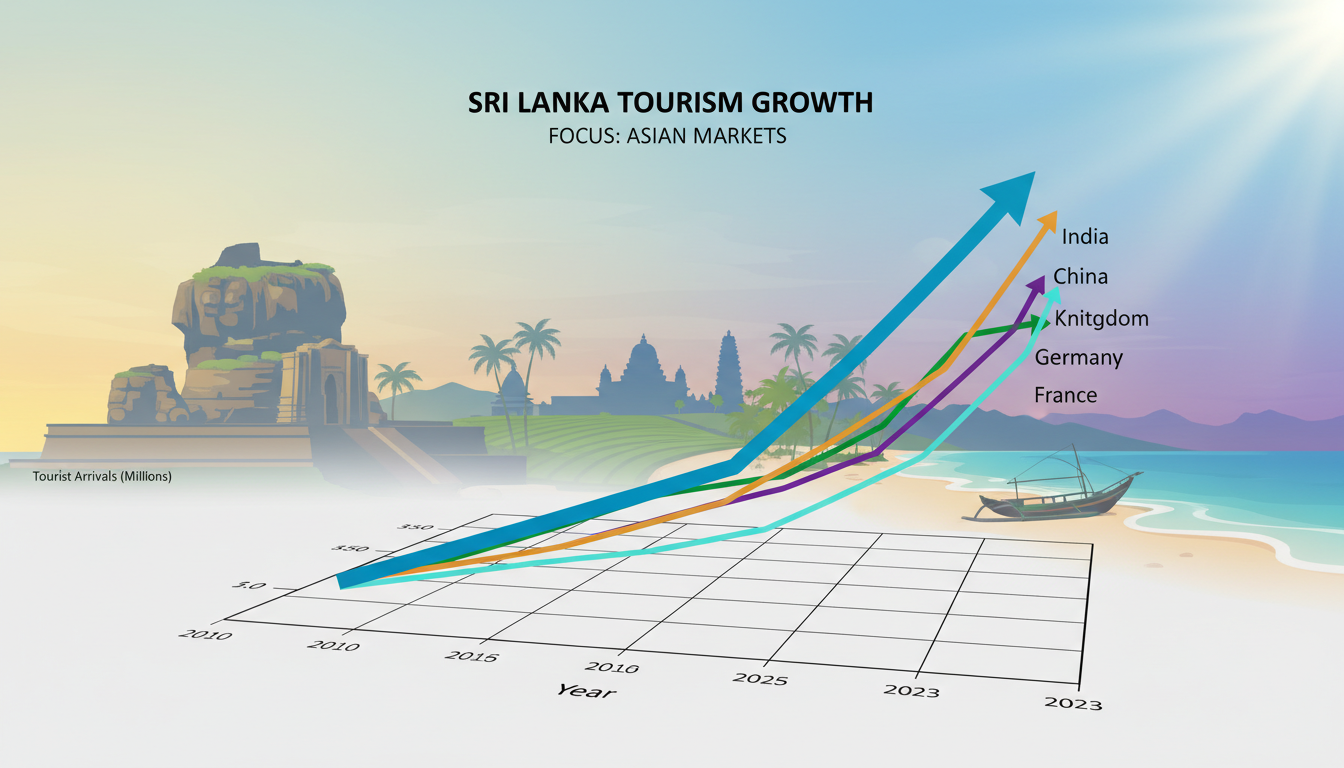
Two external lifelines are flowing strongly again. Tourist arrivals have made a robust comeback. Hotels, tour operators, and related services are seeing renewed activity.
This sector is a major source of jobs and service sector growth. Its recovery supports livelihoods across the island.
Meanwhile, money sent home by overseas workers has hit a record high. These remittance inflows are a critical source of foreign currency. They also provide direct income support to countless families.
Together, stronger tourism and remittances ease balance of payment pressures. They contribute directly to the improved supply conditions noted earlier.
The combined effect of these positive shifts is visible in the nation’s external accounts. The current account has posted a third consecutive surplus. In simple terms, the country is earning more from abroad than it is spending.
These indicators are foundational. They do not mean the work is complete, but they create a platform for the next phase. This growing stability underpins more optimistic assessments, such as the positive growth forecast from international institutions.
Growth Forecasts: A Path of Moderate but Steady Expansion
Looking beyond immediate stabilization, the focus shifts to the pace and drivers of future economic expansion. Major institutions project a trajectory of modest, sustained growth.
This outlook represents a conscious shift from crisis management to rebuilding. It sets realistic expectations for the public and business community.
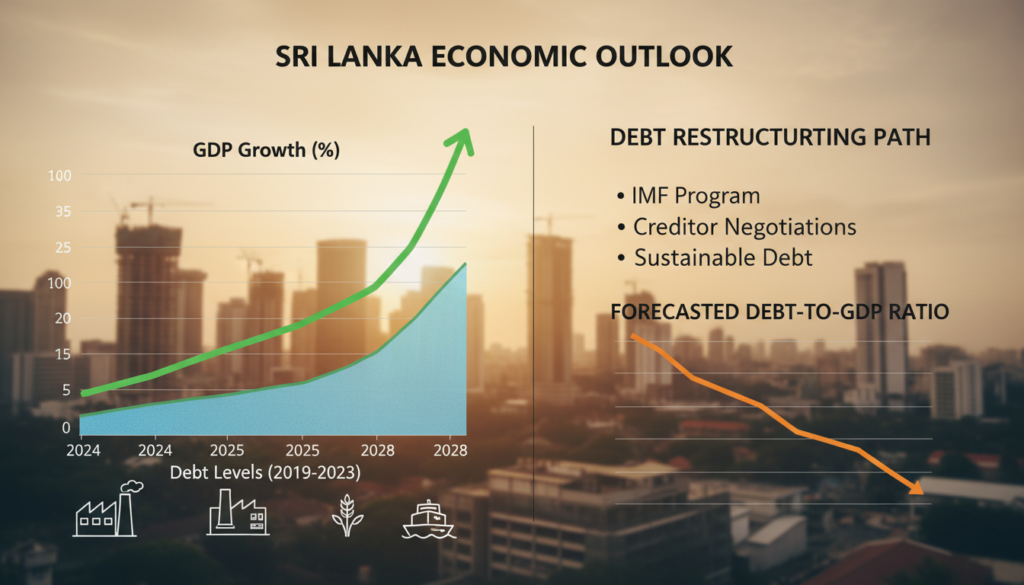
ADB and World Bank Projections for 2024-2027
Forecasts from leading development banks provide a multi-year roadmap. Their projections have evolved as conditions improve.
The Asian Development Bank’s April 2024 outlook was cautiously positive. It anticipated growth of 1.9% in 2024, rising to 2.5% in 2025.
By April 2026, the ADB’s view reflected stronger performance. It forecast growth moderating to 4.0% in 2026 and climbing to 4.2% in 2027.
This follows two consecutive years of robust 5.0% expansion. The World Bank’s October 2025 assessment projected 4.6% growth in 2025, slowing to 3.5% in 2026.
Together, these paint a picture of steady, not spectacular, progress. It contrasts with a rapid V-shaped recovery seen in some countries.
Sri Lanka’s path is more gradual, reflecting deeper structural challenges. This context is vital when considering the nation’s economic outlook for the challenging year.
Private Consumption as the Primary Driver
Current expansion is primarily fueled by household spending. Private consumption has surged as financial pressures on families ease.
Two key factors drive this trend:
- Low inflation has restored purchasing power.
- Easing interest rates have reduced borrowing costs.
This combination has boosted consumer sentiment. People are more willing to spend on goods and services again.
In contrast, private investment recovery lags. Businesses remain cautious due to lingering uncertainty.
Financing conditions, though improving, are still a constraint. A full revival of the private sector is essential for job creation.
The Critical Role of Debt Restructuring
Long-term prospects hinge on resolving the nation’s debt burden. Timely completion of external debt restructuring is non-negotiable.
This process is critical for achieving debt sustainability. It directly impacts fiscal health and investor confidence.
Successful restructuring would restore full access to international capital markets. This access is needed to fund major development projects.
Multilateral banks like the World Bank and ADB provide vital financing and advice. Their support helps maintain stability during this complex process.
The resolution will signal that the nation is open for business and trade. It is the cornerstone for attracting the investment needed for the next phase of growth.
Policy Imperatives: Structural Reforms for Sustainable Growth
The next phase of the country’s journey requires a decisive turn toward deep institutional reforms. Short-term stabilization provides a platform, but lasting progress depends on transforming the underlying economic framework.
International experts emphasize this point. Achieving sustainable growth demands moving beyond crisis management. It calls for addressing long-standing structural weaknesses.
Enabling Private Sector-Led Investment and Job Creation
A vibrant private sector is the primary engine for job creation and innovation. Current policy must actively foster this environment. Key actions include reducing bureaucratic hurdles and improving the ease of doing business.
This means easing barriers to trade and investment. It also involves attracting both foreign and local capital. The goal is to unlock productive investment that builds a more resilient economy.
Successful reforms here would directly support the nation’s broader growth strategy for 2024.
Reforming Public Spending and Wage Bills
Fiscal health is constrained by rigid spending patterns. More than 80% of government expenditure is tied to public sector salaries, welfare, and interest payments.
This leaves little room for growth-enhancing investments in critical areas. Key priorities include health, education, and infrastructure.
Specific reforms are needed to manage the public wage bill. Implementing fairer pay structures and modern payroll systems can improve efficiency.
Public investment management also requires overhaul. The focus should be on closing key infrastructure gaps. Stronger project planning and completing stalled initiatives are essential.
Allocating more funds for maintenance is another crucial step. These changes would create vital fiscal space for development.
Modernizing Tax, Land, and Labor Regulations
Outdated regulations in key areas hinder competitiveness and productivity. Modernizing these systems is a core policy challenge for Sri Lanka.
Tax administration needs streamlining to broaden the base and improve compliance. Land market regulations often delay investment and development projects.
Labor market rules must balance worker protection with flexibility for businesses. The World Bank recommends modernizing regulations governing these markets.
Such updates would improve overall business conditions. They would make the country more attractive for the trade and investment needed for long-term growth.
These reforms are interconnected. They are essential for building a more inclusive and dynamic economy. Tackling these structural challenges is the true imperative for sustainable progress in Sri Lanka.
Addressing the Human Cost: Poverty and Social Protection
While financial indicators show improvement, the social landscape tells a more complex and challenging story. Macroeconomic stabilization has not yet reversed the deep human impact of the recent turmoil. This section examines the persistent issues of poverty, the need for stronger safety nets, and the lagging recovery of household incomes.
Poverty Levels Remain Elevated Post-Crisis
The economic crisis and pandemic erased a decade of progress against poverty. Current levels are roughly twice as high as they were in 2019.
An additional 10% of the population now lives precariously just above the official poverty line. A single shock could push them back into hardship.
Malnutrition remains a serious concern, especially for children and other vulnerable groups. This threatens long-term health and development.
Several factors sustain high poverty levels even as the economy stabilizes. Widespread job losses and eroded incomes have left deep scars.
High living costs, despite lower inflation, continue to strain household budgets. The power of a family’s income to meet basic needs has been severely reduced.
Building an Inclusive Social Protection System
There is an urgent need to move from temporary crisis relief to a permanent, efficient system. The goal is social protection that is inclusive and better targeted.
Improved targeting ensures help reaches the most affected families. It also makes prudent use of limited public spending.
Structural reforms are required to manage welfare programs effectively. This includes creating a unified registry for beneficiaries and streamlining delivery.
International support is aiding this transition. Key projects, like the World Bank-supported Social Safety Nets Project, aim to build a new framework for welfare management.
Such initiatives focus on easier access to help and focused support. A robust social protection system is a cornerstone of stability and inclusive growth.
The Slow Recovery of Livelihoods and Labor Markets
The labor market has been slow to bounce back. Many households have not regained the livelihoods lost during the crisis.
This disconnect is critical. Aggregate economic growth does not automatically restore individual purchasing power.
Creating quality jobs is the most durable solution to poverty reduction. It requires fostering sustainable livelihoods across all sectors of the economy.
Policies must encourage private sector investment, which is the primary source of employment. Skills training programs can help workers adapt to new opportunities.
For Sri Lanka, rebuilding livelihoods is not just a social goal. It is essential for genuine, broad-based recovery and long-term resilience.
The challenges of high poverty and weak labor markets are central policy issues. Addressing them is what makes an economic turnaround meaningful for the country‘s people.
Navigating the Road Ahead: Risks and Building Resilience
Global geopolitical tensions now cast a shadow over fragile recent gains. Conflicts abroad pose direct risks to the country‘s stability.
Such external shocks threaten higher import costs and reduced inflows from tourism. They could sharply increase inflation, with projections near 5.2% in 2026.
This climate of uncertainty demands sustained commitment to policy reforms and fiscal discipline. Building economic resilience is a paramount priority.
Strategic public investment in infrastructure enhances long-term capacity. Completing debt restructuring secures crucial financing.
Lasting recovery depends on interlinking macroeconomic stability, structural changes, and social inclusion for true resilience.