The island nation is aiming for a more robust economic performance by 2026. This goal comes even as it grapples with significant budget shortfalls and debt burdens.
The path forward involves a delicate balance. The country must maintain recent recovery momentum while addressing deep-rooted structural issues.
According to the Asian Development Bank’s latest outlook, there is a projected uptick in economic activity. This expert assessment provides a measured dose of optimism for the future.
However, risks remain. Global tensions, like the conflict in the Middle East, can disrupt trade. At home, natural disasters such as Cyclone Ditwah pose additional threats to stability.
This article will explore the key drivers behind this growth target. It will analyze the fiscal hurdles and the strategies being deployed. These efforts build on ongoing reform programs aimed at stabilizing the economy. Readers will gain a clear understanding of the nation’s economic trajectory.
Sri Lanka’s Economic Recovery Shows Resilient Progress
Measurable progress across key financial indicators signals a resilient rebound from crisis. This foundation is crucial for understanding the nation’s future economic path.
Strong GDP Growth and Record Surpluses in 2024-2025
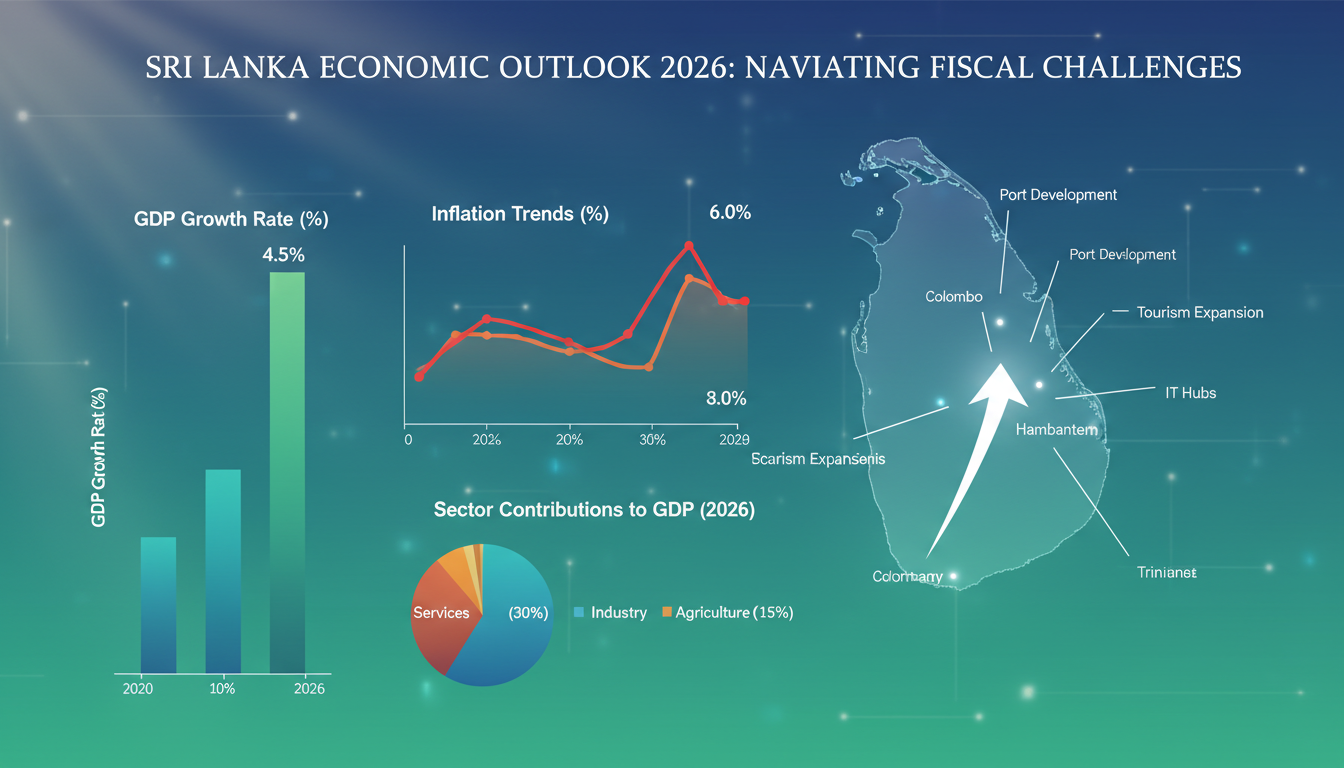
According to the Asian Development Bank, the economy expanded by a robust 5.0 percent in both 2024 and 2025. This consistent economic growth marks a significant post-crisis achievement.
The country also recorded a landmark primary budget surplus in 2025. It was the third straight year with a surplus in the current account. These back-to-back surpluses show much better fiscal and external health.
This progress happened even with the late-year disruption of Cyclone Ditwah. It underscores the underlying resilience of the current recovery.
Rebuilding Buffers: Reserves Climb to Multi-Year Highs
A major sign of increased stability is the rebuilding of foreign exchange buffers. Official reserves have climbed to their strongest level in years.
Gross official reserves were reported at USD 7.284 billion by the end of February 2026. Stronger reserves help the central bank stabilize the local currency. They also help manage the cost of essential imports for citizens.
This tangible progress reassures both local citizens and international partners. The regained momentum now provides a baseline for future plans. However, this recovery phase is entering a period with new challenges ahead.
ADB Projects Moderating Growth for 2026 and 2027
Following a period of robust post-crisis expansion, the pace of economic activity is expected to ease. The Asian Development Bank (ADB) provides a clear forecast for this next phase.
This shift represents a move from rapid rebound to more sustainable economic growth. It is a common transition for economies after a sharp recovery.
Forecast of 4.0% Growth in 2026, Edging to 4.2% in 2027
The ADB projects the nation’s gdp will expand by 4.0 percent in 2026. A slight improvement to 4.2% is anticipated for 2027.
These figures are notably lower than the 5.0% growth seen in the prior two years. This moderating trend is not a sign of weakness but of normalization.
The economy is maturing beyond its initial recovery surge. Policy focus must now shift to maintaining this steadier pace.
The Shadow of the Middle East Conflict on the Outlook
These projections come with a significant condition. They assume an “early stabilization scenario” for the Middle East conflict.
Geopolitical tensions are a major external shocks risk. For a small, open economy, such shocks can travel through multiple channels.
Global oil prices could spike, raising import costs. Trade routes may face disruption. Remittance flows from overseas workers could also weaken.
The ADB’s forecast is therefore cautious. It highlights how the country’s path is tied to the wider sri lanka global environment. Domestic decisions will be crucial in shielding the economy from these winds.
Private Consumption Remains the Primary Growth Engine
A sharp increase in private consumption stands as the key contributor to recent performance. Household spending powered the nation’s economic advance in 2025. This trend is expected to continue driving the economy forward.
Consumers opened their wallets more freely last year. This provided crucial support for overall growth. The role of everyday spending is now central to the country’s trajectory.
Household Spending Boosted by Low Inflation and Interest Rates
Two powerful forces fueled this spending surge. First, inflation remained low, keeping prices stable for families. Second, credit became more affordable as interest rates eased.
This combination put more disposable income in people’s pockets. It made loans for vehicles or appliances less costly. The result was a visible jump in consumer activity across markets.
For many households, it meant the ability to make postponed purchases. This dynamic directly boosted the gdp numbers. The reliance on consumer spending became very clear.
Purchasing Power to Be Tested by Accelerating Inflation
The outlook for 2026 presents a new challenge. Economists forecast that inflation will begin to accelerate again. This directly tests the resilience of the consumption-led model.
Rising inflation erodes purchasing power. The same amount of money buys fewer goods and services. Household budgets will feel this pressure.
Private investment is only expected to recover slowly. This places continued weight on consumer demand to propel growth in Sri Lanka. The coming year will show how this balance holds.
Understanding these pressures is key for everyday financial planning. The next section examines the specific forces behind rising inflation.
Inflationary Pressures Are Set to Re-emerge
After a period of relative price stability, economists warn of accelerating inflation ahead. This shift presents a primary concern for households and businesses across the nation.
The return of rising costs could test recent economic gains. It connects directly to the sri lanka global environment and its vulnerabilities.
Projected Acceleration to 5.2% in 2026
The Asian Development Bank provides a specific forecast. It projects the inflation rate will accelerate sharply to 5.2 percent in 2026.
This marks a significant increase from the recent lows that supported consumer spending. The number is a key data point for financial planning.
Such a jump would impact the broader economic growth environment. Moderating expansion and rising prices can create a complex policy challenge.
Global Energy Prices and Conflict Spillovers as Key Drivers
Two interconnected forces are behind this projected surge. They originate outside the country’s borders.
- Higher global energy prices are a primary component. The nation relies heavily on imported oil and other commodities.
- Spillover effects from the Middle East conflict add sustained pressure. This geopolitical tension is a major source of external shocks.
These shocks transmit directly into the domestic economy. They first raise costs for transportation and electricity generation.
Consumers then face higher fuel prices at the pump and increased utility bills. This mechanism is known as imported inflation.
For a small, open economy like Sri Lanka, such prices fluctuations are often unavoidable. They highlight a continued dependency on foreign markets.
The coming year will show how these inflation pressures affect living standards. Managing them is crucial for maintaining economic stability.
The Fiscal Tightrope: Discipline Amidst Reconstruction Needs
Fiscal policy is walking a fine line, compelled to fund urgent reconstruction while upholding hard-won economic gains. The government must balance immediate disaster relief with the longer-term goal of debt reduction.
This balancing act defines the 2026 budget challenge. It tests the nation’s commitment to fiscal discipline.
Cyclone Ditwah Relief Spending Impacts the 2026 Deficit
The massive reconstruction effort after Cyclone Ditwah has a direct cost. Relief spending is estimated at a substantial Rs.500 billion.
This essential outlay significantly widens the projected budget deficit for the year. Officials now forecast the deficit to land between 5.1 and 6.5 percent of GDP.
Such spending is unavoidable for rebuilding communities. Yet, it creates a clear tension with consolidation goals established after the recent crisis.
Commitment to a Primary Surplus Above 2.3% of GDP
Despite the wider overall deficit, a key pledge remains. The government is committed to a primary surplus of at least 2.3 percent of GDP from 2025 through 2027.
This is a cornerstone of its IMF-backed program. The difference between the two figures is crucial.
The overall budget deficit includes interest payments on past debt. The primary surplus measures whether current revenue covers all non-interest spending.
Achieving a primary surplus means the state is not borrowing to pay for today’s services. It is a vital sign of underlying discipline.
Revenue Performance Outpacing Targets
A positive development supports this difficult balance. Revenue collection has shown strong performance.
It reached 15.9 percent of GDP in 2024, outperforming official targets. This suggests improvements in tax administration and compliance.
Higher revenue gives the budget more room to maneuver. It provides essential funds for public services without relying solely on new borrowing.
The coming year will show if this revenue strength can be sustained. It is a critical factor in navigating the fiscal tightrope successfully.
The Long Road to Public Debt Reduction and Sustainability
Public debt remains a critical obstacle on the path to sustainable economic development. This burden is a direct legacy of the nation’s 2022 default. Tackling it is essential for securing long-term financial health.
The journey toward lower debt levels will be measured in years, not months. It requires consistent policy discipline and structural reform. This section examines the official targets and a major hurdle that could slow progress.
Debt-to-GDP on a Gradual Decline, Targeting Sub-60%
The government’s Fiscal Strategy Statement outlines a clear goal. It aims for a gradual reduction of public debt to below 60 percent of GDP. This metric, debt-to-GDP, is a key measure of a country’s ability to manage its obligations.
A lower ratio signals improved debt sustainability. It means the economy is generating enough output to support its borrowings. The multi-year target acknowledges that reduction cannot happen overnight.
Progress depends on maintaining primary budget surpluses. It also relies on steady economic expansion. Even with a moderate growth pace, the ratio can decline if debt accumulation is controlled.
This path is crucial for reducing the massive cost of debt servicing. Freeing up funds from interest payments allows for more productive public spending. It is a cornerstone of lasting stability for Sri Lanka.
State-Owned Enterprise Losses as a Persistent Burden
A major structural challenge complicates this debt reduction effort. Continuous losses at large State-Owned Enterprises (SOEs) drain public finances. Entities like the Ceylon Electricity Board are a persistent fiscal burden.
These losses directly impact the broader lanka economic health. They force difficult choices: raising utility tariffs, using taxpayer money for bailouts, or pursuing deeper reforms. Each option has significant social and economic costs.
Currency depreciation makes the problem worse. It inflates the cost of SOE debt held in foreign currencies. It also raises the price of critical imported inputs, like fuel for power generation.
This creates a vicious cycle. SOE losses widen the budget deficit, potentially requiring more borrowing. That borrowing can become more expensive if confidence wavers.
Strong revenue performance provides some buffer. However, without addressing SOE inefficiencies, achieving durable sustainability is harder. Reform is not just a policy issue—it affects every citizen’s cost of living.
The task is sobering but essential. Controlling the overall deficit is only one part of the equation. True recovery from the crisis requires fixing these deep-seated problems within Sri Lanka‘s public sector.
External Vulnerabilities and Downside Risks
Two major sources of foreign currency—remittances and tourism—are now at record highs but remain exposed to international shocks. The nation’s economy is not isolated from global trends.
Progress in the recovery can be quickly tested by events far from its shores. This section examines risks beyond the Middle East conflict that could impact daily life.
Potential Weakening in Remittance and Tourism Inflows
The Asian Development Bank has issued a clear warning. It notes that potentially weaker remittance inflows and tourism disruptions could hurt household incomes.
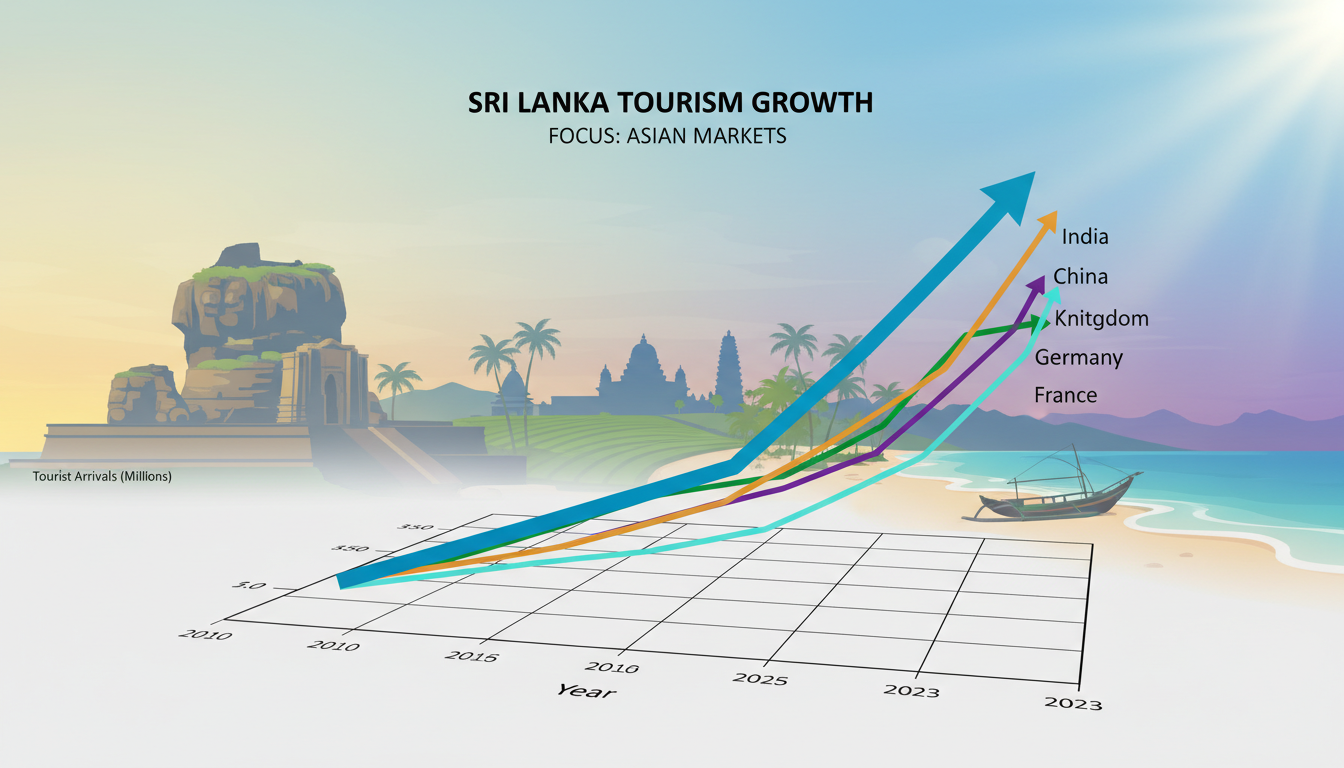
Tourist arrivals hit a record 2.36 million in 2025. Money sent home from citizens working abroad also reached historic levels.
These flows provide essential support for families and the national buffers. They are a vital part of the services sector.
However, their strength is fragile. A slowdown in key host countries for migrant workers would reduce remittances.
A drop in global travel sentiment could quickly lower tourism earnings. Both scenarios would shrink the foreign exchange entering Sri Lanka.
Trade Disruptions and the Threat to Macroeconomic Buffers
Trade routes are another vulnerability. Disruptions can affect both exports and essential imports.
Such external shocks pose a direct threat to the country’s macroeconomic buffers. The most critical of these are the foreign exchange reserves.
Strong reserves help stabilize the local currency. They also ensure the country can pay for vital imported goods, like medicine and fuel.
A sustained drop in tourism and remittance earnings would pressure these reserves. This could weaken the currency and make imports more expensive for everyone.
The situation highlights a core lesson from the recent crisis. Internal stability is partially dependent on an uncertain global environment.
Prudent management of these known risks is essential. It helps protect the current path of growth and shields citizens from sudden shocks.
Beyond Recovery: Defining Genuine Economic Resilience
Moving past the recovery phase requires a fundamental rethinking of what constitutes true economic health. The conversation must shift from celebrating rebound figures to engineering durable strength.
Economic resilience is the practical capacity to absorb, adapt to, and recover from shocks with minimal long-term damage. It means an economy doesn’t just bounce back to where it was. It builds back better, raising its baseline for future stability.
This concept moves the goalposts. It asks not just “is the economy growing?” but “is it becoming harder to knock down?”
The Four Pillars: Diversification, Productivity, SME Empowerment, and Long-View Planning
Genuine resilience rests on four interconnected foundations. Each addresses a specific weakness exposed during the recent recovery.
First, diversified income streams reduce dangerous reliance on a few sectors or markets. A broader export base and robust domestic services sector spread risk.
Second, stronger domestic productivity is essential. This means getting more output from each worker and each unit of investment. Higher productivity fuels real income gains and competitiveness.
Third, empowered small and medium enterprises (SMEs) form the backbone of job creation. They need better access to affordable credit and wider market access to thrive.
Fourth, long-view planning ensures policy consistency beyond election cycles. It commits to multi-year strategies that private investors can trust.
Why Stabilization Metrics Are Not the Same as Structural Strength
Rising GDP and rebuilding foreign exchange buffers are signs of short-term stabilization. They are vital signs of progress after a crisis.
However, they are not the same as deep structural strength. An economy can show impressive growth numbers while remaining vulnerable to the next shock.
True strength is measured by the quality of expansion. It is seen in a diversified export base, sustained gains in productivity, and a dynamic private sector.
Celebrating recovery metrics is necessary but insufficient for long-term prosperity. The Sri Lanka economic model must evolve beyond its old vulnerabilities.
This sets the stage for examining the persistent weaknesses in the current Sri Lanka economy. The next section delves into those specific challenges.
Persistent Vulnerabilities in the Growth Model
Beneath the surface of recent economic stabilization lie deep-seated weaknesses. These flaws threaten long-term prosperity for the nation.
The current model has delivered a measurable recovery from the crisis. However, it has not fixed fundamental structural problems.
These vulnerabilities limit the economy‘s true resilience. They make future progress fragile and dependent on external conditions.
Concentrated Export Base and Modest Productivity Gains
The country’s exports composition remains heavily concentrated. It relies on traditional sectors like textiles, garments, and tourism for foreign earnings.
This lack of diversification leaves national income vulnerable. A downturn in any one sector can significantly hurt overall revenue.
Tourism earnings, for example, hit a record billion in 2025. Yet this single success story underscores the risk of over-reliance.
Meanwhile, productivity gains across sectors have been modest. Productivity measures how efficiently inputs generate output.
Slow improvement here limits real wage growth for workers. It also undermines international competitiveness for local businesses.
The lanka economy needs stronger productivity to achieve sustainable growth. This requires more investment in technology, skills, and efficient practices.
SMEs: The Backbone Facing Credit and Market Access Constraints
Small and medium enterprises (SMEs) form the core of the domestic economy. They contribute approximately 52% of gdp and over 45% of employment.
Despite this critical role, SMEs face significant hurdles. Access to formal credit is often difficult and expensive.
Many small business owners struggle to secure loans for expansion. This limits their ability to invest and hire.
Limited market access beyond local borders also restricts their potential. The services sector, where many SMEs operate, is particularly affected.
These constraints stifle innovation and job creation. They prevent the sector from reaching its full contribution to broader gdp.
Addressing these issues is urgent for balanced development. Policies that ease credit flow and open new markets can unlock SME potential.
Without such changes, the spending power of households remains constrained. High debt costs for small businesses further hamper the recovery.
Sri Lanka must tackle these vulnerabilities to build a more resilient future. The nation’s economic stability depends on it.
A Critical Juncture for Policy and Reform
This period represents a pivotal crossroads for the country’s economic governance. The policy path chosen now will define the trajectory for years to come.
Initial stabilization has been achieved. The harder task of building a more durable foundation is next. Experts are clear on what this moment demands.
ADB’s Warning Against Complacency on Fiscal Discipline
Asian Development Bank Country Director Shannon Cowlin issued a direct caution. “This is not the moment to ease up on reforms,” she stated. “Fiscal discipline must be maintained.”
This warning targets the natural tendency to relax after a recovery takes hold. The risk is that hard-won gains in revenue performance and budget control could unravel.
Maintaining discipline does not mean halting all spending. It means prioritizing essential outlays like reconstruction while avoiding wasteful expenditure. This careful balance provides ongoing support for the broader economy.

Scaling Up Efficient Public Investment for Medium-Term Gains
Cowlin paired her warning with a crucial prescription. Scaling up and efficiently executing public investment is critical for sustaining the recovery.
This creates a dual imperative. The nation must maintain short-term fiscal discipline while strategically increasing capital investment. The goal is to boost medium-term growth potential.
Efficient execution is as important as the amount spent. It means high-quality public spending that delivers real value.
- Projects must be selected based on clear economic returns.
- Implementation must avoid delays and cost overruns.
- Focus should be on infrastructure and productivity-enhancing sectors.
This kind of strategic investment directly fuels future growth. It creates jobs, improves competitiveness, and builds long-term resilience.
For Sri Lanka, this approach is the bridge from short-term stabilization to lasting transformation. It is the essential next step for growth sri lanka can rely on.
The Path Forward: Balancing Immediate Stability with Long-Term Transformation
The nation’s economic journey now hinges on a dual focus. It must secure today’s stability while building tomorrow’s resilience.
Immediate tasks include managing the budget after Cyclone Ditwah and shielding households from inflation. Long-term transformation requires boosting productivity and diversifying exports.
The four pillars—diversification, productivity, SME empowerment, and long-view planning—offer a practical blueprint. They move the economy beyond mere recovery toward genuine resilience.
The window for building a stronger Sri Lanka is open. Consistent policy focus, supported by ongoing IMF engagement, is essential. Choices made now will determine if future growth is durable or fragile.