A major utility decision is approaching for the island nation. The Public Utilities Commission of Sri Lanka (PUCSL) is set to make a final ruling on a proposed adjustment to power costs. This news is vital for every home and business across the country.
The regulator’s announcement is scheduled for May 9, 2026. This follows a period of public input that began on April 29. The Ceylon Electricity Board (CEB) has formally requested a 13.56% rise in charges for the second quarter of the year.
Understanding this potential change is crucial for family budgets. The proposed hike would directly impact monthly expenses for millions. The ongoing public consultation allows citizens to voice their opinions before the final decision.
The request stems from rising global fuel prices and higher costs for generating power. These economic pressures create a significant revenue shortfall for the utility provider. The PUCSL must balance these financial needs with public affordability.
Key Date Set: Final Tariff Decision to Be Announced on May 9
A firm date now anchors the national conversation on power costs. The Public Utilities Commission of Sri Lanka (PUCSL) has officially marked May 9, 2026, for its final ruling. This announcement provides much-needed clarity for everyone affected.
PUCSL Announces Timeline for 2026 Tariff Review
The utilities commission has laid out a clear roadmap for this significant review. Following the Ceylon Electricity Board’s formal request, the regulator published a detailed consultation paper. This document outlines the full proposal and its justifications.
Stakeholders can examine the numbers behind the suggested changes. This transparency is a standard part of the commission’s process in Sri Lanka. The definitive timeline helps both the utility provider and consumers plan for the quarter of 2026.
Knowing the decision date of May 9 allows for financial certainty. It concludes a structured period of analysis and public input led by the public utilities commission.
Public Consultations Open Until May 6
Central to this process is the window for citizen feedback. Public consultations opened on April 29 and will run until May 6. This is the public’s opportunity to shape the final decision.
Written comments on the tariff revisions are welcomed through several channels. Submissions can be sent by postal mail, email, WhatsApp, or fax. This multi-option approach ensures broad accessibility for participation.
For those wishing to speak directly, an oral hearing session is scheduled. It will be held at the Bandaranaike Memorial International Conference Hall (BMICH) in Colombo. However, prior registration is mandatory.
Interested parties must call 076 427 1030 to secure a slot. This allows them to present views directly to the Commission. This mix of written and oral feedback is designed to capture diverse perspectives.
The transparent process, culminating in the May 9 announcement, is a hallmark of the regulator’s approach. It balances operational needs with public accountability before any binding outcome.
Understanding the CEB’s Proposal: A 13.56% Quarterly Increase
At the heart of the current review is a formal request from the country’s main power supplier. The Ceylon Electricity Board submitted its detailed proposal on February 13, 2026.
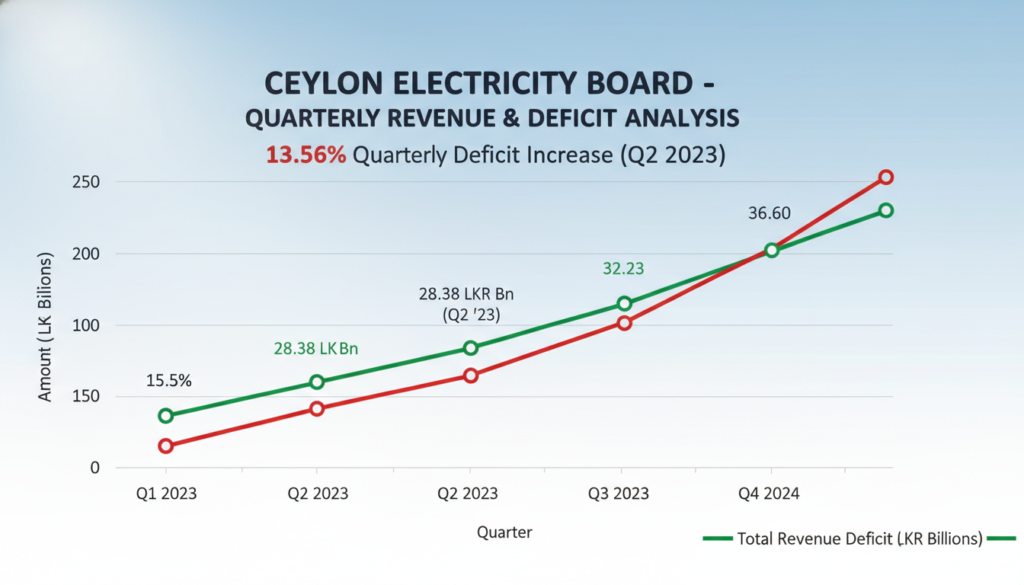
It seeks a 13.56% tariff increase for the period from April 1 to June 30. This would adjust prices for all consumer categories if approved.
The move aims to address a pressing financial gap. The CEB argues that current charges do not cover the actual cost of supplying power.
Breaking Down the Projected Revenue Deficit
The core justification lies in the numbers. The utility forecasts a total supply cost of Rs. 136.5 billion for the quarter.
Revenue collected at existing rates, however, is estimated at only Rs. 116.9 billion. This creates a projected revenue deficit of approximately Rs. 15.8 billion.
Several factors drive this gap. Volatile global fuel prices are a primary concern for thermal generation.
Variable rainfall also affects hydropower output, another key source. These, combined with other operational costs, make electricity generation more expensive.
The deficit figure is central to the CEB’s argument for a revision. It represents the shortfall that must be managed.
Proposed New Rates for Domestic Consumption Slabs
For homes, the increase would apply across the standard progressive consumption slabs. Higher usage tiers face steeper per-unit charges.
The proposed new domestic tariffs illustrate the scale of the change. Here is how the per-unit rates would shift:
- 0-30 units: From Rs. 4.50 to Rs. 5.11
- 31-60 units: From Rs. 8.00 to Rs. 9.08
- 61-90 units: From Rs. 18.50 to Rs. 21.01
- 91-120 units: From Rs. 24.00 to Rs. 27.25
- 121-180 units: From Rs. 41.00 to Rs. 46.56
- Over 181 units: From Rs. 61.00 to Rs. 69.27
This structure means the absolute rupee increase is smallest for the lowest usage band. The design intends to cushion lower-income households.
The Ceylon Electricity Board’s entire proposal is now under intense scrutiny. The regulator will assess if the tariff increase is necessary and proportional.
Their final decision will determine whether these new rates take effect. The CEB has laid out its case based on its revenue and cost projections.
How the Public Consultation Process Works
Before any binding outcome is reached, the regulator has opened a formal channel for stakeholder input. The Public Utilities Commission of Sri Lanka (PUCSL) is running a structured review. This step gathers views before finalizing its position.
This formal consultation is a standard part of major utility reviews in Sri Lanka. It allows the utilities commission to collect evidence from all sides. The goal is to make an informed and balanced decision.
Submitting Written Comments and Proposals
One primary method for involvement is through written feedback. Comments on the tariff revision request are accepted until May 6, 2026.
Stakeholders have several convenient options to send their views. The official consultation paper details these channels.
- Postal Mail: Send documents to the PUCSL’s official address.
- Email: Submit digital files via a dedicated inbox.
- WhatsApp: Use the messaging service for text or document submissions.
- Fax: Transmit pages directly to the commission’s office.
This flexible approach ensures broad access for consumers and businesses nationwide. All written input is compiled for official review.
Oral Hearings at the BMICH: Registration Required
For direct verbal presentation, an in-person session is scheduled. It will be held at the Bandaranaike Memorial International Conference Hall (BMICH) in Colombo.
Participation in this oral hearing is not automatic. Prior registration is mandatory for anyone wishing to speak.
Interested parties must call 076 427 1030 to secure a slot. This allows them to present views directly to the Commission members.
This mix of written and oral feedback captures diverse perspectives effectively.
The entire process is designed to be inclusive. Individual users, consumer groups, industry bodies, and others can contribute.
All gathered feedback will be formally assessed by the public utilities regulator. It forms a key part of their evidence-based analysis for the upcoming ruling.
This multi-faceted approach underscores a commitment to transparency in Sri Lanka’s utility sector.
The Economic Factors Driving the Tariff Revision
The rationale for changing consumer rates stems from a significant imbalance between operational expenses and collected income. This situation is not driven by a single issue but by a confluence of economic factors. These pressures form the essential backdrop for the regulator’s upcoming decision.
Understanding these drivers helps clarify why such adjustments are even under consideration. The focus is on the fundamental costs of producing power and the revenue needed to sustain the system.
Rising Global Fuel Prices and Generation Costs
A primary driver is the sharp rise in the expense of electricity generation. This is heavily influenced by global fuel prices. The nation relies on imported fuel for a substantial portion of its energy mix.
When international prices climb, the cost to produce power domestically follows. This volatility is a constant challenge for planners.
Generation expenses are also sensitive to local conditions. Fluctuating exchange rates can amplify import costs. Furthermore, the availability of cheaper hydropower depends on seasonal rainfall patterns.
This makes the overall energy supply chain vulnerable to weather and market shifts. These interconnected issues directly pressure the financial health of the sector.
The Rs. 38 Billion Deficit and the Government’s Rs. 15 Billion Subsidy
The PUCSL’s assessment reveals the scale of the challenge. It estimates a massive revenue deficit of Rs. 38 billion for the National System Operator. This shortfall is projected for the second and third quarters of 2026.
This figure highlights the gap between the money needed to run the system and the income from current rates. It is a central piece of news in this revision process.
In response, the government of Sri Lanka has taken a fiscal step. It has committed a Rs. 15 billion subsidy from the Treasury. This injection aims to cover a portion of the overall deficit.
The subsidy has a clear protective goal. According to the regulator, it would prevent any tariff increase for about 95% of consumers. This large group includes most households and religious institutions across the country.
Other categories are also shielded under this framework. Specific public services, government institutions, and tourism hotels using under 180 units monthly would see no change. The first sub-category of industrial users is also protected.
It is important to note that the Rs. 38 billion deficit calculation does not include potential extra costs. Issues like coal supply complications could add further pressure. These economic factors collectively frame the CEB’s formal proposal.
The situation illustrates the ongoing balance between recovering legitimate operational costs and keeping energy affordable for the people and businesses of Sri Lanka.
What the Upcoming Decision Means for Consumers and the Economy
This regulatory outcome carries weight far beyond a simple percentage adjustment on a utility bill. The final decision will directly shape monthly budgets for families and operational costs for companies across Sri Lanka.
For domestic users, the confirmed rates will influence spending and could encourage more mindful energy use. Businesses will factor the new power costs into their production and pricing plans for the coming quarter.
The ruling is also crucial for the Ceylon Electricity Board’s financial viability. It affects funds for system upkeep, fuel purchases, and future investments. The government’s Rs. 15 billion subsidy aims to soften the blow for protected groups.
At a national level, affordable energy is key for production and inflation. The cost of power influences economic competitiveness during a period of recovery.
All parties should await the official announcement on May 9. The result will highlight the ongoing challenge of balancing a sustainable utility sector with public affordability.