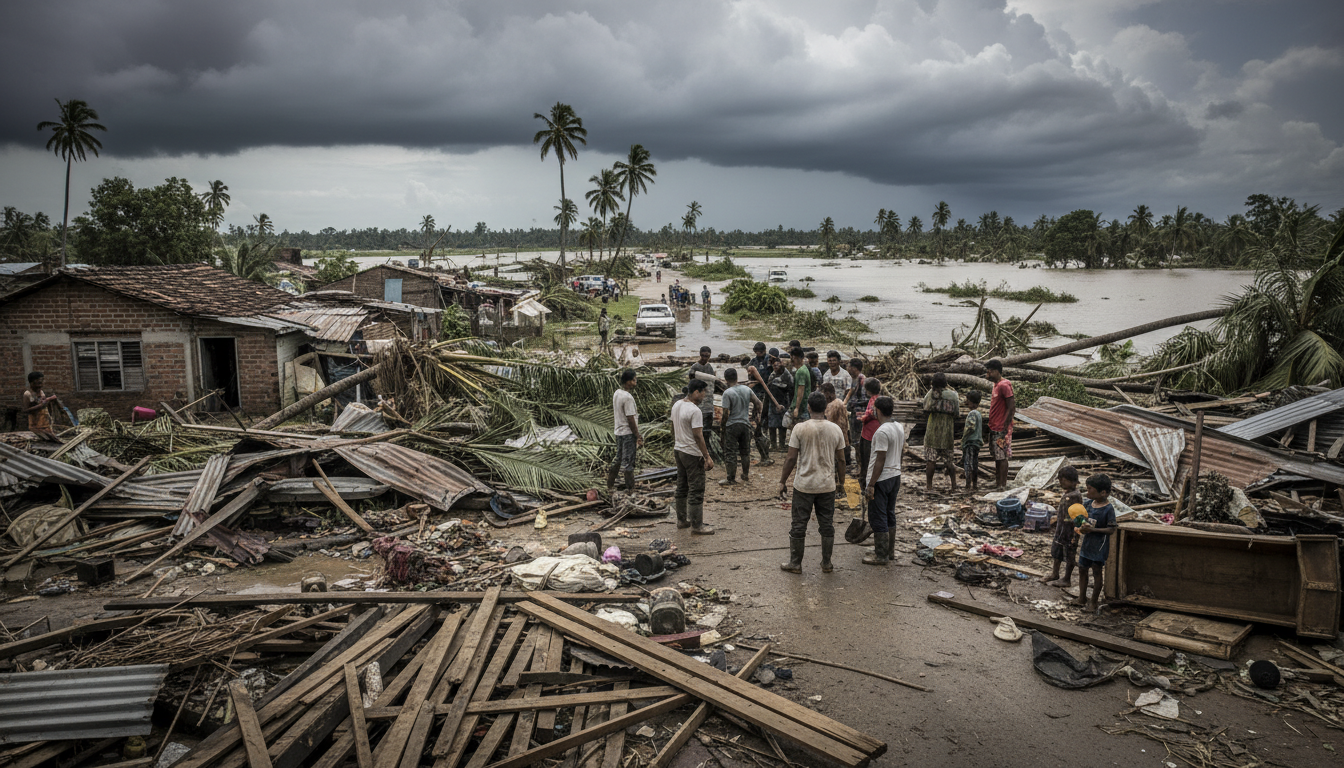
A devastating tropical system has left a trail of destruction across the island nation. The event caused extensive loss of life and widespread damage, creating a severe humanitarian crisis.
The scale of the catastrophe has prompted an urgent appeal for global assistance. A formal United Nations plan calls for $35.3 million to scale up life-saving aid for affected communities.
This funding is critical for addressing immediate needs and starting recovery efforts. The government is coordinating with international partners to manage the response.
The situation represents one of the most significant natural disasters to hit the country in recent years. Millions of people require support to rebuild their lives.
The focus is now on a coordinated, effective response from the global community. Objective reporting on these efforts helps citizens understand the path forward.
UN Launches $35.3 Million Appeal for Cyclone Ditwah Victims
A detailed humanitarian blueprint now guides the international response to the disaster. The United Nations has formally activated a $35.3 million appeal to fund critical aid operations.
This plan, known as the Humanitarian Priorities Plan (HPP), provides a structured framework for delivering assistance. It is designed to work alongside the national government’s own recovery efforts.
Humanitarian Priorities Plan Targets 658,000 Vulnerable People
The core objective is to reach an estimated 658,000 of the most vulnerable people. These individuals were identified through joint, rapid assessments of community needs.
Support under the HPP is multi-sectoral, addressing the most urgent life-saving requirements. The covered areas include food security and nutrition, health services, and clean water and sanitation.
Further priorities are temporary shelters, non-food items, protection services for at-risk groups, and restoring access to education. A component for early recovery is also included to help communities restart their livelihoods.
Funding to Cover Life-Saving Aid Through April 2026
The plan outlines activities from December 2025 through April 2026. This timeline recognizes that relief and recovery extend far beyond the initial emergency phase.
An initial contribution of $4.5 million from the UN Central Emergency Response Fund (CERF) has been allocated. However, significant funding gaps remain to fully implement the plan.
Marc-André Franche, the UN Resident Coordinator in the country, emphasized the storm’s disproportionate impact. “The cyclone has hit the poorest communities the hardest,” he stated, underscoring the targeted nature of the assistance.
This coordinated appeal ensures a planned, sustained effort to help affected people rebuild their lives with dignity.
The Staggering Human Toll of Cyclone Ditwah
Beyond the immediate damage, the storm’s legacy is measured in profound personal loss and displacement.
Verified data from national authorities details a catastrophic human cost. The numbers provide a stark view of the event’s impact on communities.
Over 600 Lives Lost and Nearly 200 Missing
The confirmed death toll stands at over 600. Nearly 200 more individuals remain unaccounted for.
This makes it one of the deadliest natural disasters in recent memory. At its peak, the cyclone affected close to 2.2 million people.
Many lives were lost due to sudden flooding and landslides. Rescue teams continue to face difficult conditions in search operations.
Widespread Displacement: Damaged Homes and Crowded Shelters
The storm damaged or completely destroyed more than 91,000 homes. This massive loss of housing is a primary driver of the current crisis.
Over 85,000 residents now live in temporary safety centers. These crowded shelters have become a necessary refuge for many families.
Ongoing monsoon rain and active landslide warnings prevent a safe return. Continued bad weather blocks access to many areas.
For those whose homes are gone, the path to recovery will be long. The immediate focus remains on providing secure, basic living conditions.
Government of Sri Lanka Formally Appeals for International Assistance
Leading the response, the government has officially reached out to the world community for crucial assistance. This formal appeal marks a critical step in scaling up the national response to the widespread crisis.
The request for international assistance aims to bolster domestic capacities overwhelmed by the scale of need. It formalizes the partnership between local authorities and global aid agencies.
Disaster Management Centre Coordinates with Armed Forces
The national disaster management centre (DMC) is the operational hub for all relief activities. Under Director-General Sampath Kotuwegoda, the DMC directs the complex disaster management efforts on the ground.
Thousands of personnel from the army, navy, and air force have been mobilized. Their primary mission involves large-scale rescue operations and the distribution of essential supplies to cut-off communities.
Specific actions include mandatory evacuation orders for residents along the Kelani River banks. State-run safety centers have been activated to provide immediate shelter for displaced families.
Diplomatic Outreach to Colombo-Based Envoys
Prime Minister Harini Amarasuriya has held urgent meetings with diplomats based in Colombo. The discussions focused on galvanizing direct, state-level support for the relief and recovery efforts.
This diplomatic push complements the work of humanitarian organizations already active in the worst-hit areas. Ground responders report that needs are escalating rapidly.
Mahesh Gunasekara of the Sri Lanka Red Cross Society highlighted the ongoing challenges. “People remain stranded in isolated locations, and the demand for basic relief continues to grow,” he stated.
The nationally-led mechanism demonstrates a clear chain of command. It is designed to efficiently channel both domestic and external resources to where they are needed most.
International Community Mobilizes Relief for Sri Lanka
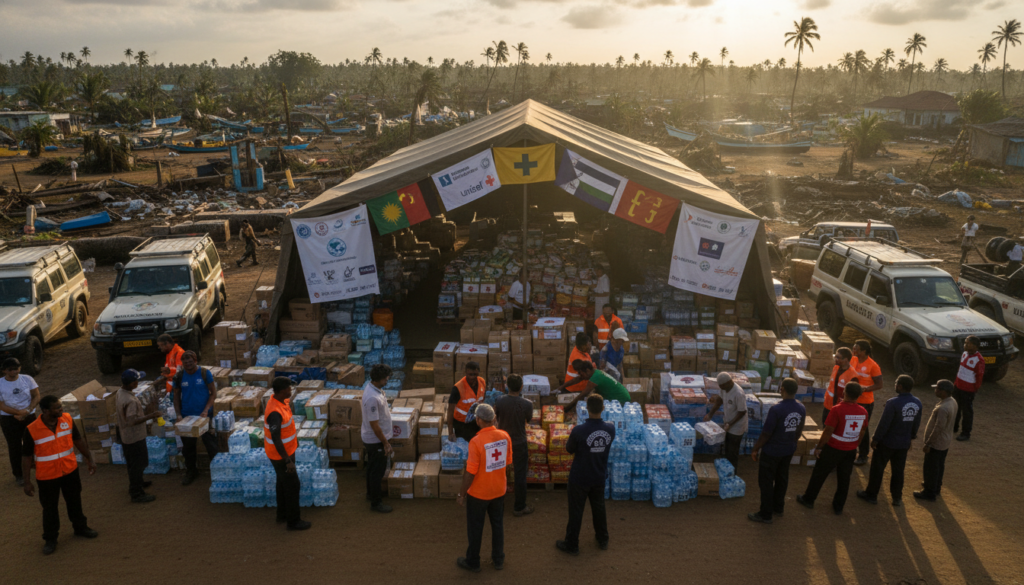
The world’s response to the catastrophe involved both nearby nations and major institutions. This swift mobilization of international assistance followed the formal appeal from the affected country.
Regional Neighbors Lead with Immediate Rescue and Supplies
India acted rapidly, sending two planeloads of relief supplies. A naval ship also delivered essential rations to support the aid operation.
Other regional partners like Pakistan, Bangladesh, and Myanmar provided crucial help. Japan, the United States, Canada, the United Kingdom, and the UAE contributed rescue helicopters, food, medicines, and tents.
Indian Prime Minister Narendra Modi affirmed his nation’s solidarity. “We stand with our neighbors and will continue to provide necessary aid,” he stated.
Financial Institutions Expedite Funding and Loans
Major global banks and agencies activated their support mechanisms. The Asian Development Bank (ADB) and the World Bank offered immediate funding for recovery.
Organizations like UNICEF focused on restoring critical facilities for children. Their work complements on-the-ground rescue and relief operations.
The International Monetary Fund (IMF) is expediting its next loan tranche. It is also considering an additional $299 million to bolster economic stability.
This financial aid is vital for long-term rebuilding efforts. It helps the national response address large-scale needs effectively.
Beyond Immediate Rescue: Compounding Vulnerabilities
The disaster has opened two critical fronts: public health and community safety. Addressing these compounding needs is essential to prevent a deeper crisis.
Heightened Health Risks and Food Insecurity
Stagnant flood water and damaged sanitation systems create a high-risk environment. This significantly elevates the threat of water- and vector-borne disease outbreaks among displaced people.
Concurrently, widespread agricultural loss and broken supply chains severely impact food security. Crop destruction and market disruptions reduce both availability and household incomes. Long-term recovery must include strategies for sustainable economic growth to rebuild resilient food systems.
Protection Concerns for Women, Children, and the Elderly
Crowded temporary shelters present specific dangers. The risks of sexual and gender-based violence increase for women and girls in these congested settings.
An estimated 462,000 children are among those affected. Their access to essential services like education and healthcare has been severely disrupted.
The strain intensifies for families already facing difficulties before the storm. Targeted aid interventions are crucial to protect these vulnerable groups and provide safe pathways to recovery.
Economic and Infrastructure Damage is Extensive
Assessments now reveal catastrophic losses across productive sectors and public assets. The scale of this damage presents a multi-faceted crisis for livelihoods and national productivity.
Rebuilding efforts must address harm to both the economy and the physical systems connecting communities. Concrete figures from official reports underscore the immense reconstruction task ahead.
Agriculture and Key Industries Suffer Major Blows
The agricultural sector absorbed a severe loss. Over 530,000 hectares of paddy land were inundated by floods.
Localities like Dimbulagala in Polonnaruwa were among the worst-hit areas. That single district saw 23,000 hectares of rice fields underwater.
Other heavily impacted zones include Welikanda and Medirigiriya. The poultry industry was also decimated, wiping out a critical protein source and income for many families.
Industrial reports detail widespread commercial devastation. A total of 138 large, 718 medium, 1,134 small, and 1,009 micro enterprises reported major setbacks.
The district of Gampaha recorded the highest concentration of this industrial damage. This blow to manufacturing and trade will affect the national economy for months.
Critical Infrastructure Like Roads and Universities Flooded
Essential public infrastructure was not spared. The University of Peradeniya campus was flooded, disrupting higher education.
Transport networks faced severe obstruction. In the Ududumbara area of Kandy, 135 landslides were recorded.
These landslides blocked key roads leading to major cities like Kandy and Nuwara Eliya. This directly hindered access for rescue teams and relief supply deliveries.
The destruction of infrastructure complicates every phase of recovery. It isolates communities and delays the restoration of basic services.
For many, the home is gone, and the path to normalcy is blocked. The focus must now include rebuilding these vital arteries of commerce and daily life.
A Long Road to Recovery: Assessing the Full Scope
United Nations development experts have released a crucial analysis pinpointing the areas facing the toughest recovery challenges. This comprehensive assessment maps the full geographic and social footprint of the recent catastrophe.
The data provides a vital blueprint for medium and long-term rehabilitation planning. It moves the focus from immediate rescue to sustained rebuilding.
UNDP Analysis Reveals Convergence of Floods, Landslides, and Poverty
The United Nations Development Programme (UNDP) conducted a detailed geospatial analysis. Its findings reveal the staggering scale of the natural disaster.
The event inundated an estimated 1.1 million hectares of land. It also triggered nearly 1,200 separate landslides across the country.
A critical insight from the report is the concept of convergence. The greatest early recovery needs are in areas where these floods and landslides intersect with pre-existing socioeconomic vulnerability.
This overlap creates acute, compounded challenges for local communities. Specific Divisional Secretariats like Mundel and Arachchikattuwa in Puttalam district, and Kandavalai in Kilinochchi, are highlighted.
Early Recovery Needs Focus on Livelihoods and Basic Services
The core of the early recovery phase is restoring basic incomes and livelihoods for affected people. This is an urgent need to prevent a deepening crisis.
Recovery is not just about rebuilding damaged structures. It must address the deeper socioeconomic vulnerabilities the storm exposed.
Restoring access to essential services like clean water, healthcare, and education is fundamental. This work requires targeted, long-term investment and planning.
The analysis provides a forward-looking, evidence-based perspective. It shows where and how recovery efforts must be focused for maximum impact over time.
Foreign Aid to Bolster Sri Lanka’s Economic Resilience
International financial assistance is becoming a critical lifeline not just for relief, but for overall economic stability. This support helps the nation manage the dual pressures of a massive humanitarian emergency and a sudden economic shock.
The scale of the flooding has placed immediate strain on key financial indicators. Central bank data shows a clear impact on the country’s financial buffers.
Support for Declining Foreign Exchange Reserves
Gross external reserves fell from $6.2 billion in October to $6.0 billion in November. This drop reflects the early economic toll of the disaster.
Analysts expect reserves to dip further in the coming months. The main drivers are a widening trade deficit and lower tourism earnings.
Foreign aid and remittances from overseas workers are now vital counterweights. These inflows are expected to provide crucial support for the national treasury.
Addressing the Widening Trade Deficit Post-Disaster
The catastrophe directly worsens the trade balance. The need for essential imports like food and building materials has surged.
At the same time, key export sectors and the valuable tourism industry have suffered a major loss. This combination puts downward pressure on the currency.
A high proportion of incoming financial aid will be spent on these necessary post-flood imports. This pragmatic use of funds stabilizes supply chains.
With this support, reserves may recover to around $7.5 billion by the end of the year. This projection, noted in reports following a recent IMF mission, offers a measure of optimism.
The situation carries echoes of the 2004 tsunami, which also struck when Sri Lanka’s reserves were low. External support played a similar stabilizing role then.
This financial assistance provides a critical buffer for the government. It helps manage a stressful economic period while rebuilding efforts gain momentum.
Rebuilding with Dignity: The Path Forward for Sri Lanka
Moving forward, the primary focus shifts from immediate rescue to the complex, long-term work of rebuilding communities. The monumental task of recovery and reconstruction will test the nation’s resolve for years.
The United Nations has emphasized helping families rebuild their lives with dignity and resilience. This goal guides the transition from emergency relief to sustainable rehabilitation.
The response from local people has been exemplary. Their solidarity in the face of floods and landslides provides a strong foundation for recovery.
Sustained external assistance remains crucial to match the scale of needs. Restoring livelihoods, roads, homes, and education services requires coordinated effort.
Recovery is a marathon, not a sprint. It demands continued commitment over time to heal communities and build a more resilient future.