A significant adjustment to national energy rates took effect on April 1. The Public Utilities Commission of Sri Lanka (PUCSL) confirmed the revision, which will lead to higher charges for many users.
The state-owned Ceylon Electricity Board (CEB) had initially sought an across-the-board hike of over 13.5%. After review, the regulator approved a more moderated increase of 8.5% for households and industries.
This decision followed a period of public consultation. The commission analyzed the tariff proposal, balancing the utility’s rising operational costs with consumer protection concerns.
The change comes amid broader economic pressures. It aims to address financial stability for the power sector while impacting monthly expenses. The move has sparked considerable public discussion and news coverage.
This introduction sets the stage for a detailed look at the new rate structure. It will explore specific effects on different user categories and related conservation guidelines within the nation’s economic strategy.
PUCSL Approves Electricity Tariff Hike Effective Immediately
The independent commission has concluded its review of the utility’s financial request. The Public Utilities Commission of Sri Lanka (PUCSL) gave its final approval for a revised pricing structure.
This change took effect from the Monday immediately following the decision. It impacts billing cycles without delay.
Commission Reviews CEB Proposal and Public Feedback
The Ceylon Electricity Board (CEB) initially submitted a tariff revision request. It sought an average increase exceeding 13.5% for all user categories.
The utilities commission sri lanka then opened the matter for public consultation. After analyzing feedback and the utility’s cost data, the regulator moderated the hike.
The approved average adjustment was set at 8.5% for domestic and industrial users. This balanced the CEB’s operational needs with public affordability concerns.
Tariff Structure: Increases for High-Consumption Consumers Only
The new scheme is highly targeted. There is no tariff increase for any consumer using between 0 and 180 units per month.
For those whose usage exceeds 180 units, an 18% hike applies. This affects bills for the remainder of the second quarter and all of the third quarter in 2026.
Commission data indicates the effective rise for some high-usage households could reach 25%. The policy clearly aims to shield low-consumption families from higher costs.
The rationale focuses on the power sector’s financial health. Rising fuel and operational expenses threatened the CEB’s stability.
A provision exists for future adjustments. If fuel prices jump sharply and CEB costs climb by over 15%, a new proposal can be submitted.
The Public Utilities Commission maintained its role as an objective arbitrator. It weighed utility viability against the economic pressure on consumers.
How Rising Power Bills Impact Sri Lankan Households
Household budgets will feel the effect of the new rates differently, depending on monthly consumption. The regulator’s decision creates two primary groups of residential users.
One group faces significantly higher charges. The other sees no change at all.

This tiered approach directly ties financial impact to energy use. It is a core feature of the recent electricity tariff revision.
Significant Cost Jump for Users Exceeding 180 Units
For families using more than 180 units per month, the bill increase is substantial. The approved tariff hike applies an 18% rise to all consumption above that threshold.
In practice, the total bill impact can reach 25%. This happens because the higher rate affects a larger portion of a high-consumption household’s usage.
Consider a typical home that uses 250 units in a month. Their new bill could be several thousand rupees higher than before.
Crossing the 180-unit mark is common for homes with multiple appliances. Air conditioners, water heaters, and refrigerators all contribute to higher usage.
The policy aims to encourage conservation among these consumers. Higher prices for extra usage act as a direct financial signal.
Stable Rates for Low-Usage Categories: 0 to 180 Units
There is no tariff increase for any consumption between 0 and 180 units. This stability protects a large portion of the population.
Many households, especially those with modest means, stay within this band. Their monthly expenses for electricity will not change.
The government and regulator designed this to shield vulnerable consumer categories. It minimizes the burden during a time of broader economic pressure.
Average monthly usage patterns show many families consume below 180 units. For them, the electricity tariff revision has no immediate effect.
This structure supports the power sector’s need for revenue while being fair. It asks more from those who use the most resources.
The coming year will test how well this balance works. Household costs and utility finances will be watched closely.
Energy Conservation Mandates to Ease Grid Pressure
Alongside the new pricing structure, the government has issued strict conservation mandates to reduce strain on the national grid. These rules form a parallel strategy to the financial tariff hike.
They aim to lower overall demand, especially during peak hours. This helps prevent potential blackouts and stabilizes the system.
The Commissioner General of Essential Services announced the guidelines. They target both the public sector and general commercial activity.
This approach addresses the immediate need to manage electricity supply. It complements the revision in prices for high-usage consumers.
State Sector Guidelines: AC Shutdowns and Lighting Controls
All state institutions must switch off air conditioning systems by 3 p.m. daily. This is a key rule to cut energy usage during the afternoon peak.
The order applies to government offices and public buildings. It is designed to lead by example in conservation efforts.
Local councils have a separate mandate. They must turn off street lights between 6 p.m. and 10 p.m.
This time window is typically one of high demand. Reducing public lighting costs eases pressure on the power network.
These steps are enforceable directives, not suggestions. The goal is a tangible drop in national consumption.
Restrictions on Public Events and Advertising Hoardings
Illuminated advertising hoardings must be switched off by 8 p.m. each night. This reduces non-essential commercial electricity draw after dark.
Another significant rule bans using the national grid for large gatherings. Any public function with more than 100 participants cannot draw power from the main supply.
Organizers must find alternative energy sources for such events. This directly targets sporadic, high-demand activities.
The Commissioner General of Essential Services oversees compliance. These government measures are part of a broader strategy for Sri Lanka‘s energy stability.
Together with the tariff increase, they form a two-pronged response. One uses price signals, the other uses operational controls.
The effect is intended to balance supply and demand across the sector. This pragmatic response addresses current constraints without political favoritism.
Broader Economic Context and Future Adjustments
Sri Lanka’s energy sector adjustments are deeply connected to external factors, including volatile global fuel markets. The recent tariff decision is conditional. If generation costs jump by over 15%, a new proposal can be submitted.
Fuel supply remains a challenge. A QR code rationing system was introduced earlier. The government is also in talks with Russia for crude oil, as the West Asia war disrupts supply chains.
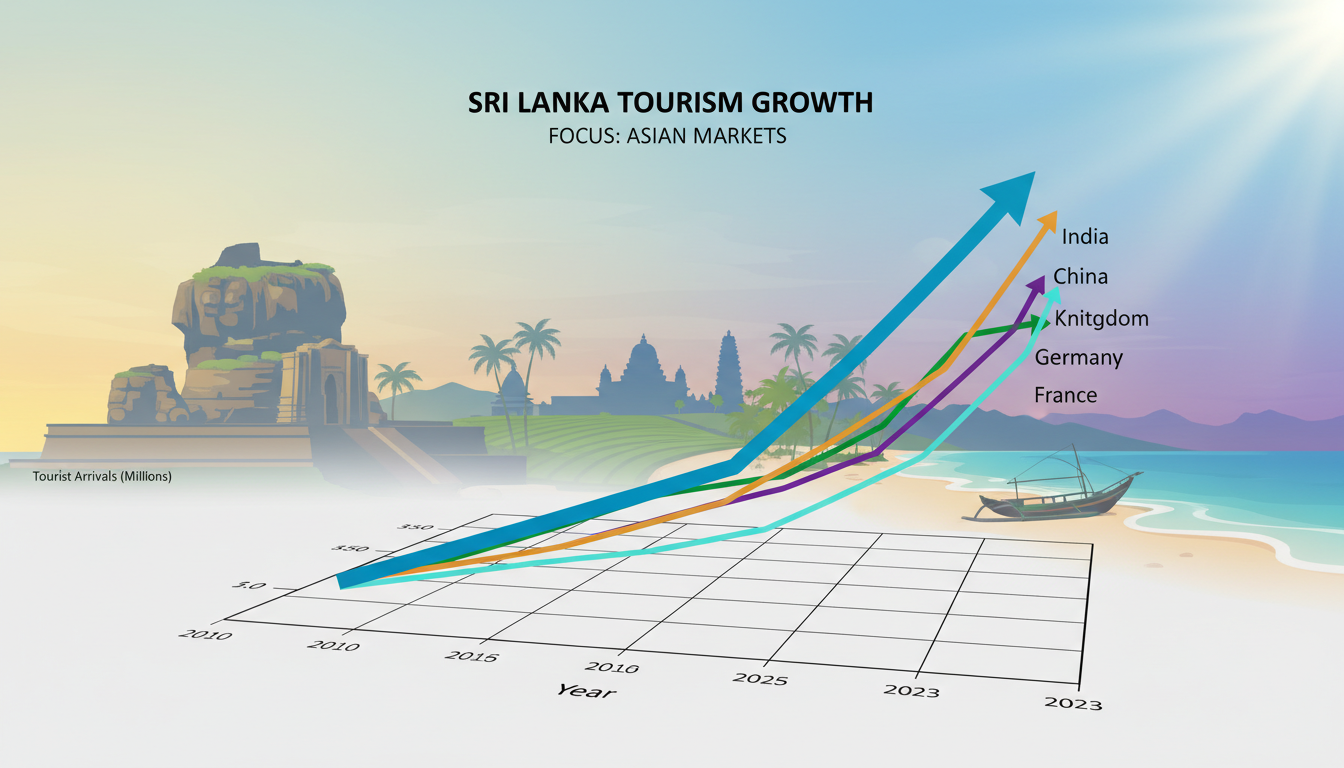
These pressures spill into other sectors. Tourist arrivals fell by over 18% this year by late March. Regional conflict directly impacts this vital consumer industry.
These interconnected issues illustrate the complex pressures on utility finances. The stability of electricity prices remains tied to unpredictable international prices. Understanding these links is key to following broader economic recovery efforts.