For the island nation, the travel industry stands as a major economic pillar. It drives a significant portion of GDP, brings in foreign exchange, and supports countless jobs across the country.
Recent years have tested this vital sector severely. The 2019 Easter bombings, the global pandemic, and a deep economic crisis in 2022 caused visitor numbers to collapse. At one point, arrivals fell by a staggering 92%.
This presents a core national challenge. More tourists coming back does not automatically mean more money for the Sri Lankan economy. The critical issue is the amount each visitor spends.
The path forward requires a strategic shift. Moving from budget travel to attracting higher-spending guests could boost income per tourist. This approach frames tourism not just as a recovery tool, but as a potential engine for sustainable, high-value economic growth in the years ahead.
The Central Role of Tourism in Sri Lanka’s Economy
Recognized formally for decades, the visitor industry is a cornerstone of the national economy. Its quantitative importance for gross domestic product, employment, and foreign currency is immense.
This sector is often labeled the nation’s ‘Engine of Growth’. The government established it as a separate economic sector in 1966, highlighting its strategic priority.
Tourism as a Key GDP Contributor and Employment Generator
The direct contribution of travel and tourism to Sri Lanka’s GDP shows a clear upward trend. It increased from 2.5% in 2000 to 5.9% by 2019.
This growth underscores the sector’s expanding role in economic growth. At its pre-pandemic peak in 2018, the industry contributed 5.6% of GDP.
The collapse in 2020 was severe, with contribution falling to 0.8%. This illustrates the vulnerability of this tourism development pillar.
On the employment front, the tourism sector is a major generator of livelihoods. It supported roughly 403,000 jobs directly and indirectly in 2019.
At its historical peak, the industry is estimated to have supported up to 3 million jobs. This impact stretches across hotels, transport, food services, and handicrafts.
Foreign Exchange Earnings: A Critical Revenue Stream
Earnings from international visitors represent a vital foreign exchange source for the country. In 2018, this revenue stream reached US$4.4 billion.
That year, over 2.3 million visitors generated this critical income. Tourism is the third-largest source of foreign exchange reserves.
It trails only worker remittances and the apparel industry. This position gives it a crucial role in balancing national payments.
These foreign exchange earnings help fund essential imports and stabilize the Sri Lankan economy. Their sudden loss can create a crisis.
The 2020 earnings collapse exacerbated an existing foreign reserve shortage. It showed the high vulnerability of this revenue stream to external shocks.
Academic frameworks like the Tourism-Led Growth (TLG) hypothesis treat tourism as a strategic non-traditional export. This theory aligns with the sector’s real-world impact here.
For the tourism industry to fulfill its central economic role, a strategic shift is necessary. Maximizing income from each visitor is now essential, not just boosting arrival numbers.
A Historical Journey: From War to Tourism Recovery
The story of Sri Lanka’s tourism sector is deeply intertwined with its modern history, marked by conflict and resurgence. For decades, the potential of this industry was stifled by a challenging environment.
A 26-year civil war created significant security concerns. These concerns limited international promotion and kept visitor numbers low for a long time. The country’s famous beaches, ancient ruins, and rich wildlife remained under-promoted globally.
Post-2009 Civil War: A New Dawn for Tourism
The end of the conflict in 2009 was a pivotal turning point. Peace restored the island’s appeal as a safe and attractive destination. This allowed for a fundamental shift in strategy.
The government and industry could finally launch ambitious promotion campaigns. Significant investments flowed into hospitality infrastructure and transport links. A major security overhaul helped rebuild traveler confidence worldwide.
Strategic frameworks guided this revival. The Third Tourism Master Plan (2008) and later “Vision 2025” provided a roadmap. These plans focused on systematic tourism development and market diversification.
Milestones and Growth Phases in Tourist Arrivals
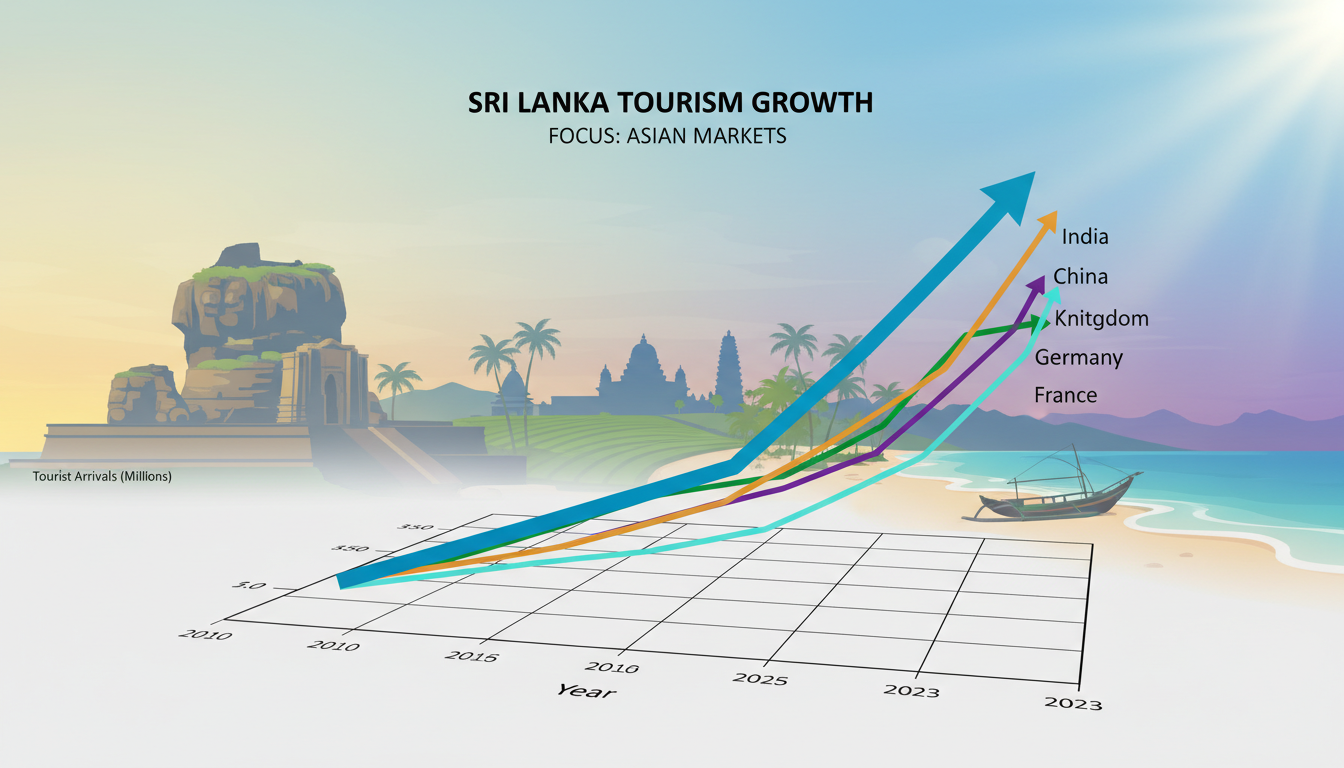
The data tells a story of rapid expansion. From a low base after the war, tourist arrivals surged to over 1.7 million by 2015. This represented a staggering 300% growth in just six years.
This boom was driven by the nation’s unique selling points. Targeted marketing highlighted cultural heritage, rainforests, and coastal beauty. The record pre-pandemic year came in 2018, with over 2.3 million visitors.
This period of success, however, had underlying strains. The focus was often on increasing volume quickly. Infrastructure in popular areas sometimes struggled to keep pace with the influx.
The rapid growth phase set the stage for later challenges. It showed how far Sri Lanka tourism had come but also revealed its fragility. External shocks would soon test the resilience built during this recovery time.
The historical context is crucial. It shows the tourism industry’s capacity for remarkable recovery. It also highlights why maximizing value from each visitor is the next necessary step for the country.
Quantifying the Impact: Data on Tourist Arrivals and Revenue
Statistical trends provide a clear picture of the sector’s volatility and its economic consequences. Official figures reveal sharp peaks and deep valleys in both visitor numbers and income.
This analysis relies on reports from the Sri Lanka Tourism Development Authority and the Central Bank. The data underscores a critical lesson for economic growth.
Pre-Pandemic Peak vs. Post-Crisis Declines
The industry reached its highest point in 2018. That year, over 2.3 million tourists visited, generating a record $4.4 billion in revenue.
This peak was short-lived. The Easter Sunday attacks in 2019 caused an immediate 70% drop in the number of arrivals that May.
The global pandemic then triggered a near-total collapse. By 2021, tourist arrivals had plummeted by 92%, falling to roughly 194,500 for the entire year.
Recovery has been slow and uneven. In February 2023, the tourism development authority reported 107,639 arrivals.
The foreign exchange earnings from travel tourism suffered even more. Income fell from $3.6 billion in 2019 to less than a fifth of that two years later.
This drastic decline worsened the nation’s financial crisis. It highlighted the sector’s extreme sensitivity to external shocks.
Analysis of Revenue per Tourist and Market Comparisons
Merely counting arrivals gives an incomplete picture. The more vital metric is how much each guest spends during their stay.
Historical data suggests that higher growth in visitor number did not always mean proportionally higher spending. The country must increase its average revenue per tourist to boost economic growth.
Comparisons with other regional destinations are instructive. The island’s average spend per visitor has often lagged behind competitors.
Market composition adds another layer of complexity. By January 2022, Russia and Ukraine accounted for over 25% of all visitors.
This was a sharp increase from less than 10% in early 2018. This reliance on a narrow set of markets proved risky when conflict erupted.
Key European and Chinese source markets also contracted during this period. Diversifying the visitor base is now a strategic priority for Sri Lanka tourism.
The path forward requires a dual focus. Stabilizing tourist arrivals is important, but boosting the revenue from each one is essential.
A strategic shift towards higher-value segments within Sri Lanka tourism is the logical conclusion from this analysis.
Major Challenges Hindering Revenue Maximization
A series of internal and external barriers currently limit the financial yield from each tourist. These obstacles prevent the tourism industry from reaching its full potential as a driver of economic growth.
Addressing these factors is a prerequisite for increasing income per visitor. The challenges are interconnected and require coordinated solutions.
Political Instability and Security Concerns
Perceptions of safety are paramount for international travelers. Events like the 2019 Easter bombings created a severe shock to confidence.
That incident led to immediate travel advisories and a 70% drop in arrivals the following month. Such crises create a negative image that deters visitors and investors for a long time.
Historical conflicts and periodic political unrest add to this perception problem. The government must work consistently to project an image of stability. This is vital for the nation’s reputation as a reliable destination.
Infrastructure Deficiencies: Roads, Accommodation, and Transport
The physical foundation for high-value travel remains inadequate in many areas. Studies highlight limited high-quality accommodation and poor road or rail links.
Many hotels lack the international standards expected by premium tourists. Transport networks between key attractions are often slow and congested.
This undermines the overall visitor experience. Without significant investment in infrastructure, the country struggles to cater to guests willing to spend more. Upgrading these systems is a core part of any tourism development strategy.
Skilled Labor Shortage and Workforce Migration
A shortage of trained professionals affects service quality across the sector. The gap in hospitality skills limits the ability to offer sophisticated, high-end experiences.
This problem is worsened by brain drain. Skilled workers frequently seek better opportunities abroad, exacerbating local shortages.
The migration of talent weakens the lanka tourism sector’s human capital. Training programs must be enhanced to build a capable workforce that stays within the sri lankan economy.
Environmental Degradation and Overdevelopment
Unsustainable building practices threaten the natural assets that attract visitors. Overdevelopment in coastal areas has led to habitat loss and community disruption.
Pollution and strain on local ecosystems degrade the very products the tourism market sells. Beaches and wildlife sanctuaries face pressure from unchecked growth.
Protecting these resources is not just an environmental issue. It is an economic imperative for the long-term health of the tourism industry. Balancing development with preservation is a crucial role for planners.
Collectively, these challenges lower the quality of the tourist experience. They restrict the ability to charge premium prices and make the entire sector more vulnerable to shocks like the covid-19 pandemic.
Tackling them is essential for any strategy aimed at boosting revenue per arrival. The next steps for sri lanka tourism depend on confronting these issues directly.
A critical examination reveals why increasing visitor numbers often fails to translate into proportional financial gains for the nation. The path to greater income is blocked by identifiable structural and external barriers.
This analysis assesses these specific obstacles. It explores why more footfall does not automatically mean more money for the national treasury.
Can Sri Lanka Turn Tourist Arrivals into Higher Revenue? Assessing the Barriers
Answering the central question requires a clear look at what holds back revenue despite recovery in arrivals. Two major categories of barriers exist: a persistent internal disconnect and devastating external shocks.
The Disconnect Between Arrival Numbers and Spending
Historically, the industry’s strategy often prioritized quantity over quality. Marketing campaigns and package deals attracted a large volume of budget-conscious travelers.
These guests typically book shorter stays and spend minimally on local experiences. The average length of visit and per-day expenditure have remained low compared to regional peers.
The product mix available to visitors has lacked diversity. Limited high-value offerings, like luxury eco-lodges or curated cultural immersions, restrict spending opportunities.
This focus on volume created a fragile foundation for economic growth. A surge in tourist arrivals did not guarantee a similar surge in total revenue.
Competitor destinations in the Indian Ocean often achieve higher average spending per guest. They successfully market exclusive experiences that command premium prices.

External Shocks: COVID-19 and Global Conflicts
Events beyond the nation’s control have repeatedly devastated the tourism sector. The COVID-19 pandemic was the most severe recent example.
Global travel restrictions in 2020 caused a near-total collapse. Revenue from travel tourism fell by approximately 50% that year.
Visitor numbers dropped to a fraction of their pre-crisis level. The industry’s recovery has been slow and uneven since.
Another major shock came from the Russia-Ukraine conflict. Before 2022, these two nations accounted for nearly 30% of all international tourists.
This over-reliance on a narrow set of markets proved extremely risky. The war abruptly severed a vital flow of visitors and foreign exchange.
Domestic crises compounded these external problems. The 2022 economic emergency, with images of fuel queues, created global anxiety about visiting.
Temporary social media bans further damaged international confidence. Such events make the country appear unstable to potential guests.
These consecutive crises from 2019 onward serve as a stark case study. They highlight the inherent vulnerability of an economy dependent on tourist arrivals.
Building a more resilient and high-value model is now urgent. While external shocks are unpredictable, a stronger tourism sector can better withstand their financial impact.
The future of Sri Lankan economic growth through tourism depends on this strategic shift. Moving beyond volume to value is the clear lesson from recent history.
Building the Foundation: Infrastructure and Human Capital Development
A sustainable shift to higher-value travel depends on two core pillars: modern infrastructure and a professional workforce.
This section outlines the fundamental upgrades required. These improvements support a more profitable tourism model for the country.
Solid physical and human capital allows for premium pricing and repeat visits. It is essential for moving beyond recovery toward sustainable growth.
Investing in Transportation and Digital Connectivity
Strategic investments in modernizing transport networks are crucial. Upgraded roads, railways, and airports improve connectivity between key attractions.
This reduces travel friction and enhances the overall visitor experience. Better mobility encourages guests to explore more regions and stay longer.
The government has initiated projects aimed at this infrastructure upgrade. Success depends on consistent funding and execution.
Digital connectivity is equally important for modern tourism development. Reliable internet and robust online services are now expected by international visitors.
These tools enable seamless booking, digital guides, and real-time information. They are vital for managing the tourism industry efficiently.
Accommodation standards must also rise. There is a strong need for more high-quality hotels that meet international expectations.
Such facilities cater to guests willing to spend significantly more. They make Sri Lanka a more attractive destination for luxury resort investment.
Enhancing Training Programs for Tourism Professionals
A skilled, professional workforce is the second foundational element. High-spending tourists expect exceptional service quality.
Currently, a shortage of trained professionals affects the entire sector. This gap limits the ability to deliver sophisticated, high-end experiences.
Comprehensive training programs are needed to build hospitality skills. These programs should address language proficiency and niche tourism guiding.
Effective solutions require partnerships. The government, private sector, and educational institutions must collaborate.
Together, they can develop certified training curricula. This builds a capable workforce that supports long-term tourism development.
Investing in human capital makes the island’s tourism offering more competitive. Well-trained staff directly enable premium pricing and encourage repeat business.
Such growth in skills also helps retain talent within the Sri Lankan economy. It reduces the negative impact of workforce migration.
These foundational developments in infrastructure and training are long-term necessities. They transform the tourism proposition for Sri Lanka.
Better facilities and service create a stronger platform for revenue. They are essential for unlocking the full economic potential of tourism Sri Lanka.
Sustainable Tourism: Balancing Growth with Preservation
Sustainable management practices are not just an ethical choice but an economic imperative for the tourism sector. Long-term financial success depends on preserving the very attractions visitors come to see.
This approach seeks a careful equilibrium. It balances the need for economic growth with the conservation of natural and cultural capital. For the island, this balance is the key to perpetual revenue generation.
Protecting Natural Assets and Biodiversity
The nation’s beaches, rainforests, and wildlife are primary draws for international tourists. Overdevelopment in popular areas, however, has disrupted local communities and ecosystems.
Stringent environmental regulations are needed to prevent habitat destruction and pollution. These rules protect sensitive coastal zones and national parks from unchecked construction.
Such sustainable practices are a powerful unique selling point. They appeal directly to the growing global market of eco-conscious travelers. These guests often spend more and stay longer to enjoy pristine environments.
Promoting Authentic Cultural Heritage Experiences
The country is home to eight UNESCO World Heritage Sites. These include ancient cities and temples within the famous Cultural Triangle.
Responsibly showcasing this rich history avoids exploitative commercialization. The focus should be on genuine engagement with living traditions and arts.
Community-based tourism development is a vital model here. It involves local populations directly in hosting and guiding.
- This ensures cultural experiences feel authentic to visitors.
- It also keeps economic benefits within local economies, promoting inclusivity.
Authenticity is a major driver for high-value, experience-seeking visitors. They seek meaningful connections and are willing to pay a premium for them.
Future policies for tourism Sri Lanka must focus on this dual mandate. Preserving cultural integrity and adopting environmentally responsible practices are non-negotiable.
As outlined in the sustainable growth strategy, this balance is central to the sector’s future. It transforms the destination into a leader in responsible travel tourism.
Ultimately, safeguarding these assets secures the foundation for all future tourism development. It ensures the Sri Lankan tourism offering remains compelling for generations to come.
Market Trends and Evolving Tourist Preferences
Understanding contemporary traveler motivations is the first step in crafting a more profitable tourism model. Global and regional markets are shifting decisively.
Visitor behavior now prioritizes unique experiences over standardized packages. Aligning with these trends is essential for any destination seeking higher spending.
The Rise of Wellness, Adventure, and Luxury Tourism
Notable shifts are creating specialized, high-margin niches. The global wellness tourism market is expanding at a rapid rate.
This segment includes yoga retreats, Ayurvedic treatments, and dedicated spa resorts. The island possesses a deep, authentic tradition in Ayurveda, giving it a powerful unique selling point.
Adventure travel is another major growth area. It encompasses activities like surfing, hiking, and wildlife safaris.
The nation’s diverse landscape of hills, coasts, and rainforests is perfectly suited for this. Promoting these assets moves the offering beyond generic sun-and-beach vacations.
Luxury travel demand is also surging. This includes boutique hotels, private villas, and curated high-end experiences.
These guests spend significantly more per day and seek exclusivity. Developing this segment directly addresses the core question of boosting revenue per arrival.
Demand for Eco-Friendly and Community-Based Tourism
A strong preference for responsible practices is now a major factor. Modern tourists increasingly seek eco-friendly accommodations and authentic cultural engagement.
This trend directly supports sustainable tourism development. Community-based initiatives are a key response.
These projects involve local populations in hosting and guiding. They ensure economic benefits stay within villages and towns.
Market data and analysis confirm this shift. Forecasts highlight rising demand for personalized itineraries and off-the-beaten-path experiences.
This preference for authenticity is a powerful source of value. Guests are willing to pay a premium for meaningful connections.
Assessing the current tourism Sri Lanka product reveals both alignment and gaps. The nation’s natural and cultural assets are well-suited to these trends.
However, more development is needed in consistent high-quality offerings. The tourism sector must build capacity to fully meet this sophisticated demand.
Mastering these evolving preferences is crucial for effective marketing. It ensures tourism Sri Lanka remains relevant and competitive in the global travel tourism landscape.
Strategic Pathways to Unlocking Higher Revenue
Strategic interventions across several key areas can unlock significantly greater income from international guests. Moving beyond recovery requires a deliberate plan to increase spending per visit.
This blueprint outlines interconnected actions for industry and policymakers. Each pathway directly targets the goal of boosting financial yield.
Diversifying into High-End and Niche Tourism Segments
A deliberate shift towards premium markets is fundamental. Luxury resorts, wellness retreats, and adventure travel command much higher daily expenditure.
Focusing on Meetings, Incentives, Conferences, and Exhibitions (MICE) is a smart move. This segment brings business travelers who spend generously on venues and services.
Developing unique products like aquaculture park tours or specialized wildlife safaris creates new revenue streams. These offerings cater to specific interests and justify premium pricing.
This diversification reduces reliance on volatile mass markets. It builds a more resilient and profitable tourism sector for the long term.
Improving Marketing and Brand Positioning Globally
The country needs a powerful global rebranding campaign. Current marketing must move beyond generic beach imagery.
New campaigns should highlight Sri Lanka tourism’s unique, high-value experiences. Stories should focus on authenticity, luxury, and stability to rebuild trust.
Targeting specific high-spending source regions with tailored messages is crucial. Digital marketing and partnerships with international travel influencers can amplify reach.
Effective branding assures potential visitors of a safe, premium destination. This perception is key to attracting guests willing to pay more.
Leveraging Technology for Enhanced Visitor Experiences
Digital tools are essential for modern travel. Seamless online booking platforms and virtual tour previews improve convenience from the start.
Implementing cashless payment systems island-wide enhances security and ease for guests. Smart visitor management systems can personalize itineraries and reduce crowding at sites.
Data analytics from these technologies provide invaluable insights. They help operators understand spending patterns and preferences.
This information allows for better service customization. A tech-enhanced journey directly supports higher satisfaction and increased spending.
Policy Reforms and Government Initiatives for Stability
Coherent, long-term policy is the bedrock of investor and traveler confidence. The government must provide a stable regulatory environment.
Streamlining business permits and investment approvals is a priority. New organizations dedicated to investment efficiency can accelerate project development.
Initiatives to enhance major tourist sites and infrastructure require consistent funding. Policies should incentivize private investment in high-quality accommodations and services.
Building lasting political and economic stability is perhaps the most crucial role for leadership. Trust is the ultimate foundation for sustainable economic growth in tourism.
These strategic pathways are mutually reinforcing. Successful marketing of luxury segments depends on the quality infrastructure and skilled workforce discussed earlier.
Likewise, technology adoption requires supportive policy frameworks. A coordinated, multi-pronged effort is the only way to transform the lanka tourism sector into a true high-revenue engine.
Envisioning a Prosperous Future for Sri Lanka’s Tourism
Looking ahead, the sector’s potential to drive economic revival remains substantial, yet conditional. The tourism sector holds an undeniable role as a major engine for recovery and sustainable growth. This future hinges on successfully implementing the strategic pathways outlined.
A prosperous vision requires a fundamental shift toward high-value travel tourism and sustained investment in foundations. It also demands a firm commitment to sustainable tourism development. While challenges are significant, they are addressable through coordinated action.
The government, private sector, and communities must work together. The goal is not merely to recover lost numbers. It is to build a more resilient and valuable tourism economy that contributes profoundly to national prosperity.
This transformation can secure higher revenue and vital foreign exchange for the Sri Lankan economy. The path forward, though demanding, offers a clear route to turning the country’s inherent attractions into lasting economic growth.