This report provides an objective analysis of the most significant events from the island nation over the last twelve months. It aims to move beyond headlines to explain the trends that defined a period of profound change.
The nation stood at a critical juncture. Interconnected political, economic, and social upheavals created a perfect storm, directly impacting everyday citizens.
These pressures culminated in a severe crisis during 2022. Mass protests, a change in leadership, and deep economic hardship marked this turbulent chapter.
Our focus is on the root causes and long-term implications. We connect recent turmoil to deeper historical patterns in Sri Lankan politics and society.
The following sections guide you through the defining events. We will explore their causes and their consequences for the country and its people.
Understanding the Search: Why Sri Lanka’s Past Year Demands Analysis
For many, the recent period felt like a relentless stream of confusing and alarming headlines.
A clear, structured analysis acts as a vital tool. It separates the critical signal from the overwhelming noise of daily reports.
Making sense of these developments is a practical necessity for several groups:
- Sri Lankan citizens navigating daily life and planning their futures.
- Business owners making crucial investment and operational decisions.
- International observers in the world of finance and diplomacy assessing stability.
This timeframe was not a simple accident. It represented a powerful convergence of long-standing policy failures, external global shocks, and deep systemic vulnerabilities.
The resulting events fundamentally reshaped the nation’s political landscape. They also triggered a severe erosion of public trust in state institutions.
Most directly, they created a crushing cost-of-living crisis for millions.
Understanding this convergence is the key to evaluating everything that follows. It allows for a clear-eyed assessment of current recovery efforts, proposed reforms, and the credibility of political leadership.
This article provides that necessary foundation. It offers a reliable, neutral examination of how Sri Lanka reached this point and what it means for the path ahead.
The Defining Event: The 2022 Political and Economic Crisis
April 2022 marked the beginning of a cascading political crisis that would see a government fall and a president flee. This period represented the explosive climax of long-building tensions.
It was a direct confrontation between a furious populace and the political establishment. The sequence of events that followed was unprecedented in the island’s modern history.
Mass Protests and the “Aragalaya” People’s Movement
Fueling the crisis was the Aragalaya, or “Struggle,” movement. This was a decentralized, largely peaceful, and youth-led mobilization.
It was characterized by sustained civic occupation, most notably at Colombo’s Occupy Galle Face green. Protesters demanded systemic accountability for severe economic hardship.
The movement’s broad base reflected deep public anger. It cut across traditional ethnic and political lines within Sri Lankan society.
The Fall of the Rajapaksa Government: Resignations and Flight
The political structure began to crumble under this pressure. The collapse followed a rapid timeline:
- 3 April 2022: Mass resignations from the cabinet created a debilitating political vacuum.
- 9 May 2022: Prime Minister Mahinda Rajapaksa resigned after violent clashes between his supporters and protesters.
- 12 May 2022: President Gotabaya Rajapaksa appointed veteran politician Ranil Wickremesinghe as the new prime minister.
- 9 July 2022: Protesters stormed the President’s House in Colombo, a symbolic seizure of state authority.
- 13 July 2022: President Gotabaya fled the country.
- 14 July 2022: He formally resigned via email, ending his tenure.
This series of events demonstrated a complete loss of governing power and control.
Ranil Wickremesinghe’s Ascent to the Presidency
With the presidency vacant, constitutional procedure moved quickly. Ranil Wickremesinghe, already serving as prime minister, became acting president.
On 20 July 2022, the Parliament held an election to choose a new head of state. Wickremesinghe secured the vote, marking a dramatic shift in leadership.
His ascent was not via a popular vote but through parliamentary consensus during an emergency. This transition underscored the extraordinary nature of the crisis.
The 2022 upheaval was a direct result of economic mismanagement. The people‘s demand for accountability became the driving force of history.
This period set the stage for the current challenging economic outlook. Understanding these events is crucial for grasping Sri Lanka‘s present and future trajectory.
Root Cause: The Perfect Storm of Economic Mismanagement
The economic collapse that gripped the nation did not emerge from a vacuum. It was the result of a dangerous mix of domestic policy errors and uncontrollable global events.
This confluence created a perfect storm. Several critical failures happened at once, pushing the economy past its breaking point.
Understanding these root causes is essential. They explain the severe daily hardships that fueled widespread public anger.
The Fateful Ban on Chemical Fertilizers
In April 2021, the government made a sudden decision. It imposed an overnight nationwide ban on synthetic fertilizer imports.
The policy aimed to shift Sri Lanka to 100% organic farming. This move was implemented without a realistic phase-in plan or farmer training.
The impact was swift and severe. Agricultural yields for staple crops like rice plummeted.
Food production dropped dramatically. This policy failure directly threatened national food security and drove up prices.
Facing backlash, authorities reversed the ban months later. The damage to harvests and farmer confidence was already done.
Depleting Foreign Reserves and the Debt Crisis
Concurrently, the nation’s financial lifeblood was draining away. Foreign exchange reserves fell to critically low levels.
These reserves are the money a state holds in other currencies. They are needed to pay for essential imports like fuel, medicine, and food.
By late 2021, reserves were nearly empty. The government declared an economic emergency as the local currency crashed and inflation soared.
This led to strict import bans. Long queues for petrol, diesel, and cooking gas became a daily reality for millions.
The situation was compounded by an unsustainable debt burden. The Sri Lankan economy had borrowed heavily, including through high-cost International Sovereign Bonds.
With no reserves to make payments, the nation defaulted on its foreign debt in April 2022. This formalized the crisis in the eyes of the global financial world.
Impact of Global Shocks: Pandemic and Ukraine War
Domestic missteps were magnified by powerful external forces. The COVID-19 pandemic devastated two key income sources.
International tourism, a major employer and forex earner, ground to a halt for nearly two years. Remittances from citizens working abroad also slowed significantly.
Just as the pandemic’s effects lingered, another shock hit. Russia’s invasion of Ukraine in February 2022 sent global commodity prices soaring.
The cost of imported fuel, wheat, and fertilizer skyrocketed overnight. For a Sri Lankan economy already on the brink, this was a catastrophic blow.
It made essential goods vastly more expensive and scarce. The “perfect storm” was now complete.
Policy error, debt, and bad timing created an inescapable trap. The everyday consequences—empty shelves, dark homes, and impossible costs—defined life for a year.
A Nation in Turmoil: Unprecedented Political Instability
A deep paralysis seized the halls of power, complicating any response to the economic emergency. The normal machinery of governance broke down completely.
This created a dangerous vacuum. Political instability became a severe crisis in its own right.
It blocked coordinated action to address the country’s financial collapse. The situation revealed deep fractures within the ruling establishment.
Cabinet Dissolution and Failed Interim Governments
On 3 April 2022, a dramatic event signaled the collapse of executive authority. All 26 cabinet ministers, except the prime minister, submitted resignations en masse.
Legal experts immediately questioned the validity of these resignations. This constitutional confusion added to the sense of chaos.
President Gotabaya Rajapaksa attempted to form an all-party interim government. His goal was to create a unity cabinet to manage the escalating crisis.
Main opposition parties, the SJB and JVP, declined to join. They cited a lack of trust in the leadership and demanded more systemic change.
With no consensus, a temporary four-member cabinet was formed on April 4. This stopgap arrangement lacked the mandate and breadth for decisive action.
The political deadlock was now total. The government could not function effectively.
The Constitutional Power Struggle
Amid the turmoil, a fundamental debate about the structure of the state erupted. Opposition groups and protesters called for abolishing the executive presidency.
They targeted the 20th Amendment to the constitution. This amendment had concentrated vast powers in the president’s office.
Repealing it became a central demand of the reform movement. The struggle was not just about who held power, but how that power was distributed.
This constitutional battle underscored a deep yearning for democratic accountability. It highlighted the tension between a powerful executive and a checked-and-balanced system.
The political landscape was shifting from family-dominated rule to a more fragmented and contested arena.
International Financial Institutions and the IMF Bailout
Economic survival required external intervention. Sri Lanka formally sought a bailout from the International Monetary Fund.
Negotiations centered on a $2.9 billion Extended Fund Facility. Approval was contingent on the island implementing strict economic reforms.
The IMF and the World Bank needed a stable, credible government partner. The ongoing political instability became a major barrier to securing this critical support.
International lenders demanded proof that the state could follow through on tough measures. This included debt restructuring and raising taxes.
The lack of a functioning, legitimate cabinet delayed progress for months. Political stability was not just a domestic concern but an economic prerequisite.
This period demonstrated how political dysfunction can exacerbate a financial crisis. The path to recovery required both economic and political repair.
Historical Context: From Civil War to Post-War Politics
The roots of the recent crisis are deeply embedded in the island’s political history, particularly the period following the end of its long civil conflict. Events from the last twelve months did not occur in a vacuum.
They were the culmination of trends established over the previous decade. Understanding this background is essential for a complete picture.
The Legacy of the 26-Year Civil War and Its Aftermath
A brutal 26-year civil war concluded in May 2009. The conflict’s end under President Mahinda Rajapaksa brought a profound sense of relief and national unity for many.
This military victory created a powerful political foundation. The dawn of peace was a defining moment for the nation.
It reshaped the landscape of Sri Lankan politics for years to come. A strong nationalist sentiment became a central force in electoral campaigns.
The Rajapaksa Dynasty’s Rise and Electoral Dominance
Capitalizing on this sentiment, the Rajapaksa family consolidated its influence. Mahinda Rajapaksa was re-elected in 2010, reinforcing his mandate.
The family’s political brand became synonymous with security and sovereignty. Later electoral victories in 2019 and 2020 secured a powerful parliamentary majority.
This allowed the placement of family members in key state positions. Power became increasingly centralized within a single political network.
The government‘s structure reflected this dynastic control. This concentration of authority would later complicate mechanisms for public accountability.
The 2018 Constitutional Crisis: A Precursor to Instability
A major warning sign emerged in late 2018. Then-President Maithripala Sirisena created a political earthquake.
He abruptly dismissed Prime Minister Ranil Wickremesinghe. Sirisena then appointed former president Mahinda Rajapaksa to the post.
The move resulted in two men claiming the same office. A 50-day constitutional standoff paralyzed the country’s administration.
It ended only after the Supreme Court intervened and ruled against the president’s actions. This event was a clear precursor to deeper instability.
It revealed the fragility of the island’s political institutions. The personalization of power was put on full display.
This crisis demonstrated how quickly normal governance could break down. It set a troubling precedent for the far greater turmoil that would follow just a few years later.
The Spark That Ignited the Tinderbox: The 2019 Easter Sunday Attacks
A single day of violence in April 2019 sent shockwaves through the nation, altering its trajectory for years to come. The coordinated Easter Sunday bombings targeted churches and luxury hotels. This act of terrorism became a pivotal event that profoundly destabilized the island in the period leading up to the 2022 crisis.
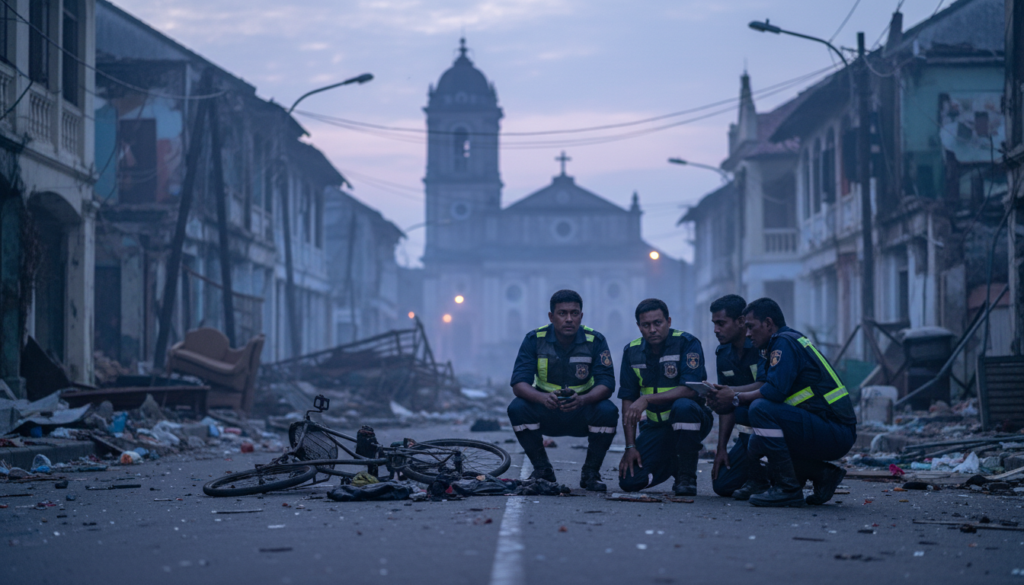
It served as a tragic spark. Combined with growing economic pressures, it helped create a tinderbox of public anxiety and discontent.
Devastation to Life and the Tourism Economy
The human cost was staggering. Jihadist suicide bombers killed more than 350 people, including worshippers and international visitors.
Authorities immediately declared a nationwide state of emergency. Security forces were deployed across Sri Lanka in an attempt to restore order.
The economic impact was immediate and severe. Tourism, a critical source of foreign exchange for the Sri Lankan economy, collapsed overnight.
Hotels stood empty and tour bookings were canceled globally. This blow weakened the nation’s financial buffers well before the COVID-19 pandemic hit.
The industry’s sharp decline drained vital revenue. It left the government with fewer resources to manage subsequent shocks.
Erosion of National Security Confidence
The attacks exposed catastrophic failures within the intelligence apparatus. Warnings from foreign agencies about the imminent threat were reportedly not acted upon.
This failure shattered public trust in the state’s ability to provide basic security. Citizens felt betrayed by those sworn to protect them.
A profound sense of vulnerability spread across the population. Confidence in the entire security establishment eroded to a dangerous low.
Official commissions of inquiry were established to investigate the lapses. Their findings did little to restore faith for many ordinary citizens.
The erosion of trust had lasting consequences. It contributed to a broader distrust of institutional authority that would fuel later protests.
Rise in Communal Tensions and Distrust
In the aftermath, social fractures that had been simmering came to the surface. The attacks were claimed by Islamist extremists, leading to a dangerous backlash against the Muslim community.
Anti-Muslim riots erupted in several areas, including Minuwangoda. Mobs damaged homes, businesses, and places of worship.
These incidents deepened existing communal divides. They fostered an atmosphere of suspicion and fear between different religious groups.
The government‘s response to this communal violence was often seen as slow or inadequate. This further strained the social fabric of the nation.
The tensions added another layer of instability to an already anxious society. Sri Lanka faced not just an economic or security crisis, but a social one.
The events of that year left a deep scar on the national psyche. They demonstrated how a single attack could ripple through every aspect of life, from the economy to community relations.
This trauma set the stage for the tumultuous period that followed. It was a crucial chapter in the island’s recent history, watched closely by the world.
Key Sri Lanka News Stories That Shaped the Past Year: The Protest Movement’s Anatomy
Examining the protest movement’s unique features provides insight into a historic moment of public dissent. This civic mobilization became a defining story, showcasing how organized public action can challenge established power structures.
It was not a single event but a sustained phenomenon. Its anatomy reveals a blend of peaceful resistance, creative organization, and a final, dramatic escalation.
Occupy Galle Face: A Peaceful Civic Occupation
At the heart of the mobilization was Occupy Galle Face. This was a sustained, peaceful encampment on a prominent seaside green in the capital.
It served as the central hub for dialogue and expression. The site featured art installations, public speeches, and community kitchens.
For months, it functioned as a living symbol of discontent. The atmosphere was more of a civic forum than a traditional protest.
This peaceful occupation demonstrated a commitment to non-violent dissent. It attracted a wide cross-section of people from across the island.
Gotagogama and Mynagogama: Protest Villages Spring Up
Adjacent to the main site, organized protest villages emerged. They were named Gotagogama (Village to Oust Gota) and Mynagogama (Village to Oust Mahinda).
These were not simple campsites. They showcased impressive organizational capacity.
The villages included libraries, medical tents, and designated stages for speeches. Volunteers managed food distribution and sanitation.
This infrastructure turned spontaneous anger into a sustained community. It highlighted the movement’s depth and the public‘s dedication.
Thousands of citizens, from students to professionals, participated daily. Their homes became symbols of a new kind of political engagement.
The Storming of the President’s House and Official Residences
The movement reached its dramatic peak on July 9, 2022. On that day, a large crowd of protesters peacefully entered the Presidential Palace.
They also accessed the Prime Minister’s official residence and other key state buildings. This was a symbolic seizure of power, broadcast live to the nation.
The scenes inside these lavish government compounds shocked many. They starkly contrasted with the economic suffering outside.
This direct action left the leadership with no room to maneuver. It led directly to President Gotabaya Rajapaksa’s announcement that he would resign.
The movement’s power came from its decentralized, leaderless structure. It made broad-based demands for systemic change, not just the removal of individuals.
Participation was remarkably diverse. Students, artists, doctors, and ordinary citizens affected by the crisis stood together.
This anatomy of protest directly forced a historic political change. The events of that summer reshaped the Sri Lankan political landscape permanently.
They demonstrated the potent force of organized civic action in Sri Lanka. The movement’s legacy continues to influence discussions on accountability and reform.
International Repercussions and Scrutiny
Beyond its borders, the nation’s crisis triggered a wave of international scrutiny that impacted diplomatic and economic relations. The internal turmoil became a major story for foreign governments and global institutions.
This external focus had real consequences. It influenced aid, investment, and the country’s standing in the world.
Global Media Spotlight and Diplomatic Pressure
International news channels framed the upheaval as a dramatic “people’s revolution.” This portrayal amplified the situation’s gravity for a global audience.
Key partners like India, China, and members of the Quad alliance responded. They provided emergency fuel and financial aid to prevent a total collapse.
Their assistance came with expectations for political stability. Diplomatic missions applied quiet pressure for a credible resolution to the leadership vacuum.
This intense spotlight damaged international creditworthiness. Lenders and investors grew wary, complicating efforts to secure long-term financial assistance.
The government‘s ability to manage the crisis became a test of its legitimacy. Foreign partners needed a stable cabinet to engage with.
Ongoing UN Human Rights Council Engagement
Separate from the economic crisis, longstanding human rights issues remained on the international agenda. The United Nations Human Rights Council (UNHRC) has maintained active engagement for years.
Resolutions have consistently urged the Sri Lankan state to ensure accountability for alleged violations during the civil war. The recent period of instability did not pause these diplomatic processes.
International advocates argued that a breakdown in the rule of law during the crisis highlighted the need for stronger institutions. The UNHRC’s work focuses on reconciliation and justice.
This ongoing scrutiny is a fixed element of the nation’s foreign politics. It requires continuous diplomatic management from the president’s office.
Allegations of Corruption and Financial Scandals
Specific corruption allegations gained international traction during this time. They reinforced perceptions of graft at high levels of government.
One major case involved SriLankan Airlines. It centered on costly cargo flights to Uganda that appeared to serve no clear commercial purpose.
Critics labeled these the “Ugandan links” scandal. They alleged the flights wasted millions of dollars in public funds.
Another controversy surrounded a hospital management contract awarded to Aspen Medical. Questions were raised about the tender process and the company’s qualifications.
These stories were reported by international financial watchdogs and media. They contributed to a climate of distrust and complicated the narrative for international lenders.
The IMF and other institutions emphasize governance reforms as part of their programs. Such allegations made the case for external oversight stronger.
Objectively, these claims damaged the perception of integrity within state institutions. Rebuilding trust is a practical step for economic recovery.
The collective weight of media focus, diplomatic pressure, and corruption claims reshaped external relations. Navigating this landscape remains a central challenge for the island’s leadership.
Other Pivotal Stories from the Recent Decade
Long before the mass protests of 2022, the island nation experienced a turbulent decade of elections, scandals, and communal strife. These earlier events created an environment of cynicism and instability.
They set the direct context for the explosive upheaval that followed. A look at the 2010s reveals a cycle of promised reform, broken trust, and deep social fractures.
From “Yahapalana” to Gotabaya: The 2015 and 2019 Elections
The 2015 presidential election marked a dramatic shift. Maithripala Sirisena, a former minister, defeated the incumbent President Mahinda Rajapaksa.
This victory led to the formation of the Yahapalana or “good governance” coalition. Sirisena became president and appointed Ranil Wickremesinghe as prime minister.
The coalition promised sweeping constitutional and anti-corruption reforms. It aimed to dismantle the executive presidency and restore accountability.
Public hope was high for a new political era. However, the partnership quickly soured into public dysfunction.
By 2018, a severe constitutional crisis erupted between the president and prime minister. The reform agenda stalled, eroding the government‘s credibility.
This failure set the stage for the next major political shift. The 2019 presidential elections saw Gotabaya Rajapaksa win a decisive victory.
His campaign capitalized on national security fears after the Easter Sunday attacks. The result signaled a return to a strong, centralized ruling style.
It also demonstrated the enduring resilience of the Rajapaksa political network. The nation‘s political direction reversed within just a few years.
The Central Bank Bond Scam and Its Political Fallout
A major scandal severely damaged the Yahapalana government’s reputation. The 2015 Central Bank bond scam involved Governor Arjuna Mahendran.
Allegations centered on insider manipulation of bond auctions. This caused significant losses to state-owned financial institutions.
The scandal became a symbol of high-level graft under a government that promised clean governance. A parliamentary committee investigation found evidence of misconduct.
Public trust in the reform coalition evaporated. The bond scam provided ammunition for critics who claimed the cabinet was no different from previous administrations.
It highlighted the systemic nature of corruption within state institutions. The political fallout contributed to the coalition’s defeat in the following election.
This event left a lasting stain on the country’s financial governance. It reinforced a widespread belief that the political office was used for private gain.
Recurring Waves of Anti-Muslim Riots and Social Fractures
Alongside political drama, violent communal tensions repeatedly flared. Anti-Muslim riots in 2014 (Aluthgama) and 2018 (Digana and Ampara) exposed deep social fractures.
These outbreaks were often triggered by local disputes or nationalist rhetoric. Mobs attacked homes, businesses, and mosques, causing deaths and displacement.
The state‘s response was frequently seen as slow or inadequate. This perception deepened distrust among minority communities.
Each incident left scars that hindered national cohesion. The violence illustrated how ethnic and religious fault lines remained unresolved.
This recurring pattern added a layer of constant social instability. It showed that the country‘s peace was fragile beyond the economic sphere.
Communal strife became a tragic feature of the recent decade. It worsened the overall climate of fear and division leading into the 2020s.
Together, these stories from the 2010s—failed reform, major scandals, and social violence—created a perfect backdrop for crisis. They fostered public cynicism toward all political establishments.
They also showed the remarkable comeback power of political dynasties. Unresolved tensions continued to simmer under the surface.
This decade-long narrative is crucial for understanding why the system eventually broke. The majority of citizens had already endured years of disappointment.
This historical context makes the recent turmoil more comprehensible. It explains the depth of anger that fueled the 2022 protests.
For a deeper look at how these dynamics affect the nation‘s economic outlook, ongoing analysis is essential. The past decade’s lessons directly inform the current challenges.
The Long-Term Impact: Economy, Society, and Governance
Assessing the long-term consequences reveals a transformed landscape where inflation, migration, and distrust redefine daily life. The turmoil of the past year left deep marks that will shape the country‘s path for years.
This section examines the enduring impact on three core areas. It looks at the economy‘s foundation, the social fabric, and the culture of politics.
Skyrocketing Inflation and the Crushing Cost-of-Living Crisis
Inflation peaked at over 50% annually. This record high devastated household budgets across the island.
Essential goods like food, fuel, and medicine became unaffordable for thousands. The severe cost-of-living crisis pushed millions into poverty.
This hardship contrasted sharply with recent history. Just years before, the World Bank had classified Sri Lanka as an upper-middle-income country.
The dramatic fall damaged international credit ratings. It severely harmed the nation’s reputation as a destination for investment.
Recovery from such high inflation is a slow process. Price stability is a primary concern for the government and public alike.
Brain Drain and the Loss of a Generation’s Potential
A silent exodus of skilled professionals accelerated during the crisis. Doctors, engineers, IT specialists, and academics sought opportunities abroad.
This “brain drain” represents a critical loss of human capital. The country invests in educating its youth, only to see them leave.
The trend threatens long-term national development. Rebuilding a skilled workforce takes decades, not years.
For families, it often means separation. For the economy, it means a shortage of expertise needed for growth.
The loss of a generation’s potential is a social and economic wound. It will constrain future income growth and innovation.
Deepened Distrust in the Political Establishment
Perhaps the most profound legacy is the erosion of public trust. Faith in all major political parties and state institutions fell to historic lows.
Citizens feel betrayed by the government‘s mismanagement. This skepticism extends to the entire Sri Lankan political class.
Rebuilding this trust is a monumental task. It requires demonstrable accountability and systemic reform.
This distrust shapes societal attitudes. People are more cynical about promises of change from any leader.
It creates a challenging environment for any administration. Policy legitimacy is now harder to achieve.
The collective impact on economy, society, and governance is interconnected. High inflation fuels emigration, which deepens distrust in the government‘s ability to provide.
These consequences will constrain policy options for the foreseeable future. The nation’s resilience is being tested in a new way.
The path ahead requires navigating these deep-seated challenges. The events of the past year have set a difficult but clear agenda for national recovery.
The Path Forward: Recovery, Reform, and National Reflection
The immediate crisis has passed, but the arduous work of national recovery and systemic reform has only just begun. This phase involves navigating complex financial negotiations, heeding persistent public demands for change, and balancing difficult policy choices.
The path ahead is neither straightforward nor quick. It requires consistent political will and a broad social consensus across the island.
Debt Restructuring and the Arduous Road to Economic Stability
A central pillar of recovery is the complex process of debt restructuring. Sri Lanka is engaged in tough negotiations with bilateral creditors and private bondholders.
This is a mandatory part of its International Monetary Fund program. Success here is a prerequisite for regaining access to global financial markets.
The goal is to make the nation’s foreign debt burden sustainable. Without a deal, the IMF’s $2.9 billion support package could stall.
Progress has been slow and fraught with technical challenges. Each creditor group has different interests and legal constraints.
The government must also implement painful structural reforms. These include changes to state-owned enterprises and tax policies.
According to the World Bank’s 2024 growth forecast, such reforms are critical for a return to positive growth. The institution notes that debt restructuring is a key precursor to economic healing.
Calls for Systemic Change and Anti-Corruption Measures
The protest movement’s energy has shifted from the streets to sustained civic pressure. A core demand remains deep, systemic political reform.
Civil society groups and citizens continue to advocate for constitutional change. They seek to reduce the overwhelming power of the executive presidency.
Strengthening independent anti-corruption agencies is another major priority. Many believe existing bodies lack the teeth to hold the powerful accountable.
Electoral reform is also on the agenda. Some propose changes to make parliament more representative of the popular will.
These calls reflect a deep-seated desire to fix a broken system. The cabinet and parliament face growing pressure to deliver tangible progress.
Rebuilding state capacity and transparency is seen as non-negotiable. Without it, public trust will remain elusive.
Reconciling Democratic Aspirations with Political Realities
A significant tension defines the current landscape. The democratic aspirations of the Aragalaya movement clash with established political realities.
The president was chosen by parliament, not a general vote. This fact shapes his mandate and political maneuvering room.
The administration under President Ranil Wickremesinghe must navigate this carefully. Its task is to implement necessary but unpopular austerity measures while maintaining social stability.
Difficult policy choices between fiscal discipline and social welfare are unavoidable. The prime minister and his team must balance IMF requirements with public need.
The established party system remains largely intact despite the upheaval. This creates a gap between the desire for a new politics and the mechanics of the old.
Recovery is fundamentally a multi-year process. It will test the patience of the country‘s people and the skill of its leaders.
Economic indicators, like those referenced by the World Bank, suggest a long climb back. The nation‘s resilience will be measured over the coming years.
The majority of citizens await concrete improvements in their daily lives. The next general election will be a crucial referendum on this path.
Ultimately, steering Sri Lanka out of crisis requires more than financial fixes. It demands a genuine national reflection on governance, accountability, and shared sacrifice.
Sri Lanka’s Resilience Tested: Lessons from a Tumultuous Era
The past year served as a profound stress test for the island’s institutions and its people. It revealed both deep vulnerabilities and unexpected strengths. The crisis resulted from interconnected failures in economic policy, political accountability, and responses to global shocks.
In response, Sri Lankan civil society demonstrated remarkable capacity. Peaceful protests and community aid networks provided crucial support during the emergency. This period offers clear lessons for governance.
Major decisions made without adequate consultation proved disastrous. The importance of institutional checks and balances, and the severe risks of unsustainable debt, were starkly highlighted. While causing profound suffering, such upheaval can also act as a catalyst for necessary reform.
The path ahead for the nation remains long and uncertain. However, the events of this period have irrevocably changed the political consciousness of its citizens. An informed and engaged public is now the most vital force for shaping Sri Lanka‘s future, reflecting its enduring ability to endure and adapt.