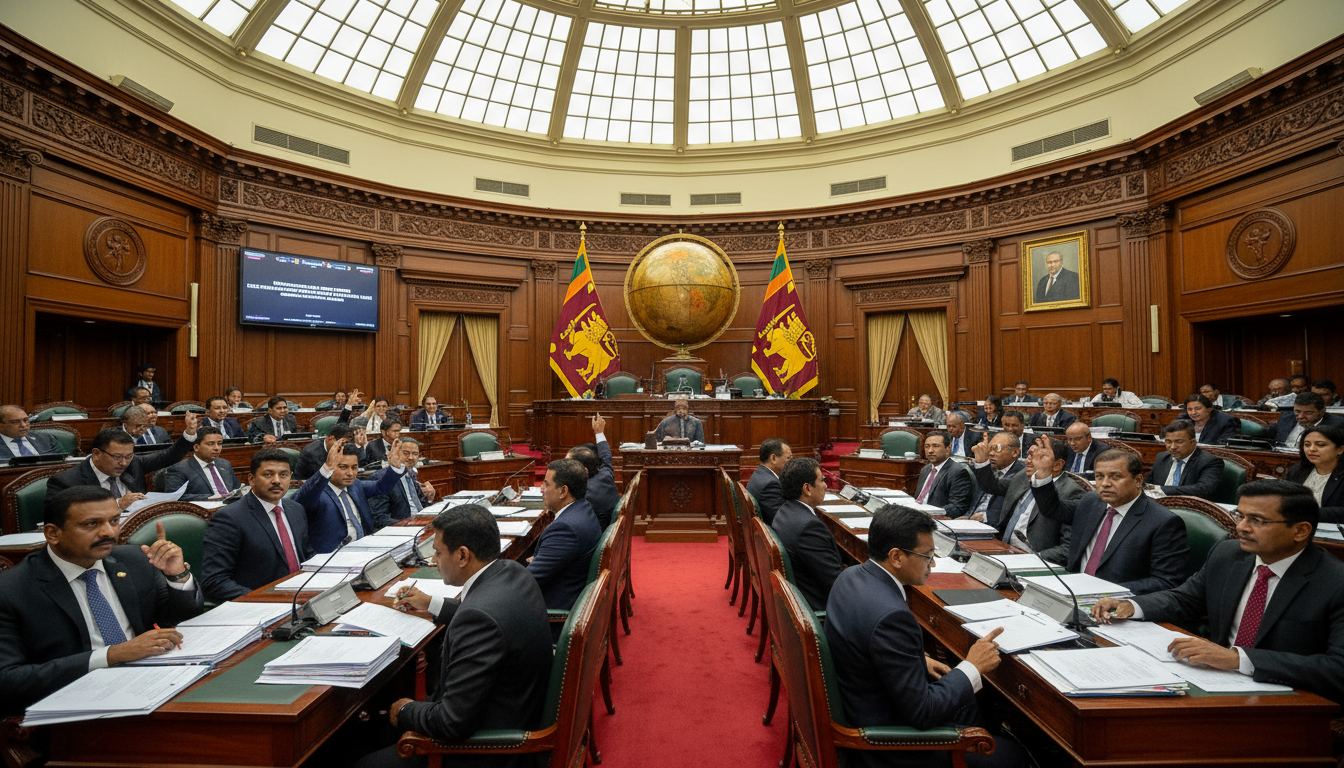
The nation’s parliament has taken a historic step. Legislators have voted to abolish a long-standing financial entitlement for themselves.
This landmark decision was made on Tuesday, February 17, 2026. The bill passed with an overwhelming majority of 154 votes in favor. Only two members of the 225-seat House voted against it.
The move directly fulfills a key campaign promise made by President Anura Kumara Dissanayake. His ruling government had pledged to end the practice.
The action comes amid widespread public anger. This sentiment stems from the severe economic crisis that has gripped the country. Many citizens demanded greater austerity from their leaders.
Under the old law, a member was entitled to a pension after serving just one five-year term. The new law halts payments to anyone who already receives or qualifies for this benefit.
It is seen as a symbolic sacrifice. Elected officials are giving up a perk while the nation works toward recovery. The government is also moving to scrap similar perks for former presidents.
This article provides a clear breakdown of this major reform. It will explain the process, the context, and what it means for the people of Sri Lanka.
Sri Lankan Lawmakers Scrap Parliamentary Pensions in Major Reform Move
Justice Minister Harshana Nanayakkara initiated the formal process to abolish parliamentary pensions on January 7, 2026. He presented the Parliamentary Pensions (Repeal) Bill for its First Reading that day.
The legislative journey moved swiftly through the House. It culminated in a final vote that demonstrated rare political unity.
Overwhelming Parliamentary Vote Ends Decades-Old Benefit
The decisive moment came on February 17. A total of 154 votes were cast in favor of the bill.
Only two members of the 225-seat assembly voted against it. Many other legislators were absent during the division.
During the Committee Stage, two amendments were proposed. MPs Ravi Karunanayake and Chamara Sampath Dassanayake sought changes.
The Minister of Justice rejected both proposals. A specific division was called on Dassanayake’s amendment.
The result was 152 votes to pass the section unchanged. Just four members supported the amendment.
With no changes accepted, the law was passed. The Speaker endorsed it, and it became Act, No. 5 of 2026.
Immediate Impact on Current and Former Legislators
The new Act repeals the Parliamentary Pensions Law, No. 1 of 1977. This statute had provided benefits for 49 years.
Section 3 of the fresh law is clear. Any person receiving or entitled pension under the old rules will cease to get it.
This halt takes effect from the Act’s official commencement date. It impacts a wide group.
Sitting lawmakers, former parliamentarians, and their widows are all affected. The financial safety net they relied on is now gone.
The overwhelming cross-party support sent a powerful message. The ruling coalition and opposition groups agreed on this austerity measure.
Analysts see the vote as a concrete step. It begins to dismantle a system of entitlements seen as excessive.
This action is particularly significant given the national financial distress. The government is signaling shared sacrifice to the people.
For the country, ending this perk is more than a budget line item. It is a symbolic move toward greater fiscal responsibility during a deep crisis.
Fulfilling a Campaign Promise Amid Economic Crisis
Public fury over elite privileges reached a boiling point following the 2022 economic collapse. This deep national trauma created the essential context for the recent legislative action. The move to end the benefit was a direct answer to years of public resentment.
Citizens endured severe shortages of fuel, medicine, and food. Widespread protests ultimately ousted the sitting president. The country declared bankruptcy in April 2022, burdened by over $83 billion in debt.
Against this backdrop, Anura Kumara Dissanayake won the 2024 presidential election. His campaign was built on a specific promise: to abolish lawmaker pensions. Voters saw this as a crucial test of accountability.
Public Anger Over Politician Perks in a Bankrupt Nation
The 2022 economic crisis was the catalyst. Images of long queues for basic necessities are seared into public memory. This hardship stood in stark contrast to the financial perks enjoyed by the political class.
Many citizens asked a simple question. Why should legislators receive a lifetime benefit after one term, while the nation struggled? This sense of injustice fueled a powerful demand for shared sacrifice.
Justice Minister Harshana Nanayakkara captured this sentiment. He stated that legislators had “no moral right” to such payments during a national recovery. The government‘s action was framed as a moral imperative, not just a budget cut.
President Dissanayake’s Pledge and Political Backdrop
President Dissanayake’s electoral mandate was clear. It was a demand for austerity and change from a weary populace. Scrapping the pension scheme was a top-tier campaign promise he moved swiftly to fulfill.
The catastrophic economic crisis resulted from several interconnected factors:
- Domestic economic mismanagement over years.
- The devastating global impact of the COVID-19 pandemic.
- The 2019 terrorist attacks that crippled the vital tourism industry.
International intervention became necessary. The International Monetary Fund (IMF) approved a $2.9 billion, four-year bailout package in 2023. This assistance came with conditions demanding broad fiscal reforms.
The pension repeal is viewed as part of this necessary reform agenda. It responds to both intense popular demand and the expectations of international financial partners. For the people of Sri Lanka, it represents a first step toward rebuilding trust.
It signals that leaders are finally being held accountable after a period of profound difficulty. The nation’s challenging economic outlook requires such symbolic and concrete actions from its government.
Inside the Parliamentary Pensions (Repeal) Bill
Parliamentary records show a six-hour debate preceded the final vote, highlighting the gravity of the decision. The Parliamentary Pensions (Repeal) Bill represents the legal instrument that ended the benefit system. This section examines its journey through the parliament and its definitive provisions.
Legislative Process and Key Provisions
The bill followed a clear path from introduction to enactment. Justice Minister Harshana Nanayakkara was its chief architect and presenter.
The legislative timeline was notably efficient:
- January 7, 2026: First Reading of the bill in the House.
- February 17, 2026: Second Reading debate and final vote.
The Second Reading discussion lasted from 11:30 a.m. to 5:30 p.m. This six-hour period allowed for thorough scrutiny of the proposed law.
The core provision was straightforward. It repealed the entire Parliamentary Pensions Law, No. 1 of 1977 in one stroke.
Section 3 of the new Act was critical. It mandated the immediate cessation of all payments and entitlements. Anyone already receiving or qualified for an entitled pension would see it stop.
Rejected Amendments and Final Passage
During the Committee Stage, attempts were made to modify the bill. Two members proposed changes.
MP Ravi Karunanayake suggested an amendment to Section 3. MP Chamara Sampath Dassanayake proposed a change to Section 4.
The Justice Minister informed the House that the government would not accept these modifications. He maintained a firm stance for a clean repeal.
A specific division was called on Dassanayake’s amendment. The result demonstrated overwhelming support for the original text.
The vote was 152 in favor of the unamended section. Only four legislators supported the change.
With no amendments accepted, the bill passed in its original form. This underscored the administration’s commitment to a complete termination of the scheme.
Speaker Dr. Jagath Wickramaratne then endorsed the certificate on the bill. This formal step certified it for enactment.
The legislation became Act, No. 5 of 2026. Its objective was singular: to completely eliminate the state-funded pension scheme for lawmakers and affected widows.
The process showed rare parliamentary resolve. The government achieved its goal to scrap pensions without dilution.
Broader Austerity: Scrapping Perks for Former Presidents
In a related and earlier austerity move, the government terminated a comprehensive package of benefits for former heads of state. This action in September 2025 set a clear precedent for the later repeal of legislative entitlements.
It demonstrated a consistent policy to reduce the cost of maintaining political elites. The people had demanded such steps following the nation’s severe financial collapse.
Ending State-Funded Privileges for Ex-Leaders
The abolished perks were extensive. They covered nearly all aspects of life after leaving the highest office.
The state no longer funds the following for ex-presidents and their widows:
- Official housing and accommodation allowances.
- Lifetime pensions and personal allowances.
- Dedicated transport and security vehicles.
- Private office space and administrative staff.

This change directly impacts a significant group. Five living former presidents and one widow have lost these state benefits.
The reform was reportedly triggered by public controversy. Former President Mahinda Rajapaksa’s reluctance to vacate a government bungalow fueled public outcry.
Response to Popular Demand and Symbolic Significance
These twin reforms—targeting both legislators and ex-presidents—form a coherent policy. The aim is to comprehensively prune politician privileges.
For citizens, the symbolic weight is heavy. Seeing the highest former office-holders lose entitlements sends a powerful message.
It signals that the political class is sharing in the national belt-tightening. This is crucial for a nation navigating a challenging economic recovery.
The moves represent a sharp break from tradition. For decades, Sri Lanka maintained a system of generous post-service benefits.
Ending them fulfills a key campaign pledge for shared sacrifice. It is a tangible response to the anger born from the economic crisis.
Together, these actions mark a significant shift in political culture. They move Sri Lanka toward greater fiscal responsibility and public accountability.
Sri Lanka’s Path to Economic Stability and Reform
This landmark political reform is born from economic necessity and public pressure. It connects to broader international efforts to achieve stability. Sri Lanka has concluded its debt restructuring process with creditors.
The objective is to secure approximately $17 billion in debt service relief. This eases the fiscal burden amid the ongoing economic crisis.
Challenges persist in rebuilding key sectors like tourism. Stabilizing remittance flows is also crucial. Scrapping these perks acts as a confidence-building measure for citizens and the IMF.
The government‘s action fulfills a key campaign promise. It sets a new precedent for political accountability and reduced expenditure.
For the people, the parliament’s action is a step toward restored trust. The pension vote marks significant progress on a difficult path to fiscal responsibility.