The nation’s economy presents a complex picture for 2026. Clear signs of a recovery are visible, with stronger reserves and export growth. Yet, deep structural weaknesses from past shocks remain largely unaddressed.
This analysis aims to look beyond short-term rebound metrics. Its goal is to assess the foundations for genuine, long-term resilience. True strength is not just bouncing back from each crisis.
It is a system built on diversified income, stronger domestic productivity, and stable macroeconomic buffers. Recent events, from the 2022 financial crisis to Cyclone Ditwah in late 2025, have tested the country’s limits.
The report has a dual focus. It will examine hopeful signs of stabilization and economic growth. It will also critically analyze hidden risks in the system. The term “resilience” is common in policy talks, but practical implementation lags.
This objective review previews four pillars of durable stability. It seeks to inform public understanding, helping citizens and policymakers distinguish between a temporary rebound and sustainable strength for the sri lankan people.
Sri Lanka’s 2026 Economic Recovery: Setting the Context
Recent years have been defined by a cascade of crises that reshaped the country’s financial foundations. This period of turmoil began with a severe foreign exchange and debt crisis in 2022.
That event triggered widespread shortages and social hardship. It exposed deep vulnerabilities in the national economy.
Global commodity price spikes followed, straining essential supply chains for fuel and food. Then, Cyclone Ditwah struck in late 2025.
The natural disaster compounded the stress on an already fragile system. It damaged infrastructure and disrupted livelihoods.
In response, national policy documents now consistently pledge to “build resilience.” The term appears in every budget speech.
But there is a crucial difference often overlooked. A simple recovery aims to restore the economy to its pre-crisis baseline.
True reform structurally elevates that baseline. This makes future shocks cause less damage.
Policymakers face a constant tension. They must manage immediate fallout while investing in long-term change.
This balancing act is difficult. Short-term firefighting often consumes resources and political will.
Therefore, a surface-level reading of positive indicators can be misleading. Rising GDP or tourist arrivals might signal a rebound.
They do not automatically indicate a stronger, more durable system. Underlying structural weaknesses can persist.
International financial support has been key in the stabilization phase. Programs from the IMF and other institutions provided a lifeline.
The Central Bank of Sri Lanka has played a central role in this process. Its actions helped manage liquidity and inflation.
To assess the real trajectory, several key indicators demand analysis. These include:
- Foreign reserve levels and external debt management
- Export performance and sectoral diversification
- Fiscal deficit trends and revenue collection
- Private sector investment and credit growth
Examining these areas reveals whether current growth is built on sand or solid rock. The next sections will delve into these hopeful signs and hidden risks.
This context is vital for understanding the road ahead. The nation’s journey is about more than just a single economic recovery.
It is about building a system that can withstand the next test of time.
Hopeful Signs: Evidence of Stabilization and Growth
Positive trends are emerging across external accounts, tourism, and government finances. These areas show measurable progress after a period of severe strain.
This evidence points to a genuine, albeit fragile, rebound. It provides a foundation for cautious optimism about the nation’s trajectory.
Rebounding Foreign Reserves and External Sector Health
The country’s external sector shows clear signs of strengthening. Foreign reserve levels have improved from their critical lows.
This improvement is a direct result of concerted policy actions. The Central Bank of Sri Lanka has played a pivotal role in managing liquidity.
International financial support has been crucial in this stabilization phase. Programs from institutions like the IMF provided a necessary lifeline.
Stronger reserves enhance the capacity to manage external obligations. They also help stabilize the local currency and build investor confidence.
This external sector health is a cornerstone for broader economic stability. It allows for smoother operation of vital supply chains for imports.
Tourism Revival and Steady Remittance Inflows
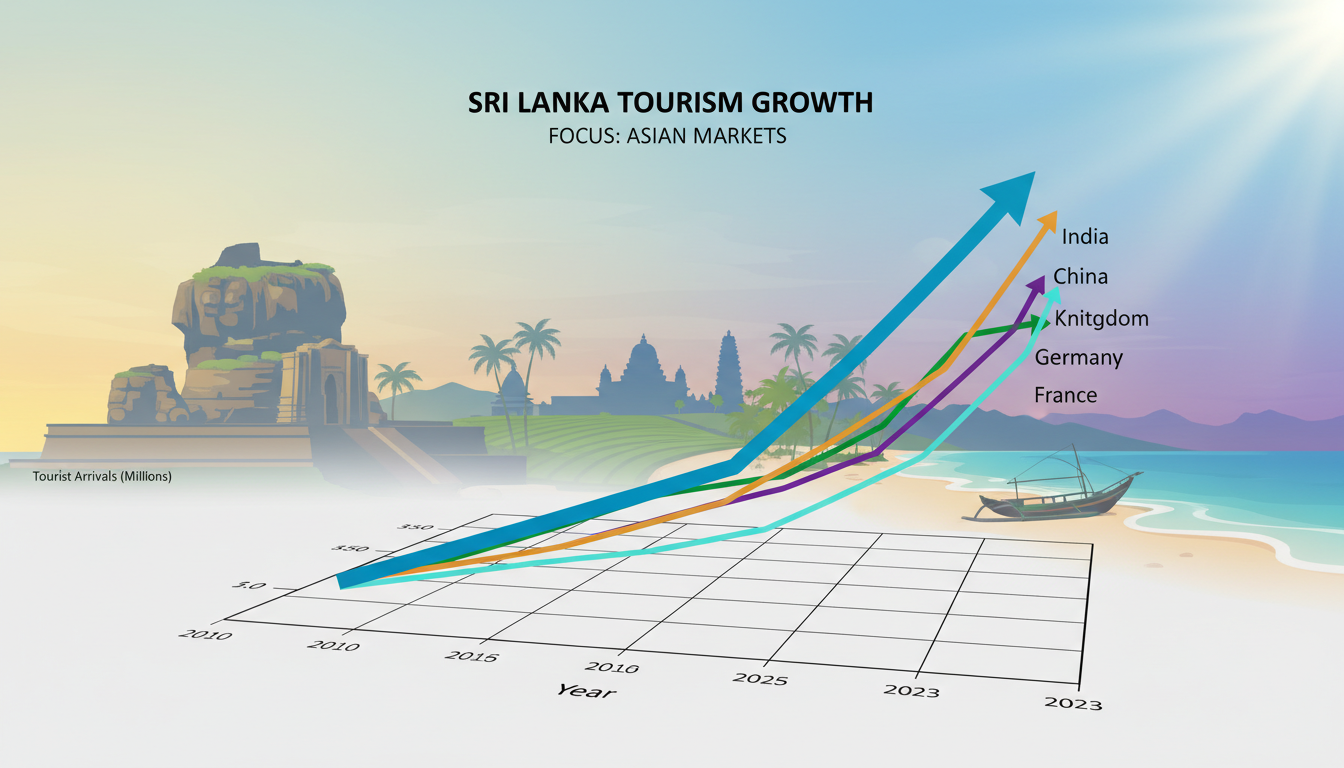
The visitor sector is experiencing a significant resurgence. Arrival numbers have climbed steadily, injecting much-needed foreign exchange.
This revival supports thousands of businesses and jobs across the island. Hotels, transport, and retail services are seeing renewed activity.
Alongside tourism, remittance inflows remain a bedrock of stability. Funds sent home by citizens working abroad provide a reliable source of dollars.
These inflows directly support household incomes and domestic consumption. Together, tourism and remittances act as twin pillars of external support.
Their steady performance reduces pressure on the balance of payments. This creates a more predictable environment for trade and investment.
Export Growth and Fiscal Discipline Measures
Total export earnings reached a notable USD 17.2 billion in 2025. This marked a solid 5.6 percent increase from the previous year.
The growth was driven by contributions from both merchandise and services exports. Key markets showed renewed demand for the country’s products.
This export expansion is a positive signal for the Sri Lanka economy. It indicates improving competitiveness and global trade connections.
On the fiscal front, the government’s 2026 budget projected a primary surplus. This is a key marker of renewed fiscal discipline.
It signals a commitment to spending within its means. The budget also targets a decline in the debt-to-GDP ratio toward 96.8 percent.
Reaching this debt sustainability metric is critical for long-term confidence. It reassures international partners that reforms are taking hold.
Fiscal discipline is tightly linked to the broader reform agenda. It demonstrates the political will to address structural weaknesses.
This commitment is essential for securing continued support from global financial institutions. It builds the credibility needed for sustained investment.
Together, these factors—export growth, tourism recovery, and fiscal prudence—form a hopeful picture. They suggest the nation is building a platform for more durable stability.
Hidden Risks: Structural Weaknesses and Vulnerabilities
International financial institutions have recently tempered their outlook, signaling underlying fragilities within the system. Beyond the hopeful signs of stabilization, significant structural challenges persist.
These vulnerabilities could slow progress and make the nation susceptible to future shocks. They are found in three critical areas: export concentration, small business health, and macroeconomic buffers.

Concentrated Export Sectors and Lack of Diversification
The country’s export profile remains heavily reliant on a narrow set of traditional goods. Key items like tea, apparel, and rubber dominate merchandise earnings.
This concentration creates a major risk. Global demand swings or sudden drops in prices for these commodities can quickly hurt the entire sector.
It leaves national income exposed to volatility in specific international markets. A more resilient model would feature a broader mix of high-value products and services.
Diversification into areas like information technology and business process outsourcing is slow. Building competitive strength in new fields requires time and sustained investment.
SME Constraints and Productivity Gaps
Small and medium-sized enterprises (SMEs) form the backbone of the domestic economy. Yet, they face persistent hurdles that limit their growth and innovation.
Access to affordable credit remains difficult for many smaller firms. High energy costs and complex regulations add to their operational burdens.
These constraints create a wide productivity gap compared to larger corporations and regional peers. When SMEs struggle, job creation slows and economic dynamism suffers.
Strengthening this vital segment is crucial for inclusive growth. It requires targeted structural reforms to improve the business climate.
Revised Growth Projections and Macroeconomic Fragilities
Major lenders have downgraded their expectations for the near future. The IMF and World Bank now project growth for 2026 in a range of 3.1% to 4.5%.
This downward revision reflects two main factors. First, the initial rebound momentum is naturally moderating.
Second, the deep crisis of recent years has caused long-term “scarring.” This scarring effect dampens business investment and consumer confidence for an extended period.
On the fiscal front, space for new government spending is severely limited. High debt servicing costs consume a large portion of revenue.
This leaves little room for vital public investment in infrastructure or social programs. While foreign reserve buffers have improved, they provide only a minimum safety net.
Reserves covering roughly three months of imports is a basic threshold. It offers scant protection against a major new external shock or disruption to supply chains.
This cautious outlook from global institutions, including a more conservative World Bank projection in prior assessments, sends a clear message. The sri lanka economy has stabilized but is not yet on a path of robust, high-speed expansion.
The current programme focuses on stability, which is a necessary first step. The harder task of building widespread, durable strength lies ahead.
Economic Resilience: Moving Beyond Short-Term Recovery
The ultimate test for any nation is not just surviving a crisis, but emerging from it stronger. True economic resilience means building a system that can withstand future shocks with less damage.
It moves past the temporary relief of a recovery. The goal is to create lasting growth and stability for all citizens.
The Four Pillars of Genuine Economic Resilience
Building this durable strength rests on four interconnected foundations. These pillars shift focus from short-term fixes to long-term capacity.
- Diversified Economic Engines: Reliance on a few export goods or a single sector is risky. A resilient economy cultivates multiple sources of income, including high-value services and trade.
- Fiscal and Debt Sustainability: A manageable debt burden and a disciplined budget create space for public investment. This is crucial for infrastructure and social support during hard times.
- An Adaptive Private Sector: Small and large businesses need an environment that rewards innovation. Easing credit access and reducing red tape are key structural reforms to boost private sector performance.
- Strong Institutional Capacity: Effective, coordinated government agencies are needed to implement complex policies. This final pillar is often the most challenging to construct.
Institutional and Planning Challenges
Even with well-designed plans, execution often falters. Variable implementation capacity across different ministries is a major hurdle.
Some departments move quickly, while others lag. This inconsistency can stall entire programmes.
Maintaining long-view policy coordination is another difficulty. Planning often gets trapped in short electoral cycles or focused only on the next review by international partners like the IMF.
This tension between political timelines and long-term needs creates planning uncertainty, a challenge highlighted in analyses of the nation’s economic outlook.
Government budgets frequently mention ambitious goals. Public-private partnerships and digitalization are common themes.
Yet, turning these proposals into on-the-ground projects often faces delays. Bureaucratic processes and a lack of specialized skills can slow execution.
These institutional weaknesses undermine even the best policies. They can turn resilience rhetoric into empty promises.
Overcoming these planning challenges is essential. It is the difference between having a strategy and achieving measurable outcomes that improve lives.
Regional Insights and Policy Challenges from the ADB and IMF
A key test for any recovery is managing the social impact of necessary policy adjustments. This is a central challenge for the Sri Lanka economic programme, shaped heavily by dialogue with major financial institutions.
Recent forums, like the Asian Development Bank (ADB) annual meetings, have highlighted regional priorities. These insights directly inform the nation’s ongoing engagement with international partners for support.
Lessons from the ADB Annual Meetings in Samarkand
The ADB meetings in Samarkand emphasized building long-term resilience for emerging economies. Discussions focused on climate-resilient infrastructure investment and strengthening regional trade and connectivity.
For a nation emerging from a deep crisis, the message was clear. Short-term fixes are insufficient without parallel institution-building.
The ADB’s role often complements the IMF’s stability-focused programme. It provides crucial funding for projects that address structural bottlenecks.
IMF Reforms and the Cost-Recovery Pricing Dilemma
Implementing IMF-mandated structural reforms involves adjusting state-controlled fuel and utility prices. This aims to reduce massive government subsidies that strain the budget.
The mechanism ties local costs directly to international market rates. This is known as cost-push inflation.
The burden falls hardest on lower-income households. Essentials like energy and transport consume a far larger share of their budgets.
A dangerous scenario of stagflation arises if cost-push inflation coincides with slowing growth. The Central Bank of Sri Lanka faces a complex task in such an environment.
It must control inflation without choking off the fragile recovery. This balancing act is critical for the Sri Lanka economy.
Balancing Reform Implementation with Social Protection
Policymakers must outline viable policy options. The goal is balancing fiscal discipline with social stability.
First, refining the pricing formula can smooth extreme volatility in global prices. Small, frequent adjustments are often less shocking than large, sporadic hikes.
Second, government revenues from a higher VAT on fuel can be ring-fenced. These funds should directly offset impacts on the most vulnerable.
Third, all price adjustments must follow a transparent, rule-based system. This builds public trust in the process.
Most critically, well-designed social protection is non-negotiable. Targeted, direct cash transfers are the most effective shield.
Such measures must be time-bound and linked to clear eligibility criteria. This ensures help reaches those who need it most.
This approach is a core part of a broader growth strategy that seeks to secure investment while protecting households. It demonstrates a commitment to equitable stability.
The success of these difficult policy reforms depends on this careful balance. It reassures international partners while safeguarding vulnerable citizens across the island.
Forging a Crisis-Resistant Future for Sri Lanka
Moving forward requires a decisive shift from celebrating short-term rebounds to engineering long-term durability.
Stabilization metrics—strong reserves, solid export earnings, a revived tourism sector, and fiscal discipline—provide a critical platform. They are not the final goal.
Persistent vulnerabilities, like a concentrated export base and constrained small businesses, remain. The balance of necessary reforms with social protection is delicate.
Insights from regional forums stress urgency. The nation must build institutional coherence and long-view planning. This is key to keeping pace in a connected Asia.
The practical path is the four-pillar framework for genuine economic resilience: diversification, productivity, private sector empowerment, and stable systems.
The current window of relative stability is crucial. It is the time to embed these structural changes, moving from repeated crisis management to sustained crisis resistance.
A truly resilient economy can deliver higher wages, stronger public finances, and improved living standards for all citizens.
Ultimately, sustained policy focus and implementation in the coming years will determine if this recovery translates into enduring strength.