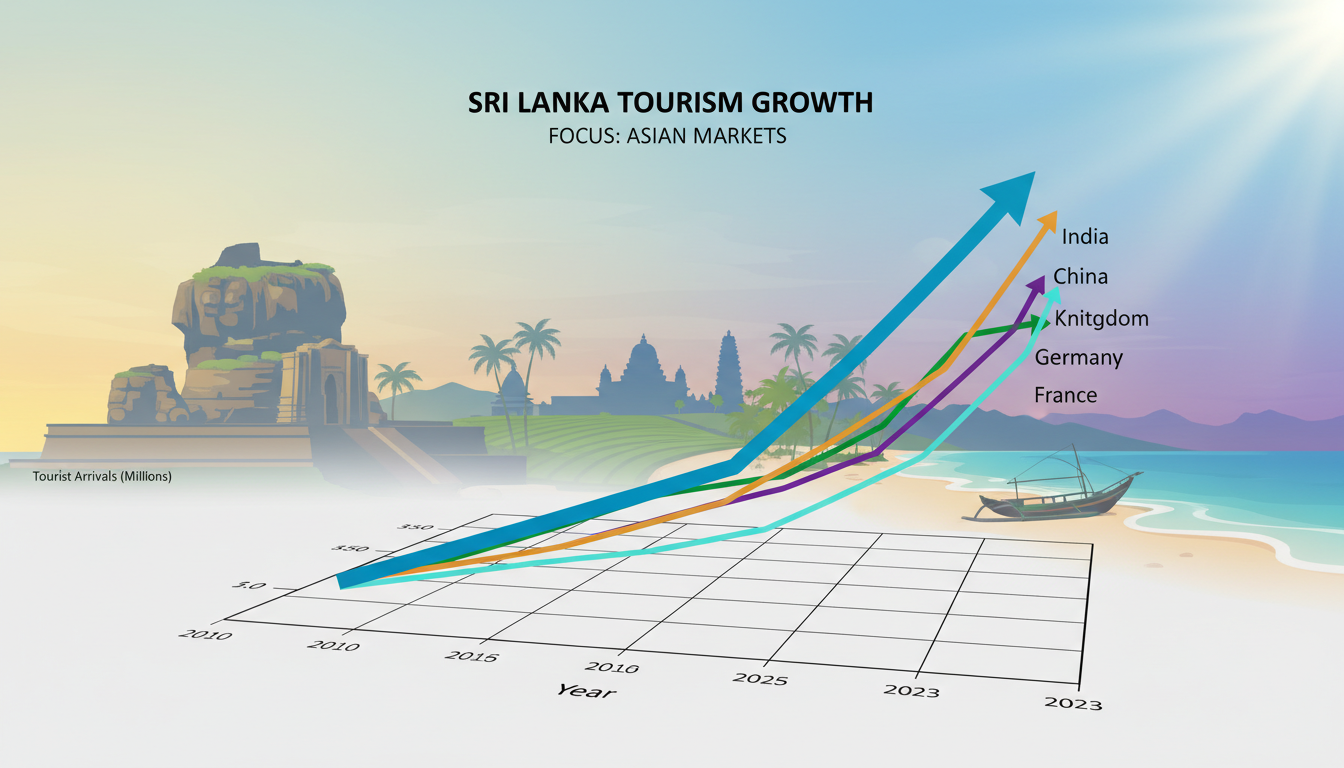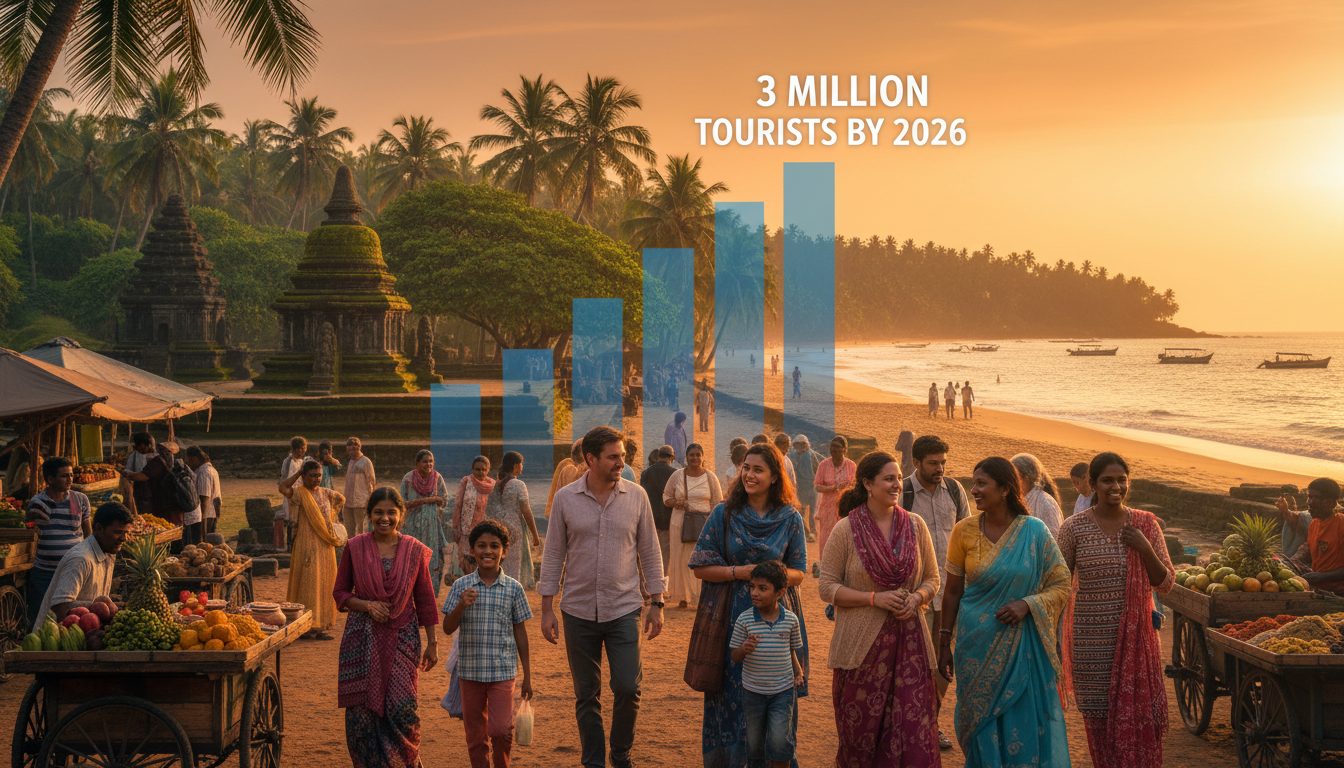
The island nation has set a bold new goal for its travel industry. Authorities aim to welcome three million visitors in 2026.
This ambitious target follows a landmark period for the sector. In 2025, arrivals hit a record 2.36 million, marking a strong recovery for the country.
Tourism is a major source of foreign exchange revenue. It is a critical driver for the national economy and ongoing development efforts.
The planned increase represents a significant step forward. It aligns with broader national rebuilding following recent challenges. The Sri Lanka Tourism Development Authority will play a key role.
This article explores the drivers behind this growth goal. It will examine the strategies for sustainable expansion and the hurdles that remain for this popular destination.
Sri Lanka Sets Ambitious Tourism Goal Following Historic 2025
Official statistics from 2025 reveal a landmark performance for the island’s visitor economy. This success provides a solid foundation for the next phase of growth.
Record-Breaking Arrivals and Revenue in 2025
The country welcomed a historic number of tourist arrivals last year. Final data shows a total of 2.36 million visitors, officially confirmed on 29 December 2025.
This figure surpassed the previous peak of 2.33 million set in 2018. It marks a crucial milestone for recovery after seven years.
However, the total tourism revenue for 2025 was recorded at US$3.2 billion. This is lower than the $4.48 billion earned in 2018.
The difference highlights a key focus for the industry. While more people are visiting, the average spend per visitor needs attention.
Official Projection: 3 Million Tourists by 2026
Building on this momentum, authorities have set a clear new target. The goal is to attract 3 million tourist arrivals 2026.
This represents a 27% increase from the 2025 numbers. It is an ambitious but calculated objective for the travel sector.
Senior officials have publicly backed this plan. Tourism Minister Vijitha Herath and SLTDA Chairman Buddhika Hewawasam have expressed strong confidence.
Their ambition extends to earnings, targeting $5 billion in tourism revenue by 2026. This would significantly boost the nation’s foreign exchange reserves.
As the second-largest source of national income, a strong tourism performance is vital. It supports broader economic stability and job creation.
The revised growth expectations align with positive indicators. The International Monetary Fund (IMF) has also noted the sector’s improving contribution.
Industry leaders believe the 2025 record provides the necessary momentum. The focus now shifts to strategic execution to welcome the next wave of visitors.
Driving Forces Behind the 2026 Tourism Target
Behind the numeric goal lies a strategic response to recent economic and environmental shocks. The drive for more visitors is tightly linked to urgent national rebuilding efforts.
It is a multi-purpose plan for financial stabilization and growth.
Post-Cyclone Ditwah Recovery and Economic Revival
A devastating natural disaster shapes the current policy. Cyclone Ditwah struck the island in late November.
It resulted in over 600 fatalities. The storm damaged more than 110,000 homes.
Critical infrastructure, including roads and railways, suffered severe blows. The World Bank estimates total losses at $4.1 billion.
This context makes the tourism target a core part of the recovery plan. Generating foreign currency is essential for reconstruction.
Tourism Minister Vijitha Herath has stated that increased travel income will directly support the economy now. The government sees this sector as a vital tool for revival.
Boosting Foreign Exchange and Investment Inflows
Tourism is already a top earner of foreign exchange for the nation. This role is now more critical than ever.
The revenue from international tourists provides liquid funds for imports and debt servicing. It supports the broader development agenda.
Authorities are also focusing on capital investment. They aim to attract about $500 million in tourism investments in 2026.
This follows $329 million from 126 projects in the previous year. Such inflows fund new hotels and experiences.
A thriving tourism sector contributes to macroeconomic stability. This can positively influence reviews under the International Monetary Fund program.
The push aligns with the government‘s wider broader economic reform strategy to attract investment and ensure fiscal stability.
Ultimately, the drive for more arrivals is a calculated strategy. It addresses disaster recovery, economic growth, and capital attraction simultaneously.
Challenges and Industry Concerns on the Road to 3 Million
Achieving the ambitious visitor goal requires navigating a series of well-documented challenges within the travel sector. Industry stakeholders balance optimism with a cautious, grounded perspective on the hurdles ahead.
The Delay in National Destination Marketing Campaigns
A major constraint cited by experts is the continued absence of a cohesive national marketing strategy. This long-delayed campaign is seen as vital for attracting higher-spending tourists.
Hotelier Hiran Cooray of Jetwing has publicly expressed caution. He argues that without this promotional push, a more modest growth target of around 10% is realistic.
The delay is attributed to lengthy state procurement processes and political changes. This hinders the tourism sector‘s ability to compete effectively in global markets.
A strong brand message is essential for any destination seeking a significant increase in tourist arrivals. Its absence is viewed as a critical gap in the government‘s plan.
Declining Daily Tourist Spend and Revenue Gaps
Despite record arrival numbers, average daily tourist spend has declined. It fell to $148 in 2025 from the $170-180 range seen in 2018.
This trend helps explain why total tourism revenue has not kept pace with visitor counts. More people are coming, but each spends less.
A key reason is the growth of the informal accommodation sector. Guesthouses and Airbnb rentals now account for nearly 40% of the industry.
Many of these options are priced below $50 per day. This shifts the market mix and lowers the average expenditure per visitor.
Closing this revenue gap is a central challenge for tourism development. The focus must shift from pure arrival numbers to value.
Addressing Tourism Leakage and Import Dependence
Another structural issue is “tourism leakage.” This occurs when revenue earned from tourists leaves the local economy.
Reliance on imported goods and services for hospitality is a primary cause. This includes everything from food and beverages to construction materials and furnishings.
A UNWTO-supported survey is currently examining leakage within Sri Lanka tourism. The findings will inform a planned stakeholder workshop.
The goal is to develop strategies for promoting local products and supply chains. Keeping more money within the destination is crucial for sustainable development.
These interconnected issues—marketing, spend, and leakage—present factual obstacles. Addressing them is key to converting million tourist arrivals into broad-based economic benefit for the country.
Strategies for Sustainable Growth and Future Outlook
To convert recent momentum into lasting prosperity, the industry’s strategy now focuses on three core pillars. These address both immediate visibility and long-term value creation for the economy.
First, authorities must finalize and launch the long-awaited national destination marketing campaign. This is crucial for building international demand and will leverage modern digital marketing capabilities. Second, planned workshops will tackle tourism leakage by promoting local food, beverages, and furnishings.
Strengthening local supply chains keeps more revenue within the country. The government also continues to push for new investment to fund development projects.
The sector’s rapid and safe recovery after recent challenges has reinforced global confidence. This resilience provides a solid foundation for the growth path ahead, where sustainable expansion remains a key goal for national stability.