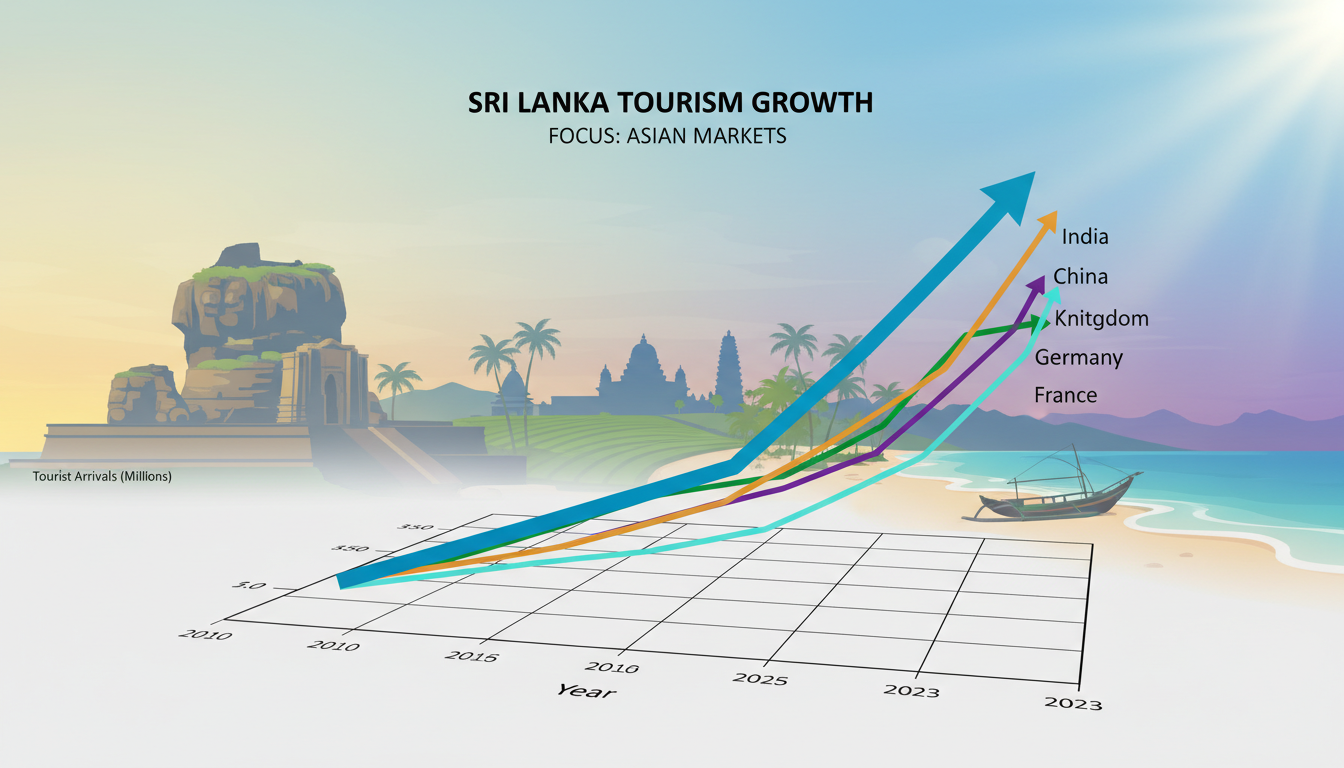
A powerful resurgence in the visitor sector is now a central force for economic growth in Sri Lanka. New figures for 2025 show a major milestone was reached. Tourist arrivals surpassed the previous 2018 peak, recording over 2.36 million visitors.
This strong rebound highlights the industry’s critical position. It stands as the third largest source of foreign exchange for the nation. This revenue is vital for stabilizing the broader economy.
The travel industry is also a fundamental source of jobs. It supports millions of livelihoods directly and indirectly across the island. This widespread employment generation strengthens communities.
Understanding this revival is essential to grasp the country’s current economic trajectory. The sector has a unique multiplier effect, where spending circulates within local areas. This report will analyze the drivers, projections, and challenges of this ongoing expansion.
1. Introduction: Sri Lanka’s Tourism Sector at a Crossroads
Sri Lanka’s travel sector now faces a crucial inflection point. It must determine how its recent revival translates into long-term, stable contributions to national prosperity.
Data for 2025 confirms a strong upward trajectory. This momentum has brought the industry to a juncture where rapid gains must be balanced with strategic, sustainable development.
This moment requires careful analysis. The choices made now will define the sector’s role in the country‘s financial future for years to come.
The Role of Tourism in National Economic Strategy
The government has long recognized the travel industry’s strategic value. It is formally embedded in national planning documents as a pillar for economic growth.
Historically, this has meant prioritizing foreign exchange earnings and job creation. Current policy frameworks are evolving. They now emphasize concepts like tourism master plans and adaptive policy responses.
These frameworks guide public investment and regulatory decisions. Their goal is to ensure the sector‘s expansion benefits the broader economy in a structured way.
Purpose and Scope of This Industry Report
This report provides an objective, data-driven assessment. It aims to analyze the recovery’s depth, its economic impact, and credible future pathways.
The scope is comprehensive. It covers historical resilience, current performance metrics, and growth projections. It also examines global economic contexts and domestic strategic challenges.
Information is synthesized from authoritative sources. These include the Sri Lanka Tourism Development Authority, the World Bank, and the IMF.
This analysis is vital for policymakers, businesses, and the public. It offers a fact-based exploration of a critical industry during a period of national rebuilding.
The following sections will logically progress from this foundational context. They will explore past crises, present data, and future strategies for sustained development.
2. Historical Context: Crises and Resilience in Sri Lankan Tourism
Historical data reveals a pattern of boom and bust that has defined Sri Lanka’s international tourism landscape. This volatility provides essential context for the current expansion.
The industry’s modern trajectory has been shaped by external shocks and internal challenges. Each event tested its fundamental strength and capacity to rebound.
From Civil War to Pandemic: A Series of Setbacks
The end of the decades-long civil conflict in 2009 was a pivotal moment. It unlocked the island’s potential for global promotion and investment in hospitality.
This period of peace fostered steady growth in visitor numbers for nearly a decade. However, this progress faced a relentless sequence of disruptions.
The sector endured the 2019 Easter Sunday attacks, a global health pandemic, and a severe domestic economic crisis. These events formed a compound shock of unprecedented scale for the country.
The 2018 Peak and Subsequent Downturn
The high point before the fall came in 2018. International tourist arrivals surpassed 2.3 million that year, generating approximately $4 billion in revenue.
This performance set a clear benchmark for the industry. The subsequent collapse was therefore dramatic and severe.
By 2021, inbound visitor numbers had plummeted by 92%. Official figures recorded only around 194,500 arrivals for the entire year.
This extreme low point illustrated the profound vulnerability of a travel-dependent economy. It highlighted how quickly fortunes could reverse.
Foundations of the Current Recovery
The steep downturn, however, laid the groundwork for the present rebound. Several key factors enabled the resurgence.
First was the inherent resilience of the hospitality and service tourism ecosystem. Businesses and workers adapted during the quiet years.
Second, massive pent-up global travel demand created a powerful tailwind once restrictions eased. Sri Lanka remained an attractive destination.
Finally, strategic policy reviews were conducted during the lull. This allowed for a more focused promotional approach when markets reopened.
This history of weathering multiple storms now directly informs the sector‘s role. Its proven ability to rebound makes it a logical candidate for driving economic activity.
3. The Current State of Tourism Recovery in Sri Lanka
Empirical evidence from 2025 confirms the industry has surpassed its pre-disruption peak. This section provides a quantitative snapshot of the travel sector’s performance. The data highlights both the strength of the rebound and the evolving landscape of international visitors.
Tourist Arrival Data: Post-Pandemic Rebound
The most compelling figure is the total for 2025. Official tourist arrivals reached 2,362,521. This number exceeds the previous high mark set in 2018.
This milestone signifies a complete numerical recovery. The path to this point was marked by steady growth. In 2024, the island welcomed approximately 1.5 million visitors.
That 2024 figure was double the total recorded in 2022. It showed rapid acceleration, though it remained one million below the old peak. The consistent upward trend month-by-month demonstrated resilient demand.
Key Source Markets: India, Russia, and Emerging Regions
The origin of these tourists reveals important strategic shifts. India has firmly established itself as the largest source market for Sri Lanka.
Russia consistently holds the position of the second-largest contributor. An interesting fluctuation occurred in early 2024. For a brief period, Russian arrivals temporarily surpassed those from India.
This highlights the potential volatility in these key markets. Diversification efforts are ongoing. Promotional activities are increasing in other regions, including Eastern Europe and the Middle East.
Understanding these markets is crucial for stable future planning. The heavy reliance on two primary sources presents both an opportunity and a risk for the sector.
Revenue Generation and Foreign Exchange Earnings
Beyond headcounts, the financial impact is profound. The travel industry is the third-largest generator of foreign exchange for the country.
This revenue is considered high-value. A significant portion of tourist spending circulates within the local economy. It supports hotels, restaurants, transport services, and craft vendors directly.
In the benchmark year of 2018, earnings from international visitors exceeded $5.6 billion. Current data indicates a strong correlation between rising arrivals and increasing revenue.
The full financial recovery in dollar terms is a key metric to watch. Early signs suggest spending per tourist is also showing positive trends.
The evidence points to a robust comeback. The tourist arrivals have not just returned; they have set a new record. The financial benefits are again flowing into communities across Sri Lanka.
4. How Tourism Recovery Becomes a Key Driver of Sri Lanka’s Economy
Beyond just visitor numbers, the sector’s true power lies in its deep integration into the domestic economy. It fuels economic growth at multiple levels, from national accounts to village markets.
This section breaks down the specific channels through which the tourism industry actively stimulates development. The analysis covers direct financial contributions, job creation, and the vital circulation of spending within local communities.
Direct Contributions to GDP and Employment
The direct impact on Sri Lanka‘s Gross Domestic Product is significant and growing. Official data shows the tourism sector directly contributed 5.9% to GDP in 2019.
This was a major increase from just 2.5% in the year 2000. The trend highlights the industry‘s expanding role in the national economy over two decades.
On the employment front, the figures are equally compelling. The sector directly provides jobs for nearly 490,000 people in Sri Lanka.
When considering indirect and induced jobs, over 3 million livelihoods are connected to the visitor economy. This makes it one of the largest sources of work in the country.
The Multiplier Effect on Local Businesses and Communities
The most powerful mechanism is the local multiplier effect. Money spent by international guests tends to circulate within the domestic economy multiple times.
A single dollar spent on a hotel room leads to further spending. This includes local food supplies, transport services, tour guides, and craft purchases.
This chain of transactions supports small guesthouses, family-run restaurants, and tuk-tuk drivers. Income generated this way supports community development and helps alleviate poverty in regions across the island.
The Hotels Association of Sri Lanka emphasizes this point. Revenue from visitors largely stays within the country, creating a broad and inclusive economic growth effect.
Contrast with Traditional Export Sectors
This local retention sets the tourism sector apart from some traditional export sectors. Industries like tea and apparel are vital for foreign exchange earnings.
However, a significant portion of revenue from these trade sectors can be repatriated. This means profits may go to foreign owners or be spent on imported inputs and machinery.
The visitor industry is different by its very nature. It is a services-based export consumed on-site.
Spending on accommodation, meals, and experiences has a high local content ratio. This creates a more potent tool for decentralized development.
It is important to note that tourism also requires some imports, especially for luxury hotels. Yet the net positive local retention of spending is a defining strength.
This deep integration positions the industry not just as a service provider. It is a foundational pillar for inclusive and sustainable growth in Sri Lanka.
5. Growth Scenarios and Projections for 2026
Forecasting models now provide a clear picture of potential visitor influx for 2026, offering valuable planning tools. This analysis shifts from examining current performance to mapping credible future pathways.
Industry stakeholders rely on these projections for resource allocation and strategy. The data presented here comes from established analytical techniques.
Methodology Behind the Forecast Models
The primary method used is time series analysis. This technique examines historical patterns in tourist arrivals to predict future trends.
It accounts for seasonal peaks, such as the high period from December to January. It also factors in the strong recovery momentum observed since 2022.
Analysts at the Sri Lanka Tourism Development Authority and other bodies use this data. Their models assume no major external shocks, like global recessions or geopolitical crises.
This approach provides a baseline for understanding potential growth. It is a standard practice in economic and travel industry reporting.
Conservative Scenario: 2.55 Million Arrivals
The conservative forecast for 2026 predicts approximately 2,546,644 international visitors. This scenario assumes a continuation of current growth rates.
It is based on existing air connectivity and marketing efforts in core source markets. The model anticipates moderate expansion without significant new investments.
This outlook represents a steady, manageable increase for the country. It would solidify the gains made since the post-pandemic rebound.
Month-by-month, arrivals would follow historical patterns. Peaks are expected during the European winter and local festival seasons.
Optimistic Scenario: 3 Million Arrivals
The optimistic scenario targets three million arrivals in 2026. Achieving this hinges on several positive developments.
Increased flight capacity from both existing and new airlines is crucial. Successful marketing campaigns in emerging regions like Eastern Europe and the Middle East would also drive numbers.
Sustained global travel demand and political stability within Sri Lanka are further prerequisites. This high-end projection would mark accelerated growth for the tourism sector.
Key drivers for this scenario include:
- Enhanced digital marketing by Sri Lanka Tourism.
- Improved airport and road infrastructure.
- Consistent service quality and visitor safety.
Benchmarks from PATA and Other Organizations
External validation comes from international bodies. The Pacific Asia Travel Association (PATA) has published its own forecasts for Lanka tourism.
PATA projects an average of 2,790,383 arrivals for the island in 2026. Its upper scenario reaches 3,395,565 visitors.
These figures often align with or exceed local projections. They consider broader regional travel trends and economic factors.
Institutions like the World Bank also monitor the sector’s performance. Their development authority assessments provide macroeconomic context.
These benchmarks help contextualize the island’s potential. They show that Sri Lanka tourism recovery is part of a larger regional narrative.
It is important to view all projections as data-based estimates, not guarantees. They are sensitive to external shocks like economic downturns or natural events.
For policymakers and business owners, these scenarios are essential planning tools. They guide investment in hotels, training, and promotional campaigns to harness future growth.
6. The Global Economic Landscape and Its Impact on Tourism
Global economic conditions directly influence travel patterns and spending decisions worldwide. The visitor sector in Sri Lanka does not operate in isolation. It is deeply connected to international financial trends and consumer confidence.
This section examines the broader environment that shapes tourist flows. It presents authoritative forecasts and analyzes potential risks. Understanding this context is essential for realistic planning.
IMF and World Bank Growth Forecasts for 2025-2026
Major financial institutions provide crucial benchmarks for global economic health. The International Monetary Fund projects worldwide growth at 3.3% for 2026.
The World Bank offers a slightly more conservative view. It estimates global expansion averaged 2.7% in 2025.
These figures represent a subdued post-pandemic trajectory. They indicate a fragile recovery rather than a robust boom. Such modest growth affects disposable income in source countries.
When consumers in Europe or North America feel financially secure, they travel more. When budgets are tight, long-haul trips to destinations like Sri Lanka may be reconsidered.
UN Tourism Confidence Index and Traveler Sentiment
The UN Tourism Confidence Index serves as a key barometer for the industry. Experts worldwide contribute to this sentiment gauge.
The current score for 2026 stands at 126 on a scale of 0-200. This indicates expectations for another solid year for international travel.
However, the score reflects slightly less optimism than the previous year. The organization projects global tourism growth of 3-4% in 2026.
Traveler sentiment shows distinct trends shaping demand. There is a continued emphasis on value-for-money experiences.
Sustainable travel choices and authentic cultural immersion remain important. These preferences influence destination selection and spending habits.
Geopolitical Tensions and Macroeconomic Volatility
Several risk factors cloud the global outlook. Ongoing geopolitical conflicts create uncertainty in many regions.
New trade tariffs and frictions, like those implemented by the U.S. in 2025, disrupt economic flows. Such measures can dampen business travel and corporate budgets.
Macroeconomic volatility presents another challenge. Fluctuations in fuel prices directly affect airline ticket costs.
Currency exchange rate instability impacts spending power. A strong dollar might make travel to Sri Lanka more expensive for some visitors.
Key reported risk factors include:
- Regional conflicts affecting traveler perceptions and routes
- Trade policy changes influencing business confidence
- Energy prices influencing transportation costs
- Inflationary conditions in major source markets
These global factors have tangible local impacts. Tourists from advanced countries may become more cost-conscious.
Business travel, including meetings and conferences, could be affected by trade uncertainty. The World Bank and other institutions monitor these linkages closely.
This analysis sticks to projections from authoritative sources. It avoids speculation about unpredictable events.
The global outlook remains cautiously positive for the travel industry. Yet Sri Lanka‘s visitor sector is inextricably linked to this fragile international context. Strategic planning must account for these external conditions.
A comprehensive report on the sector must consider this wider economy. The island’s success depends on both domestic strategy and global tailwinds.
7. Sri Lanka’s Domestic Economic Prospects for 2026
Looking ahead to 2026, Sri Lanka‘s own financial health presents a mixed picture of cautious optimism and notable risks. The domestic economy forms the essential backdrop for all commercial sectors.
This includes the vital tourism industry. Its performance is intertwined with broader national conditions like inflation, investment climate, and policy stability.
Authoritative institutions have released their forecasts. Their projections offer a data-driven view of the country‘s near-term trajectory.
World Bank and ADB Growth Projections
Major multilateral lenders provide a tempered outlook for Sri Lanka‘s growth. The World Bank projects the island’s economic expansion will slow to 3.5% in 2026.
The Asian Development Bank (ADB) forecasts a similar pace of 3.3%. These figures represent a moderation from the immediate post-crisis rebound period.
Both institutions cite ongoing structural reforms as critical for achieving even this modest growth. Their assessments are typically conservative, focusing on baseline scenarios.
They account for global headwinds and domestic fiscal constraints. This creates a benchmark for understanding the external view of the lanka economy.
Central Bank Policy: Inflation Targeting and Financial Reforms
The Central Bank of Sri Lanka holds a more optimistic internal forecast. It expects the economy to grow between 4% and 5% in 2026.
A major policy shift is underway to support this goal. The institution is adopting a flexible inflation-targeting framework.
Its primary aim is to maintain consumer price stability, targeting an inflation rate of around 5%. This is crucial for business planning and preserving the purchasing power of tourist spending.
Other financial reforms are also part of the agenda. Strengthening monetary policy frameworks and digitalizing payments are key priorities.
These changes aim to create a more predictable and efficient business environment. For the tourism sector, stable prices help manage operational costs and guest budgets.
Upside and Downside Risks to Economic Stability
The path to these growth targets is not guaranteed. A range of potential disruptions could alter the Sri Lanka economy‘s course.
Significant downside risks require careful monitoring:
- Trade restrictions or global slowdowns dampening export demand.
- Financial sector vulnerabilities and stress in the banking system.
- Political instability or social unrest disrupting development programs.
- Natural hazards, such as cyclones, impacting infrastructure and agriculture.
Conversely, several upside factors could improve outcomes. The resolution of international trade disputes would boost exports.
Technological advancements enhancing productivity across sectors is another positive. Political stabilization could also enable faster implementation of crucial reforms.
For the visitor industry, these macroeconomic factors are not abstract. Controlled inflation preserves the real value of tourist expenditures.
Natural disasters can directly disrupt travel and damage destinations. A stable investment climate attracts capital for new hotels and amenities.
The overall domestic climate for 2026 is one of cautious, reform-driven recovery. It is underpinned by significant contingent risks that require vigilant management.
This sets the stage for the next section, which explores how this economic climate specifically impacts the tourism industry.
8. Implications of the Economic Climate for the Tourism Industry
Economic forecasts for 2026 translate into tangible effects on travel demand and industry investment. The global and domestic analyses from previous sections point to specific consequences. These implications shape the operating environment for the visitor sector.
Understanding these links is crucial for realistic planning. The industry must navigate a landscape of moderated spending and financial constraints.
Pressure on Disposable Income and Domestic Travel
Slower global and domestic growth directly pressures household budgets. This moderates discretionary spending on leisure activities.
International tourists from key source markets may become more cost-conscious. They could prioritize shorter stays or regional destinations over long-haul trips to Sri Lanka.
Domestic travel within the country may also face headwinds. Local residents might cut back on hotel stays and dining out when inflation erodes purchasing power.
This dual pressure suppresses demand from both international and local visitors. The industry must adapt its offerings to this new reality of cautious spending.
Exchange Rate Volatility and Tourist Spending Patterns
Currency fluctuations present a complex dynamic. A weaker Sri Lankan rupee might make the destination cheaper for foreigners.
However, it simultaneously increases costs for essential imports needed by the industry. This includes food supplies, equipment, and luxury furnishings.
Tourist spending patterns are likely to shift in response. Visitors may seek more all-inclusive packages or budget accommodations.
They might spend less on discretionary items like souvenirs and optional tours. This exchange rate volatility makes revenue forecasting difficult for businesses.
Key impacts include:
- Increased operational costs for hotels and restaurants.
- More price-sensitive international travelers.
- Potential for shorter average length of stay.
Investment Climate for Tourism Infrastructure
Tighter financial conditions pose a significant hurdle. High public debt levels and fiscal consolidation limit government spending on public infrastructure.
This affects roads, airports, and utilities that support the visitor economy. Private investment in new hotels and resorts may also slow.
Banks facing their own vulnerabilities may be reluctant to lend for large projects. This constrains funding for facility upgrades and new developments.
The investment climate is further complicated by global trade tensions. Corporate travel budgets, including the MICE segment, could shrink.
Meetings, incentives, conferences, and exhibitions are sensitive to trade policy uncertainty. This represents a lost opportunity for high-value business travel.
Potential adaptation strategies for the sector include:
- Adjusting pricing models to maintain value propositions.
- Seeking alternative investment sources like foreign direct investment.
- Focusing on renovating existing properties over new construction.
These implications are not insurmountable. They represent manageable challenges that require strategic planning.
Both the private sector and government must collaborate. A proactive approach can turn these economic headwinds into opportunities for resilience.
9. Critical Challenges Facing Sustainable Tourism Growth
Multiple barriers stand between the current rebound and a future of stable, high-value tourism. The sector must now confront deep-rooted structural and operational issues.
These challenges are well-documented by industry analysts. Addressing them is essential for transitioning from recovery to long-term development.
This section outlines four critical areas of concern. Each requires targeted intervention from both the private sector and the government.
Infrastructure Deficits: Transportation and Accommodation
The physical foundation for growth remains inadequate in key areas. Road networks connecting major attractions are often congested and in poor condition.
Travel between cities like Colombo and popular southern beach towns can be slow. This reduces the time visitors spend enjoying destinations.
There is also a shortage of international-standard accommodation. While budget options exist, premium hotels are lacking in many regions.
This limits the country‘s ability to attract high-spending travelers. Niche markets, like cruise tourism, face specific hurdles.
Port facilities need significant upgrades to handle larger ships. Without better infrastructure, this lucrative segment cannot expand.
Human Resource Shortages and Skilled Labor Migration
A “brain drain” of talent poses a serious threat to service quality. Skilled hospitality workers, including chefs and managers, often seek opportunities abroad.
This migration is driven by better salaries and career prospects overseas. Local training programs have struggled to keep pace with industry demands.
The result is a gap in expertise, especially in luxury services. Reports consistently highlight shortages of trained staff in upscale hotels.
Enhanced vocational education is urgently needed. Partnerships between tourism businesses and technical institutes could help fill the void.
Retaining talent requires competitive wages and clear career paths. This is a fundamental challenge for sustainable development.
Environmental Degradation and Sustainability Concerns
Overdevelopment in coastal areas has damaged natural assets. Unregulated construction has put pressure on fragile ecosystems.
Popular beach belts show signs of environmental stress. Wildlife sanctuaries also face increased visitor numbers that strain their carrying capacity.
Protecting these assets is not just an ecological issue. It is central to the industry‘s long-term appeal.
Stricter regulations on building and waste management are necessary. A balance must be struck between welcoming visitors and preserving nature.
Sustainable practices benefit both the environment and the tourism product. They ensure destinations remain attractive for future generations.
Political and Policy Consistency
Historical shifts in government direction have disrupted long-term planning. Changes in administration often lead to revisions of national tourism master plans.
This inconsistency undermines investor confidence. Large projects require stable policy frameworks over many years.
Key areas like land allocation and tax incentives need predictability. Without it, both local and foreign investors may hesitate to commit capital.
A bipartisan approach to sector development could provide the stability needed. The challenge is to separate strategic policy from short-term political cycles.
Objective analysis shows that continuity in government strategy is a prerequisite for major infrastructure projects.
These challenges are not insurmountable. They represent known issues that require focused effort and resources.
Confronting them directly is the next logical step. It sets the stage for exploring strategic opportunities and market diversification.
The goal is to build a more resilient and valuable visitor economy for Sri Lanka.
10. Strategic Opportunities and Market Diversification
The next phase of expansion for the island’s travel sector hinges on strategic diversification beyond its current source markets. Industry veterans advocate a deliberate shift in focus. They recommend targeting high-spending demographic groups from traditional European nations.
This approach moves beyond reliance on volume-driven arrivals. It seeks to increase the average revenue generated per guest. The goal is to build a more valuable and resilient visitor economy for Sri Lanka.
Shifting Focus to High-Spending Tourist Segments
Analysts point to a clear economic rationale. Tourists from Germany, France, and the United Kingdom often have higher daily budgets. They typically stay longer and spend more on premium experiences.
This contrasts with some budget-conscious mass markets. Attracting these discerning travelers requires specific investments. New luxury hotels and high-end service standards are being developed to meet this demand.
The financial yield from a smaller number of high-value visitors can surpass that from a larger volume of cost-sensitive ones. This strategy directly supports tourism development goals for sustainable growth.
Promoting Niche Tourism: Wellness, Cultural, and MICE
The island possesses unique assets perfectly suited for niche markets. Wellness tourism, centered on authentic Ayurveda and meditation retreats, encourages extended visits. These guests often seek transformative health experiences.
Cultural exploration is another strong pillar. Sri Lanka boasts eight UNESCO World Heritage Sites. These range from ancient cities to sacred temples, offering deep historical immersion.
The Meetings, Incentives, Conferences, and Exhibitions (MICE) sector represents a major opportunity. Business travel brings high-spending delegates and corporate events. Developing this segment requires modern convention facilities and reliable support services.
Key niche segments for Lanka tourism development include:
- Wellness & Ayurveda: Long-stay retreats focusing on holistic health.
- Cultural Heritage: In-depth tours of historical and archaeological sites.
- MICE Travel: Business conferences, product launches, and corporate incentives.
- Adventure & Eco-tourism: Surfing at Arugam Bay, wildlife safaris, and hill country trekking.
Digital Transformation and Enhanced Marketing Campaigns
Reaching these new markets requires a modern digital footprint. Sri Lanka tourism promotion must leverage online platforms and data analytics. Targeted social media campaigns can showcase specific experiences to precise audience groups.
Improving the digital booking journey is equally important. User-friendly websites and seamless online payment systems reduce friction for potential tourists. Enhancing the digital visitor experience, from virtual tours to mobile travel guides, builds confidence.
This digital shift allows for more efficient use of marketing resources. It moves beyond broad branding to performance-driven outreach. The objective is to connect the right offer with the right traveler at the right time.
Leveraging UNESCO Heritage and Natural Assets
The country‘s greatest competitive advantages are its authentic cultural and natural treasures. The eight UNESCO sites provide a powerful narrative for marketing. They tell a story of ancient civilizations and living traditions.
Natural assets across the Indian Ocean island are equally compelling. Pristine beaches, lush rainforests, and diverse wildlife sanctuaries offer unmatched eco-tourism potential. Protecting these environments is not just ecological; it is central to the long-term product.
Strategic development involves creating curated experiences around these assets. This could include expert-led heritage walks or conservation-focused wildlife tours. Such offerings appeal directly to the high-value, experience-seeking traveler.
Current investments in eco-friendly resorts and boutique properties are aligned with this vision. They provide the accommodation quality that discerning visitors expect while minimizing environmental impact.
Diversification into these high-yield segments addresses previous challenges. It creates demand for skilled guides and hospitality professionals. It incentivizes the protection of natural and cultural sites. Most importantly, it builds a tourism economy less vulnerable to downturns in any single source market. This strategic pivot is essential for the next chapter of Sri Lanka‘s travel industry.
11. Policy Frameworks and Infrastructure Development
Public policy and large-scale infrastructure form the essential backbone for a competitive and growing travel sector. This section examines how these elements enable expansion.
It reviews strategic documents and physical projects. The goal is to assess their real-world impact on the sector.
Government Initiatives and Tourism Master Plans
The government has long used master plans to guide the tourism industry. The Third Tourism Master Plan from 2008 was a key document.
It set a vision for the sector‘s growth over many years. Current initiatives build on this foundational thinking.
New projects are being promoted to add value. These include developing an aquaculture park and encouraging gem and jewelry sales to visitors.
The Meetings, Incentives, Conferences, and Exhibitions (MICE) segment is also a focus. Beachfronts are offered for development, though land cannot be sold to foreigners.
The Sri Lanka Tourism Development Authority (SLTDA) plays a central role. This development authority facilitates marketing, regulation, and investment.
Other policy areas like visa facilitation, safety standards, and environmental rules are part of the framework. The challenge lies in consistent implementation over time.
Air Connectivity and Regional Accessibility
Improving air links is a critical focus for the country. Direct flight routes and frequencies determine how easily visitors can arrive.
Current connectivity serves traditional source markets like India and Russia. Increasing seat capacity from these regions is a priority.
Meeting future arrival projections requires more flights. Emerging markets in Eastern Europe and the Middle East also need better links.
Strategic partnerships with airlines are essential. More direct routes reduce travel time and make the island a more attractive destination.
This accessibility is not just about convenience. It is a fundamental driver of tourism volume and economic growth.
Investment in Luxury Hotels and Eco-Friendly Resorts
Investment trends in physical infrastructure are shifting. There is strong private sector interest in building luxury hotels and eco-friendly resorts.
This aligns with the strategic shift towards high-spending visitors. New properties are planned in coastal and cultural zones.
However, potential regulatory hurdles exist. Restrictions on foreign land ownership can complicate major investment deals.
Long-term leases are a common workaround for international developers. Policy stability is crucial for building investor confidence.
When rules are clear and consistent, capital flows more freely. This funds the high-quality infrastructure needed for tourism development.
The role of the tourism development authority is to streamline this process. It must balance promotion with sensible regulation.
Coherent, long-term policy frameworks are as crucial as physical builds. They provide the certainty that attracts the investment needed for sustainable sector growth in Sri Lanka.
12. The Empirical Link: Tourism and Economic Growth Theory
The connection between visitor arrivals and broader financial expansion is not just anecdotal. It is a well-studied economic principle. This section grounds the report’s central argument in established academic research.
It explores the theory that a thriving travel sector can propel a nation’s prosperity. The analysis moves from global concepts to specific local application.
Examining the Tourism-Led Growth (TLG) Hypothesis
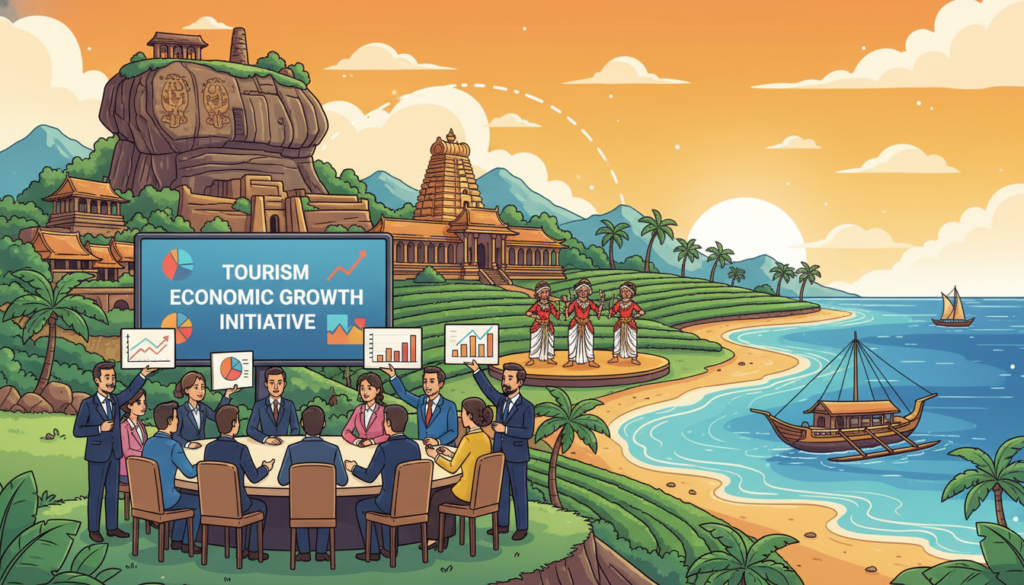
The Tourism-Led Growth hypothesis is a core idea in development economics. It posits that expanding international travel directly drives economic growth.
How does this work? Tourism acts as a service export. It generates vital foreign exchange earnings for the host country.
This revenue stimulates investment in hotels, transport, and related infrastructure. It also creates a wide range of jobs, from skilled managers to local guides.
The income from these jobs then circulates through the domestic economy. Studies show this effect is often strongest in non-OECD countries.
Their developing economies can benefit greatly from this high-value service sector. The TLG model provides a framework for understanding this dynamic.
Case Studies: Lessons from Turkey, Greece, and Asia
Real-world examples from other nations offer powerful evidence. Researchers have tested the TLG hypothesis in various contexts.
In Turkey, analysis showed a clear one-way causal link. Tourism development there was a significant driver of national economic growth.
Greece demonstrated a strong positive long-term relationship. Its travel industry has been integral to the national economy for decades.
Studies across Asia reveal a more complex, bidirectional relationship. In many countries, growth and tourism expansion fuel each other.
Key insights from these global case studies include:
- The travel sector’s contribution to GDP and employment is substantial.
- The effect is often more pronounced in developing countries.
- Success depends on strategic investment and policy support.
It is important to note some academic studies challenge a universal TLG link. The relationship can depend on local infrastructure and governance.
Application to Sri Lanka’s Development Trajectory
How does this empirical evidence apply to Sri Lanka‘s current path? The observed data aligns strongly with the TLG hypothesis.
The record tourist arrivals in 2025 represent the “tourism” side of the equation. The resulting foreign exchange earnings and job creation represent the “growth” side.
As a developing nation, Sri Lanka fits the profile where the TLG effect is often most powerful. The travel industry can act as a primary sector for national development here.
This theoretical lens connects directly to earlier sections of this report. The rising GDP contribution and employment figures are not random outcomes.
They are the expected results predicted by economic theory when a service export sector expands. The crisis years interrupted this process, but the underlying dynamic remains valid.
Strategic focus on the visitor sector is therefore empirically justified. It is a pragmatic and theoretically sound key driver for national progress.
The island’s trajectory is supported by both global precedents and established economic principles. This understanding reinforces the importance of sustained investment in this vital sector.
13. Strategic Imperatives for Sustained Growth
Sustaining the current momentum demands a clear set of integrated actions from both the public and private sectors. The analysis points to several core strategic priorities.
First, substantial investment in human capital and physical infrastructure is non-negotiable. This means building a skilled industry workforce and modernizing transport links.
Second, aggressive market diversification must build a more resilient visitor base. Policy consistency from the government is also vital for long-term planning and investor confidence.
These actions are interconnected. Progress in one area supports development in another. Executed together, they enable the sector to drive stable, inclusive economic growth for the nation.