The nation’s economy is on a path of stabilization after a severe downturn. This turnaround is supported by three critical forces: a resurgent tourism sector, steady diaspora remittances, along with the discipline of an International Monetary Fund support program.
In 2022, the island nation defaulted on its external debt for the first time. This event marked a dramatic fall from its prior status as a regional development success story.
Recent indicators show promising progress. Growth reached 5.0% in 2024, exceeding expectations. Inflation has been brought under control. Foreign exchange reserves are being slowly rebuilt.
This stabilization is promising but remains fragile. Converting it into long-term, inclusive growth that benefits all citizens requires sustained policy commitment.
This article will explore the causes of the crisis. It will detail each recovery driver and examine critical reforms like debt restructuring. Remaining social challenges and future risks will also be discussed.
Sri Lanka’s Economic Crisis: From Success Story to Sovereign Default
Before its sovereign default, this island nation was often cited as a development success story in South Asia. Its economy displayed impressive momentum for years. This facade of strength, however, masked deep structural problems that would later trigger a full-blown crisis.
The Pre-Crisis “Development Success Story” Model
For nearly three decades, Sri Lanka posted strong growth. From 1993 to 2017, its GDP expanded at an average of almost 6% per year.
This performance lifted the country from low-income to upper-middle-income status by 2018. The economy diversified beyond agriculture into manufacturing and services.
Human development indicators also improved significantly. This period created a widespread perception of sustained progress.
Structural Weaknesses: Fiscal Imbalances and External Dependence
Beneath the surface, critical vulnerabilities were growing. The government consistently collected very low revenue, around 12% of GDP.
This led to persistent budget deficits. To finance spending, the state borrowed heavily, causing public debt to balloon.
The composition of this debt also shifted risk. The nation moved from soft loans to more expensive commercial external debt like Eurobonds.
Meanwhile, the trade gap for imported goods widened sharply. It peaked near $10 billion in 2018.
This deficit was offset by volatile foreign income sources. The economy became reliant on these flows for basic foreign exchange.
The Perfect Storm: Sequential Shocks and Policy Missteps
From 2018 onward, a series of external blows hit the fragile system. A constitutional crisis created political instability.
The devastating Easter Sunday attacks in 2019 severely impacted a key sector. The COVID-19 pandemic then brought global travel and trade to a halt.
Finally, the Russia-Ukraine war disrupted vital imports and fueled global inflation. Domestic policy errors amplified the damage.
Major 2019 tax cuts slashed state revenue further. An abrupt, nationwide shift to organic farming in 2021 hurt crop yields.
These decisions damaged food security and export earnings. Confidence in economic management eroded.
The combined effect was catastrophic. Foreign exchange reserves dried up, making it impossible to pay for essential imports or service its debt.
In spring 2022, Sri Lanka defaulted on its external debt for the first time. This marked the painful end of its so-called success story.
The event underscored the urgent need for fundamental reforms to build true stability. Today, the nation’s focus is on fostering a renewed reform momentum to ensure such a crisis does not recur.
Tourism, Remittances and IMF Support Drive Sri Lanka’s Recovery Story
The turnaround from crisis is being powered by distinct yet complementary sources of foreign currency and policy discipline. This tripartite engine provides the immediate stabilization needed and creates a platform for future expansion.
A Tripartite Engine for Stabilization and Growth
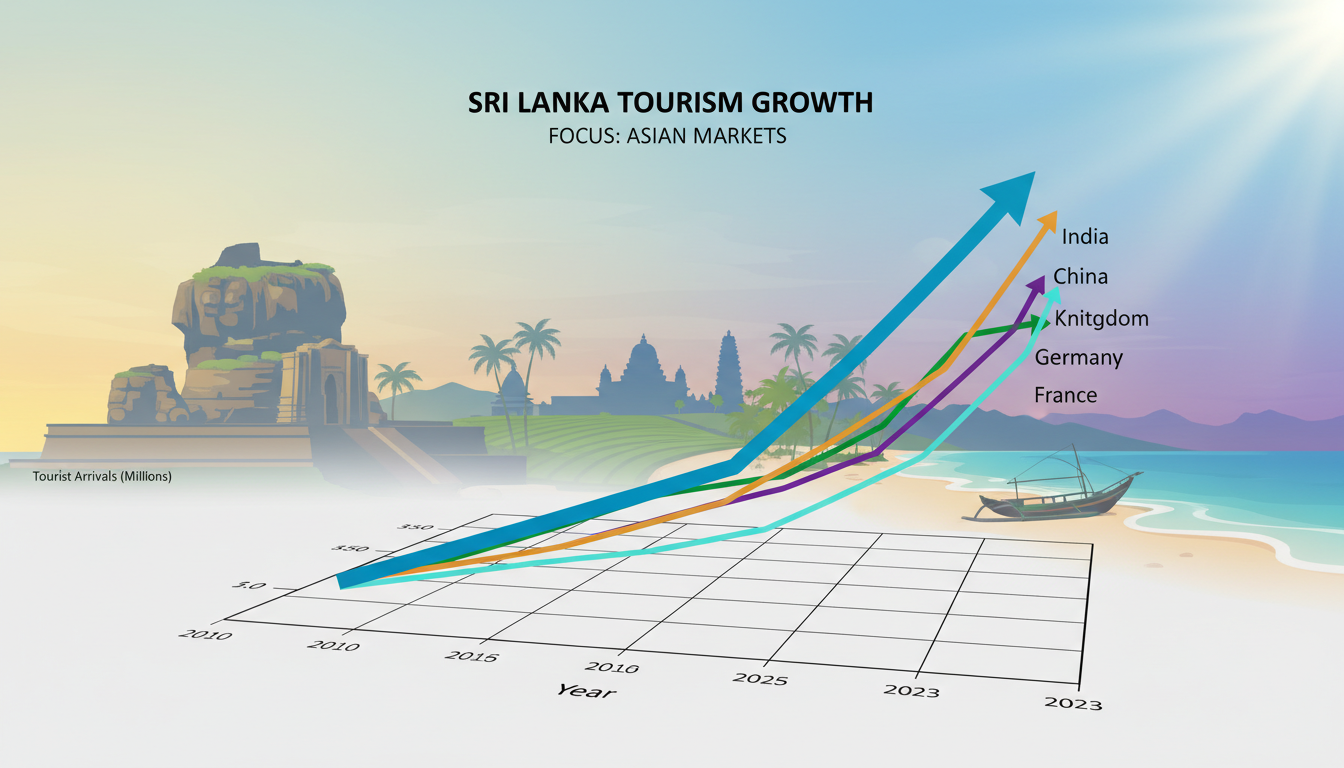
Visitor numbers are rebounding strongly post-pandemic. This sector brings in direct foreign currency and creates widespread employment. It is a leading force in the current recovery phase.
Funds sent home by citizens working abroad offer a vital, steady lifeline. These inflows support household spending and help stabilize the local currency. They provide a crucial buffer for the national current account.
Anchorizing these efforts is a program from the International Monetary Fund. The Extended Fund Facility, agreed in March 2023, supplies financial resources. More importantly, it enforces a strict reform agenda to rebuild international credibility.
Together, these three elements work in concert. They help offset the nation’s chronic trade deficit. They are essential for rebuilding depleted foreign exchange reserves.
This coordinated approach creates a more predictable environment. Such stability is necessary to attract new investment. It forms the bedrock for medium-term growth.
The framework sets clear targets for fiscal consolidation and inflation control. Achieving debt sustainability is its core objective. These measures underpin the entire national strategy.
This engine has delivered initial results, including controlled inflation and resumed economic expansion. Converting this fragile stability into lasting, transformative growth, however, requires deeper structural reforms.
The Resurgent Tourism Sector: Leading the Charge
A key industry is experiencing a remarkable revival, bringing vital foreign currency back into the economy. This resurgence is not just a sign of progress; it is a central pillar of national stabilization efforts.
The health of this sector directly impacts hundreds of thousands of jobs. It supports retail, hotels, restaurants, and transport services across the island.
Sustaining this momentum requires decisive action. Policymakers must address infrastructure gaps and ensure benefits reach more people and places.
Record Arrivals and Revenue Rebounding Post-Pandemic
International visitor numbers have climbed sharply since 2022. Earnings from this source have become the fastest-recovering stream of foreign exchange.
Data shows arrivals surpassing pre-crisis levels in key markets. This rebound provides immediate relief for the national current account.
Each tourist represents direct spending on local services. This activity generates tax revenue and supports small businesses. Its quick return made it a top priority for economic managers.
Infrastructure Demands: Airports, Transport, and Destination Development
Current success highlights existing weaknesses. Experts warn that growth will stall without major upgrades.
Critical needs include:
- Modernizing the main international airport to handle higher passenger traffic.
- Improving road and rail links to popular cultural and natural sites.
- Developing basic amenities—like water, waste management, and internet—in emerging destinations.
Safety standards and service quality must also keep pace. Investment in these areas is essential for long-term competitiveness.
Without such reforms, the country risks losing its renewed advantage. The government faces a clear choice: build capacity now or miss a historic opportunity.
Spreading Benefits: The Push for Regional Tourism and Inclusive Growth
A strategic shift is underway to decentralize the visitor economy. The goal is to promote regions beyond the traditional western coastal belt.
This push aims to generate employment in rural areas. It seeks to spread income more evenly and reduce regional inequality.
For this to work, investment must focus on several areas:
- Destination marketing for lesser-known historical and ecological sites.
- Skill development programs for local guides, hospitality staff, and artisans.
- Community-based projects that allow residents to share in the revenue.
Enhancing the visitor experience increases spending per tourist. It also encourages longer stays and repeat visits.
The path forward is clear. Building a more resilient and equitable industry requires sustained commitment. The time for implementation is now.
Diaspora Remittances: A Vital Lifeline of Foreign Exchange
Since 2010, diaspora remittances have consistently provided the largest share of foreign exchange entering the country. These transfers from citizens working abroad became the main source of external income. For years, they have formed a cornerstone of national finances.
Between 2014 and 2020, annual inflows averaged approximately $7 billion. This figure represented about 8% of the nation’s GDP. Such scale underscores their fundamental role in the economy.
These flows offer a practical lifeline. They support household spending and help millions of people. Their steady nature provides a buffer against economic shocks.
Steady Inflows Supporting the Current Account and Currency Stability
The economic function of these funds is multifaceted. They directly bolster the current account balance. This is a key measure of a nation’s international financial health.
When foreign exchange enters through official channels, it supplies the banking system. This infusion helps the central bank manage the local currency’s value. Stabilizing the rupee is a continuous process.
Compared to other capital flows, remittance streams show notable resilience. They did not collapse during the recent crisis. This reliability made them a critical source of stability when it was needed most.
Households use this money for daily needs and education. It boosts disposable income at the grassroots levels. This support is vital for maintaining social cohesion during hard times.
Offsetting Trade Deficits and Financing Essential Imports
These inflows act as a crucial counterbalance. The nation has long run a structural trade deficit, importing more goods than it exports. Worker transfers help finance this gap.
Essentially, the foreign exchange sent home pays for vital imports. This includes fuel, medicine, and food. These items are critical for daily life and continued progress.
Recent data illustrates this offsetting effect. In early 2025, strong earnings from visitors and steady remittances helped maintain a current account surplus. This occurred despite a rise in import levels.
However, over-reliance on this single source is a recognized vulnerability. The government acknowledges this risk. A significant portion of these funds originates from a few host countries, like Gulf states.
Their economic conditions can directly impact inflow volumes. Diversifying the economy and export base remains a long-term goal. Managing external debt also requires a broader strategy.
For now, these transfers remain indispensable. They provide both macroeconomic support and household resilience. Their role in the nation’s financial stability is undeniable.
The IMF’s Extended Fund Facility: A Framework for Discipline
March 2023 marked a critical juncture with the approval of a multi-year financial support arrangement. The International Monetary Fund agreed to a 48-month Extended Fund Facility worth about $3 billion.
This program serves as the central blueprint for national economic repair. It provides not just funds, but a structured reform agenda.
Adherence to this framework has helped tame inflation and rebuild reserves. It enforces the discipline needed to convert short-term stability into lasting growth.
Program Objectives: Restoring Debt Sustainability and Macroeconomic Stability
The IMF program has three clear, interlinked goals. First, it aims to restore debt sustainability by making public debt manageable again.
Second, it focuses on rebuilding the nation’s depleted foreign exchange buffers. Third, it targets bringing runaway price increases under firm control.
These objectives address the core weaknesses exposed during the crisis. Achieving them is fundamental for any future expansion.
The program sets specific quarterly targets. Progress is reviewed every three months by International Monetary Fund staff.
This process creates a measurable roadmap. It moves policy from broad statements to actionable measures.
Key Pillars: Revenue-Based Fiscal Consolidation and Monetary Anchoring
The reform strategy rests on two main pillars. The first is revenue-based fiscal consolidation.
This means the government must increase its income significantly. Reforms focus on raising tax rates and, more importantly, widening the tax base.
The goal is to boost state revenue to a sustainable share of GDP. This reduces reliance on borrowing to fund public spending.
The second pillar is monetary policy anchoring. The central bank must maintain a tight stance to control inflation.
Its primary tools are policy interest rates and reserve management. This approach helps rebuild foreign currency reserves over time.
Together, these pillars correct the fiscal and monetary imbalances that fueled the downturn. They provide a technical foundation for recovery.
Rebuilding Credibility and International Confidence
A core function of the Extended Fund Facility is restoring lost trust. Strict performance criteria force consistent policy implementation.
This external discipline helps overcome domestic political resistance. It signals a serious commitment to change.
Rebuilding credibility with global investors and creditors is essential. It is the key to regaining access to international capital markets.
It also attracts foreign direct investment. Former Central Bank Deputy Governor Yvette Fernando emphasized the stakes.
“Macroeconomic stability must not be compromised,” she warned. “Losing credibility now would be extremely costly.”
The danger of reform fatigue or deviating from the program is real. Such a misstep could swiftly undermine hard-won stability.
The IMF program is therefore more than a financial lifeline. It is a framework for rebuilding the nation’s financial reputation, one quarterly review at a time.
Debt Restructuring: The Path to Solvency
Central to the nation’s recovery plan is the arduous task of renegotiating its overwhelming debt obligations. This debt restructuring is a core component of the international monetary fund program.
It is not a cancellation of what is owed. Instead, it is a formal renegotiation of loan terms.
The goal is to make the total debt load manageable for the long term. Success here is a strict prerequisite for any lasting stability.
Negotiations with Official Creditors and Bondholders
The government is managing two parallel negotiation tracks. Each involves different types of lenders with distinct interests.
On one track are official bilateral creditors. These are other sovereign nations that lent money directly.
Key players include China, India, and members of the Paris Club. Japan is also a significant lender.
The second track involves private international bondholders. These are the institutions and funds that purchased the country‘s Eurobonds.
For both groups, the discussion focuses on changing the original loan conditions. Options include extending repayment periods, lowering interest rates, or in some cases, reducing the principal amount.
This complex process is highly sensitive. Officials must balance creditor demands with a deal that is fair to citizens.
The economic rationale is clear. Lower annual debt service payments free up crucial government revenue.
That money can then be directed toward essential public services and investment. It stops scarce funds from simply leaving the country as interest.
Reducing the Debt Burden and Paving the Way for Market Re-access
The primary objective is to achieve debt sustainability. This means bringing the public debt-to-gdp ratio down to a manageable level.
A successful agreement acts as a critical gateway. It signals to the world that the economy is back on a credible path.
This restored credibility is essential for the country to eventually re-enter international financial markets. Future borrowing for development would then be possible at reasonable rates.
The crisis was fueled by unsustainable external debt. Restructuring aims to definitively solve this problem.
Recent progress is encouraging. As negotiations near completion, the public debt burden has begun to decline from its peak.
This is a vital sign that the process is working. It creates the fiscal space needed for future growth.
However, the time and complexity involved underscore the fragility of the recovery. Reforms in debt management must be permanent.
Overall, debt restructuring is a technical but indispensable step. It converts short-term stabilization into a foundation for long-term solvency.
Taming Inflation and Restoring Monetary Policy Control
The journey from hyperinflation to price stability marks one of the most significant turnarounds in the recovery narrative. Bringing runaway consumer price increases under firm control and methodically rebuilding national buffers are central to restoring lasting stability. The central bank has been the primary institution steering this technically complex process.
From Hyperinflation to Targeted Rate Cuts
In 2022, the crisis manifested most painfully at the market and kitchen table. Inflation peaked at nearly 70%, eroding living standards as prices for food, fuel, and essentials skyrocketed. Savings lost value rapidly, creating widespread hardship.
The central bank responded with aggressive monetary policy tightening. It raised interest rates sharply to curb demand and stabilize the local currency. This was a painful but necessary step to break the destructive cycle of rising prices and a falling rupee.
These measures worked. As inflation subsided and fell below the target range, the central bank could shift stance. In May 2025, it reduced the policy rate to 7.75%.
This move made borrowing cheaper for businesses and households. The goal is to revive private sector credit and consumer spending. Supporting growth in the real economy is now the priority.
The Central Bank’s Role in Rebuilding Foreign Exchange Reserves
The institution holds a dual mandate. Controlling inflation is one part. Managing the country‘s foreign exchange reserves is the other, equally critical, function.
Reserve accumulation is a slow, deliberate process. During the crisis, reserves fell to critically low levels, insufficient to cover essential imports. Rebuilding them is fundamental for buffering against future external shocks.
By 2025, reserves had been steadied at around $4.7 billion. This represents a more comfortable, though still modest, position. It provides a crucial safety net for national economic security.
The importance of central bank independence in this process cannot be overstated. Making these technically-driven monetary policy decisions requires insulation from short-term political pressures. Consistent, rules-based policy is key to maintaining hard-won credibility.
Current stability, with inflation in single digits and foreign exchange reserves rebuilt, represents a major turnaround. It forms a essential pillar for the nation’s financial security and future prosperity.
Fiscal Reforms and Revenue Mobilization
The state’s chronic inability to collect sufficient revenue lies at the heart of the recent financial turmoil. For years, government income hovered near 12% of GDP, among the world’s lowest levels. This fundamental weakness made persistent budget deficits and soaring public debt inevitable.
Correcting this flaw is a non-negotiable pillar of the current stability program. The prescribed path is revenue-based fiscal consolidation. This process aims to strengthen the state’s finances through a dual approach: raising more money and spending it more wisely.
Overhauling the Tax System to Widen the Base
Historically, the tax system has been narrow, inefficient, and riddled with exemptions. This design left a small share of citizens and businesses bearing the burden. The current reforms target this structure directly.
Key policy measures include increasing the value-added tax (VAT) rate. More importantly, officials are working to remove numerous special exemptions. The goal is to bring more economic activity into the formal tax net.
Specific areas of focus for the overhaul are:
- Reforming personal and corporate income tax to make them more progressive and efficient.
- Improving tax administration and digital systems to combat evasion.
- Bringing a larger portion of the informal economy into the compliant taxpayer base.
Better management and implementation of these rules are just as critical as the laws themselves. The success of these reforms directly impacts long-term fiscal sustainability.

Controlling Expenditure and Achieving Primary Surpluses
A critical target in the fiscal program is achieving a primary surplus. This term refers to the budget balance before interest payments on debt are counted. Hitting this target means the government generates enough revenue to cover all its non-interest spending.
Creating this surplus is essential for debt reduction. It proves the state can live within its means without relying solely on economic growth. On the expenditure side, this requires difficult choices.
Rationalizing the large public sector wage bill is necessary. So is reforming costly subsidy programs. The challenge is to do this while protecting critical social safety nets and productive public investment.
Recent data shows initial progress. In the first half of 2025, a larger primary surplus was recorded. This was driven by higher tax collection, particularly from imports, alongside controlled capital expenditure.
Raising taxes after a deep crisis is socially and politically difficult. It requires careful communication and equitable design to maintain public support. The time for these essential reforms is now, as they form the bedrock of a solvent state capable of funding public services for the long term.
Beyond Stabilization: The Need for Export-Led and FDI-Driven Growth
Achieving macroeconomic balance is a milestone, yet it remains fundamentally different from achieving widespread economic advancement. Experts warn that stabilization alone will not deliver prosperity.
The long-term goal must be a decisive shift. The nation needs to move from a consumption-and-debt-driven model to one powered by exports and productive foreign investment.
This is the essential next phase of the national recovery. Building a dynamic, job-creating economy requires deeper integration into global systems.
Simplifying Regulations to Attract High-Quality Foreign Investment
The country has historically underperformed in attracting Foreign Direct Investment (FDI). Before the crisis, FDI stock was only 15% of GDP, below peer averages.
This gap is often attributed to a complex, slow, and opaque regulatory environment. Such a system discourages investors who seek clarity and efficiency.
Dr. Ganeshan Wignaraja cautioned that “If approvals remain slow and rules unclear, capital and jobs will go elsewhere.” Regional competition from nations like Vietnam and Bangladesh is intensifying.
The urgency for regulatory simplification is clear. Key measures must include streamlining business approvals and ensuring clear rules for entry and exit.
Protecting investor rights is also crucial for building confidence. Successful regulatory reforms are a core part of improving the environment for sustainable development.
Without a decisive improvement in the business climate, the nation risks missing the current wave of supply chain diversification in Asia. This could lock in a slower growth trajectory for years.
Integrating into Global Supply Chains Beyond Traditional Sectors
A shift toward export-led growth demands moving beyond traditional industries. Reliance on textiles and tea leaves the economy vulnerable to market swings.
The future lies in higher-value areas. Technology services, specialized manufacturing, and niche agricultural products offer new pathways.
Integrating into global supply chains in these fields can boost the export share. It also creates more formal, higher-skilled employment opportunities.
Such jobs are crucial for absorbing the labor force, especially young people. They typically offer better wages and stability than informal work.
The process requires proactive economic diplomacy and targeted investment promotion. The government must identify strategic sectors where the nation holds a competitive place.
Building this new sector mix is key to long-term sustainability. It diversifies the economic base and spreads risk.
Progress depends on effective policy design and implementation. Institutions like the World Bank can provide advisory support for this complex transition.
The time for action is now. Converting fragile stability into transformative growth hinges on these forward-looking reforms.
The Digital Economy and High-Growth Sectors for the Future
Experts point to a cluster of emerging industries as the key to unlocking transformative growth in the coming decade. Moving beyond stabilization, the national economy must cultivate new, modern engines of prosperity.
This forward-looking agenda is detailed in policy frameworks like ‘Sustaining transformative growth, 2025-2030’. It identifies priority areas beyond traditional strengths.
Diversifying the Economic Base for Resilience
Strategic diversification is critical for building long-term stability. Relying heavily on a few sectors leaves the entire country vulnerable to specific downturns.
A more varied industrial base acts as a shock absorber. It ensures progress continues even if one industry faces challenges.
The digital economy stands out as a prime candidate for expansion. This sector includes information technology services, software development, and digital finance.
It creates high-skilled jobs and connects the place to the global knowledge economy. Crucially, it has a low physical footprint, requiring less intensive infrastructure.
Initiatives like the AI Integration in Digitalization Push are transforming this space. They aim to boost productivity in fields from agriculture to financial services.
Other promising sectors offer complementary pathways. Sustainable agriculture adds value to traditional farming.
Logistics and port-related services leverage Colombo’s strategic geographic place. Light advanced manufacturing can integrate into regional supply chains.
Fostering these new industries requires targeted policy measures. Investment in digital infrastructure, like broadband and data centers, is foundational.
Equally important is building human capital through STEM education. Innovation-friendly regulations are needed to attract investment and speed up implementation.
The educated workforce presents a significant advantage for this process. It provides the talent pool needed for a digital and knowledge-intensive future.
This diversification agenda links directly to the goal of “transformative growth“. The aim is not just a return to pre-crisis levels.
It is about building a more modern, productive, and resilient economic structure. Such a structure can deliver broad-based benefits to people across the nation.
Successful reforms in this area will determine long-term sustainability. The government must act with urgency to seize this historic opportunity.
The time for laying these new foundations is now. They are essential for a robust recovery and a prosperous future.
The Human Cost: Poverty, Labor Markets, and Social Recovery
Behind the headlines of fiscal targets and GDP growth lies a more difficult story of social hardship. The financial crisis has left deep human consequences that persist even as macroeconomic indicators stabilize.
True social recovery lags behind. Rates of poverty and malnutrition remain above pre-crisis levels. This reality slows overall national progress.
Persistent Challenges: Real Wages, Nutrition, and Regional Inequality
For many working people, a job does not guarantee security. Real wages are significantly lower than they were in 2019.
This means purchasing power has been eroded. Affording basics remains a struggle despite lower inflation.
Nutritional deficits are a serious concern, especially among children. Food insecurity worsened during the downturn. Its effects can have lifelong impacts.
Geographic inequality is another major hurdle. Economic gains are concentrated in the Western Province.
Rural and estate areas are often left behind. This disparity fuels social and political tensions across the country.
Analysts warn of a potential “lost decade” for living standards. Even with growth, average GDP per capita may not return to its pre-crisis place before 2028.
Low Female Labor Force Participation and Job Creation Gaps
The labor market reveals critical weaknesses. Female labor force participation is chronically low.
Social norms and a lack of childcare support are key barriers. This represents a major untapped resource for the economy.
Job creation has not kept pace with needs. The formal sector cannot absorb enough of the workforce.
Key challenges in the labor landscape include:
- A significant gap in quality, stable employment opportunities.
- Weak wage growth that fails to match the cost of living.
- Persistent inequality in access to work based on gender and region.
Measuring success requires looking beyond aggregate growth figures. True turnaround is seen in improved livelihoods and better job quality.
Reducing poverty and inequality must become explicit policy goals. This requires targeted social protection programs.
Inclusive growth strategies are essential. The World Bank and other partners emphasize this focus.
Effective implementation of these social reforms is crucial. The government faces the complex task of balancing fiscal discipline with social investment.
The time to address these human costs is now. A robust economy must work for all its people.
Political Transition and Policy Consensus
A new administration took office with the dual challenge of honoring international commitments and addressing domestic demands. This political shift marks a critical phase in the national journey. It tests the ability to maintain policy discipline while responding to urgent social needs.
The September 2024 presidential election was a significant event. Voters delivered a clear mandate for change, bringing a new political force to power. Left-wing candidate Anura Kumara Dissanayake secured victory.
His tasks are complex. They involve implementing electoral priorities like social justice and anti-corruption. At the same time, he must continue steering the economy through its fragile recovery.
The 2024 Election and Commitment to the Reform Framework
Despite campaign criticism of the international bailout program, the new government made a pragmatic choice. It committed to respecting the targets of the IMF program concluded by its predecessor. This decision ensures vital policy continuity.
Such continuity is critical for maintaining market confidence. It signals a serious approach to debt sustainability and stability. Boosted by a large parliamentary majority, the administration has room to act.
There is also some public consensus on the need for difficult reforms. This consensus provides a foundation for action. The government now seeks to infuse the technical reform framework with a greater focus on social equity.
Balancing these objectives is the core policy challenge. The country cannot afford a reversal of the hard-won macroeconomic gains. Yet, people demand visible improvements in their daily lives.
Building State Capacity for Effective Implementation
Agreeing to reforms on paper is one thing. Executing them effectively on the ground is another. ODI Director Dirk Willem te Velde identified implementation capacity as the defining challenge.
This means strengthening the skills, efficiency, and integrity of public institutions. Complex reforms in tax administration, investment promotion, and service delivery require capable management.
Building this state capacity is a long-term process. It involves training civil servants and modernizing systems. It also requires fighting corruption to ensure fair implementation.
Political consensus across party lines is equally important. The broad direction of economic policy must be shielded from partisan reversal. Past progress was often undone with changes in government.
A durable consensus can prevent such setbacks. It locks in essential measures for the long haul. This provides predictability for businesses and citizens alike.
Public support for difficult reforms remains fragile. It must be nurtured through transparent communication. Anti-corruption efforts and visible fairness in policy design are crucial.
The ultimate test for the political system is clear. It must deliver tangible results for citizens. Effective implementation is the only path to converting stability into shared growth.
This time of transition offers a unique opportunity. The government can build a more capable state. Such a state can manage complex sector reforms and improve living levels for all people.
External Shocks and Climate Vulnerability
The economic toll of Cyclone Ditwah highlights the urgent need for climate resilience as a core policy priority. This event starkly illustrates how external environmental threats can inflict massive damage, derailing hard-won progress.
Recent crisis management efforts now unfold against a backdrop of increasing weather extremes. The country‘s geographic place makes it inherently exposed.
Building long-term stability requires confronting these risks head-on. Adaptation is no longer just an environmental concern.
The Economic Impact of Cyclone Ditwah and Future Resilience
Preliminary estimates from Cyclone Ditwah are sobering. The storm caused around $4.1 billion in direct damage.
It affected districts that generate 82-84% of the national gdp. Losses were equivalent to about 4% of total output.
A single event can wipe out a significant share of annual growth. This diverts scarce resources from development to urgent reconstruction.
The process of rebuilding drains public funds. It also disrupts vital supply chains for essential goods.
Key sectors like agriculture and infrastructure face immediate ruin. Such shocks strain the entire economy.
Future climate-related disasters are expected to increase in frequency and intensity. This reality demands a proactive management strategy.
Adaptation as a Long-Term National Priority
Inherent vulnerability as an island nation is a constant fact. Cyclones, flooding, and droughts threaten livelihoods.
Making infrastructure more resilient is a fundamental investment. Protecting coastal areas and promoting climate-smart agriculture are essential measures.
This must move from a peripheral issue to a central economic and national security goal. The government has a clear role in leading this process.
Climate resilience is directly tied to fiscal sustainability. Future disasters could strain public finances with unbudgeted recovery costs.
This potentially undermines debt sustainability and hard-earned stability. Prudent policy must budget for resilience spending now.
Building resilience also presents significant economic opportunities. Developing renewable energy reduces dependence on imported fossil fuels.
It can create green jobs and attract new investment. This aligns with broader reforms for a more robust economy.
The time for decisive action is immediate. Framing climate risk as a clear and present danger is crucial.
It threatens not just the environment but the very foundation of the recovery. Improving living levels for all people requires a secure foundation.
Effective tax and spending measures should incorporate resilience criteria. Every new project must consider future external shocks.
The crisis taught harsh lessons about preparedness. Ignoring climate vulnerability would be a repeat of past mistakes.
Sustained progress depends on building an economy that can withstand the storms ahead. This is the next critical phase in securing the nation’s future.
The World Bank Group’s Role in the Recovery Partnership
Long-term development partnerships provide essential backing beyond immediate crisis response. While one institution focuses on stabilization, another offers sustained engagement for rebuilding.
The World Bank Group has been a partner for over seven decades. Its role combines financial resources with deep technical expertise.
This multifaceted support system is critical for the nation’s journey. It helps translate short-term stability into lasting progress.
As of March 2025, the World Bank had approved $1.85 billion for 12 active operations. These funds come through its International Development Association and International Bank for Reconstruction and Development.
The portfolio reflects a holistic approach to development. Funding targets four key areas to build a more resilient economy.
Financing and Advisory Support for Inclusive and Green Growth
The current allocation spreads across vital sectors. Each category addresses a specific foundation for future growth.
Infrastructure receives the largest share, at 36%. This includes transport networks and urban systems that form the backbone of commerce.
People-focused areas get 24% of funding. Education, health, and social protection programs invest directly in human capital.
Environmental sustainability claims 21%. Projects in agriculture and water management promote climate resilience.
The remaining 19% targets prosperity. Finance, competitiveness, and governance reforms aim to improve the business climate.
Beyond loans, the World Bank provides critical analytical work. Its research informs policy decisions within the government.
This advisory role is often as valuable as the financing. It helps ensure measures are evidence-based and effective.
The International Finance Corporation (IFC) operates as the private sector arm. It has invested over $2 billion in local enterprises.
IFC engagements catalyze private investment that the public sector cannot achieve alone. This is essential for job creation and innovation.
The Updated Country Partnership Framework Focus on Jobs
A new strategic document guides this engagement. The updated Country Partnership Framework (CPF) sharpens the focus on a pressing need.
Its central aim is to assist the country in pursuing inclusive and resilient growth. The mechanism for this is private sector-led job creation.
This alignment responds directly to post-crisis realities. High-quality employment is a cornerstone of social recovery.
The framework represents a shift from pure stabilization. It looks toward transformative progress that benefits more people.
Effective use of this partnership requires strong implementation capacity. Government agencies must manage projects efficiently to achieve impacts.
Building this institutional capability is a long-term process. It involves skills development and system modernization.
The World Bank acts as a knowledge-driven partner. It supports the nation’s own reform agenda rather than imposing external solutions.
This contrasts with shorter-term crisis stabilization roles. The partnership is designed for the marathon, not just the sprint.
Successful collaboration can improve living levels across the country. It helps secure a better place in the global economy.
The time for leveraging this international solidarity is now. It offers a crucial pathway toward debt sustainability and shared prosperity.
A Fragile Recovery: Recognizing Risks and Vulnerabilities
Beneath the surface of improving statistics, significant vulnerabilities threaten to unravel recent progress. Speakers at a recent ODI/CEPA event issued a clear warning. The nation’s recovery remains fragile despite clear stabilization gains.
This section serves as a necessary reality check. It tempers optimism with a clear-eyed look at risks that could derail the economy. Both internal pressures and external shocks pose serious challenges.
The Danger of Reform Fatigue and Complacency
A major internal risk is the rise of reform fatigue. This term describes waning public tolerance for difficult measures. After the immediate crisis passes, patience for austerity often wears thin.
This social pressure can push politicians to abandon necessary policy changes. It threatens the stability built through disciplined fiscal and monetary actions.
Another related danger is complacency. Early success in controlling inflation and rebuilding reserves might lead to premature relaxation.
A return to loose policy could risk a new cycle of instability. Maintaining discipline over time is crucial for lasting growth.
The government must communicate the long-term need for these reforms. Public support is essential for their continued implementation.
External Global Economic Headwinds
The country remains highly exposed to forces beyond its control. Its open economy depends heavily on external flows for stability.
A global economic slowdown is a primary concern. Reduced international demand could hurt export sector earnings and visitor arrivals.
Persistently high interest rates in advanced economies, like the United States, present another hurdle. They make future external borrowing more expensive for the country.
This complicates the path to debt sustainability once market access resumes.
Ongoing geopolitical tensions add a third layer of risk. Conflicts can disrupt vital trade routes and remittance channels almost overnight.
These flows are critical for financing essential imported goods. Their disruption would strain the current account quickly.
Domestic policy alone cannot guarantee insulation from these shocks. This reality underscores the fragility of the current recovery phase.
Proactive risk management is the best defense. Maintaining adequate reserve buffers provides a crucial safety net.
Staying the course on agreed reforms builds fundamental strength. It prepares the economy to better withstand unpredictable external events.
The message from analysts is prudent and cautionary. Sustained vigilance and discipline from both policymakers and the public are non-negotiable.
Converting fragile stability into durable, shared growth requires navigating these risks with care. The process is far from complete.
Sustaining Transformative Growth: The Road Ahead for Sri Lanka
The coming years present a critical opportunity to lock in stability and pursue transformative growth. The nation stands at a crossroads. It can consolidate recent gains into a new era of sustainable advancement or risk falling back into cycles of crisis.
Success hinges on a clear formula. Unwavering commitment to the agreed reform program maintains macroeconomic discipline. This must be paired with aggressive investment in key infrastructure and decisive deregulation to unlock private capital.
True progress means growth that is inclusive, job-rich, and resilient to shocks. It must lift living standards for all people. This is the core objective outlined in forward-looking policy agendas.
Realizing this future demands strong political will and capable state implementation. The path is charted, though difficult trade-offs remain. With sustained effort, the country can secure a more prosperous and stable economy.