The nation’s financial position shows clear signs of strengthening. Official reserve assets climbed to US$6.83 billion by December 2025. This marks a sharp monthly increase of over 13%.
Foreign currency holdings reached around US$6.73 billion. This build-up provides a much stronger external buffer for the country. It is a stark turnaround from the depths of the 2022 crisis.
Back then, the nation’s reserves plunged to near zero. This led to a historic default on its sovereign debt. The situation was dire for the island’s economy.
A crucial lifeline has been the International Monetary Fund’s Extended Fund Facility program. Alongside a comprehensive debt restructuring, it has helped stabilize public finances. These reforms are central to the current progress.
This article examines whether this rebound is built to last. It will analyze the roots of the crisis, the reform journey, and the challenges ahead. Key positive signs include a return to GDP growth and controlled inflation.
Central Bank Governor Dr. Nandalal Weerasinghe projects the economy could expand by 4-5% in. Achieving fiscal and external surpluses are other critical milestones. The path forward remains complex but is now visibly charted.
The 2022 Crisis: Understanding the Collapse That Drained Reserves
The roots of the 2022 meltdown lie in a complex web of debt, policy, and unforeseen global events. It was a culmination of structural weaknesses that left the nation extremely vulnerable.
When several negative factors hit at once, the economy could not withstand the pressure. The result was a historic default and deep social turmoil.
Accumulation of Unsustainable External Debt
For many years, development was financed through heavy borrowing from abroad. This created a large stock of external debt.
A significant portion came from high-interest commercial loans. Major bilateral lending, including from China’s Belt and Road Initiative, also played a role.
Many funded infrastructure projects delivered limited economic returns. This made repaying the foreign debt increasingly difficult over time.
The total public debt burden became unsustainable. By 2022, the nation defaulted on approximately US$46 billion in external debt.
Policy Missteps and the Collapse of Fiscal Buffers
Domestic policy choices severely weakened the government‘s finances. Deep tax cuts in 2019 slashed state revenue.
Expansive subsidy programs further widened the fiscal deficit. The budget was under immense strain even before the pandemic.
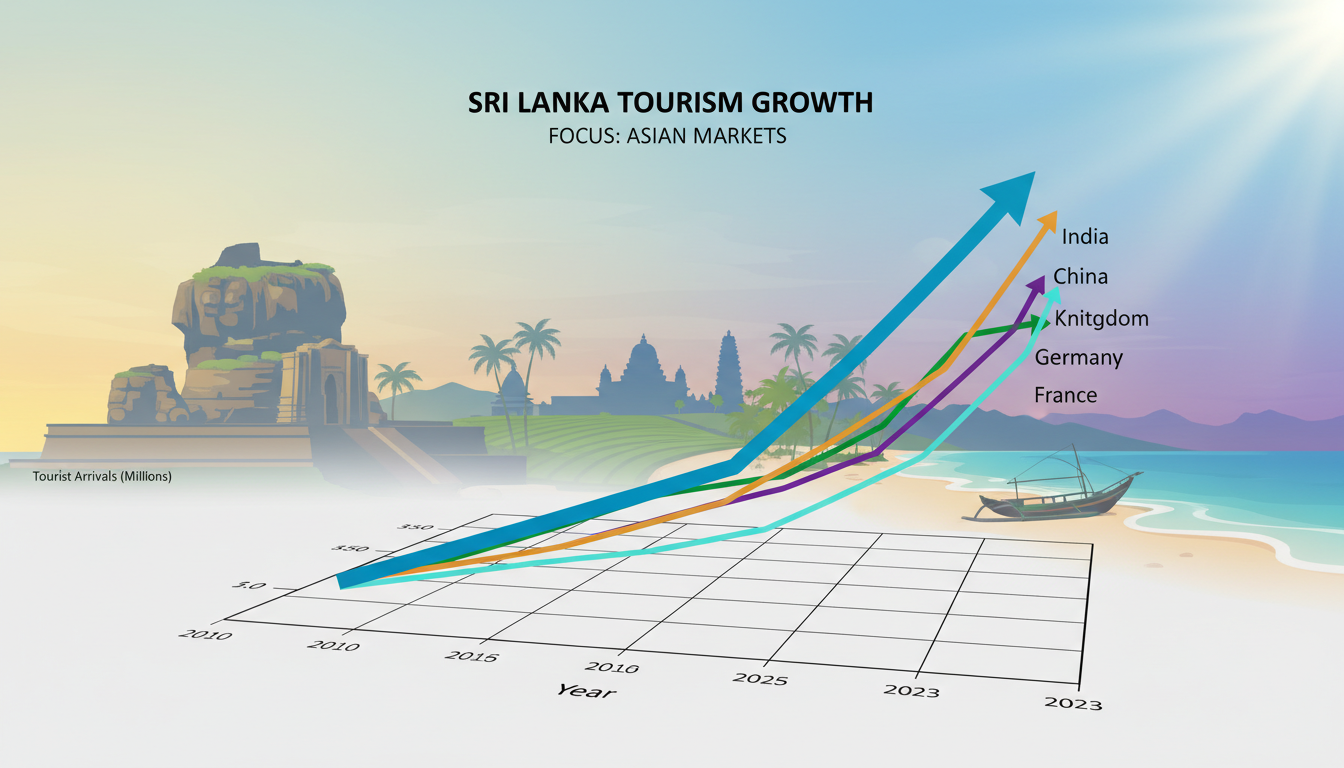
Then, COVID-19 delivered massive external shocks. Tourism, a key earner of foreign exchange, collapsed.
This caused an estimated 5% loss in GDP. Remittances also fell, hurting the trade balance.
The country lost access to international financial markets. With exports down and essential imports still needed, exchange rate pressure mounted.
Official reserves were drained to critically low levels trying to defend the currency rate.
Social Consequences and Political Upheaval
The human cost was severe. Inflation skyrocketed past 70%, eroding purchasing power.
Widespread shortages of food, medicine, and fuel became daily life. Lengthy daily power outages crippled homes and businesses.
Public anger boiled over into a massive protest movement. This led to the toppling of the sitting government.
Extreme poverty is estimated to have quadrupled. The crisis pushed many Sri Lankan families to the brink.
This period of profound upheaval set the stage for the difficult reform agenda that followed. It was a stark lesson in economic resilience.
The IMF Lifeline: A Blueprint for Stabilization and Reform
The approval of a US$3 billion financing arrangement marked a definitive pivot from crisis management to structured recovery. In March 2023, the International Monetary Fund (IMF) agreed to a four-year Extended Fund Facility (EFF) for Sri Lanka.
This program was not a simple bailout. It was a conditional agreement. The nation committed to a specific set of policy reforms in exchange for financial support.
The goal was to halt the economic freefall and build a credible path forward. It provided an immediate confidence boost and a clear blueprint for action.
Key Pillars of the Extended Fund Facility (EFF) Program
The program’s strategy was built on five core pillars. Each directly addressed a critical vulnerability exposed during the crisis.
- Revenue-Based Fiscal Consolidation: The government had to increase state income. This meant raising taxes and broadening the tax base to fund essential services and reduce the budget deficit.
- Restoring Public Debt Sustainability: A comprehensive plan was needed to manage the massive debt burden. This pillar paved the way for negotiations with international creditors.
- Maintaining Price Stability and Rebuilding Buffers: The central bank focused on controlling inflation. It also aimed to accumulate foreign currency reserves to protect against future shocks.
- Ensuring Financial Stability: Reforms targeted the banking sector. The goal was to keep it strong enough to support economic growth.
- Strengthening Governance and Raising Potential Growth: This long-term pillar aimed to fix structural problems. It included measures against corruption and reforms to make state companies more efficient.
Swift Impact on Inflation and Market Sentiment
The effects of this disciplined approach were rapid and significant. Inflation, which had soared past 70%, fell below 5% by late 2023.
Tighter monetary policy from the central bank was a key driver. Allowing a more flexible exchange rate also helped correct imbalances.
Market confidence began to mend. Foreign reserves, drained to critical lows, rebounded to around US$4.5 billion.
This early stabilization came with difficult adjustments. The required reforms, like higher taxes and cost-reflective utility pricing, increased living costs for citizens.
By March 2025, the program had passed three consecutive reviews. This showed sustained commitment to the agreed targets.
The IMF arrangement provided the essential framework for macroeconomic stability. Its long-term success, however, depends entirely on continued implementation of these deep reforms.
For Sri Lanka, it represented a necessary first step in a much longer journey toward sustainable recovery.
Debt Restructuring: Removing the Sword of Damocles
The process of restructuring the country’s massive debt load represents a fundamental shift from default risk to fiscal sustainability. This complex negotiation was essential to unlock the nation’s path forward.
It directly addresses the unsustainable public debt that triggered the 2022 default. Successful restructuring removes an immediate threat and rebuilds investor confidence.
From Default to Agreement with Bondholders and Bilateral Creditors
A major breakthrough came in December 2024. The government reached a landmark agreement with its international bondholders.
This deal achieved 98% participation. It provided critical relief on principal and interest payments over an extended time.
Negotiations with key bilateral creditors have also progressed. Talks with Chinese lenders have stabilized a significant portion of the foreign debt.
Discussions with the Paris Club of creditor countries are ongoing. This step-by-step progress is crucial for comprehensive debt resolution.
Avoiding a full-scale banking crisis during the distress period gave the nation an advantage. This position allows for a potentially faster recovery compared to other historical cases.
Projected Impact on Debt Servicing and Fiscal Space
The data reveals the transformative effect of these deals. Without restructuring, total debt servicing would have consumed over 38% of GDP by 2026.
Under the new baseline, that burden could fall to around 22% of GDP. The relief on external debt servicing is even more pronounced.
It is projected to drop to as low as 3.3% of GDP by 2026. This frees up a vast amount of fiscal space.
Previously allocated for debt payments, this revenue can now be redirected. The state budget gains room for essential public spending and investment.
Such a shift is vital for long-term growth. It also triggers positive credit rating actions, which lower future borrowing costs for the economy.
The overall Debt-to-GDP ratio has already declined. It fell to 104.6% in 2024 and is projected below 97% within five years.
This restructuring is not an end goal. It is the necessary condition that removes the sword of Damocles, allowing Sri Lanka to focus on growth-oriented policies for the first time in years.
Foreign Reserves Improve: Analyzing the Current Recovery Metrics
Concrete metrics now illustrate the distance traveled from the 2022 economic abyss. The most recent data points form a coherent picture of stabilization.
This analysis focuses on two pivotal achievements: the rebuild of external buffers and a historic shift in fiscal and external accounts.
Reserve Growth to US$6.8 Billion and the Composition of Holdings
Official reserve assets hit US$6.83 billion by December 2025. This marked a sharp monthly increase of over 13%.
Foreign currency holdings constituted roughly US$6.73 billion of this total. The figure represents a dramatic rebound from the near-zero levels seen just three years prior.
The composition of these reserves is noteworthy. A significant portion includes a conditional US$1.4 billion bilateral swap arrangement with China.
This means the funds are available but under specific terms. Other components are built from more organic sources.
Steady worker remittances and a recovering tourism sector contribute. A more flexible exchange rate policy has also helped attract inflows.
The accumulation acts as a critical shield. It protects the economy from potential future external shocks.
Achieving “Twin Surpluses”: Current Account and Primary Balance
A technical but vital milestone was reached. For the first time on record, the nation achieved ‘twin surpluses’.
This concept has two parts. First, the primary budget surplus means the government‘s day-to-day spending is less than its revenue, excluding interest costs.
Second, the current account surplus means the country earns more from abroad than it spends on imports and services.
In 2024, the primary surplus was 2.2% of GDP. This ended over a decade of perennial fiscal deficit.
These surpluses are directly linked to reserve growth. They show money is being generated internally, not just borrowed.
Moderated imports and improved export trade helped create the external surplus. This provided a steady stream of foreign currency.
Other metrics support this narrative of recovery. GDP growth rebounded to 4.5% in 2024.
Inflation, once in hyper-territory, turned briefly negative (-1.5%) in late 2024. This indicates severe price pressures have been extinguished.
The achievements stem from strict policy reform, external support like the IMF program, and the low-base effect following the crisis.
They signal stabilization, not necessarily the completion of the economic journey. The sustainability of this progress is the next critical question.
Beyond the Numbers: Deep-Structural Reforms for Sustainability
The durability of the current stabilization hinges on profound changes to the country’s economic institutions. Lasting progress depends on deep structural reforms that go beyond short-term macroeconomic fixes.
These institutional adjustments are difficult but necessary. They aim to build a more resilient foundation for future growth.
Overhauling State-Owned Enterprises (SOEs)
Major state-owned firms have long drained public debt and revenue. The government is now implementing a multi-pronged strategy to stop the financial bleed.
A key step is enforcing cost-reflective pricing for utilities like fuel and power. This ends expensive subsidies funded by the state budget.
Balance sheets are also being cleaned up. The foreign debt of giants like Ceylon Petroleum was absorbed by the central government.
This restructuring relieves a massive burden. Plans to divest non-strategic SOEs could further improve efficiency and bring in new capital.
Monetary Policy Autonomy and Inflation Targeting
Past policy missteps, like printing money to fund deficits, are now legally prohibited. A new Central Bank Act grants the institution formal independence.
This ends the era of fiscal dominance. The central bank can now focus solely on maintaining price stability.
Its official mandate is a clear inflation target of 5%, with a 2% band on either side. This framework provides long-term certainty for businesses and investors.
It commits the bank to managing the interest rate to hit these targets. This is a critical shift from discretionary management.
Governance, Anti-Corruption, and Factor Market Reforms
Strengthening governance is a core pillar of the sustainable reform agenda. An Anti-Corruption Act was enacted in 2022 to bolster legal frameworks.
The International Monetary Fund published a detailed governance diagnostic in 2023. It highlighted areas for improvement in state operations.
New laws are being drafted to improve public financial management. Legislation for an independent office to manage debt is also in the works.
Beyond institutions, factor market weaknesses pose a challenge. A significant “brain drain” of skilled professionals hurts long-term capacity.
Modernizing archaic labor laws is needed to boost productivity. Land rights reforms, including granting rights to millions of farmers, aim to unlock economic potential.
These diverse efforts share a common goal. They seek to create a better environment for business, investment, and trade.
Collectively, they represent the hard work of building a more robust economy. This work is essential for weathering future shocks.
Political Reset and Reform Continuity: The 2024 Election Impact
The electoral victory of the National People’s Power (NPP) party marked a decisive break from the political establishment. In late 2024, the left-wing coalition won the presidency and a parliamentary majority.
This ended decades of dominance by established political families. The new government of President Anura Kumara Dissanayake entered with a strong mandate.
Its promises focused on clean governance and social justice. This political reset created a key test for the nation’s economic reforms.

Maintaining IMF Commitments Amidst a New Political Mandate
A primary concern was the future of the International Monetary Fund program. President Dissanayake moved swiftly to reassure international partners.
He publicly reaffirmed commitment to the Extended Fund Facility (EFF). This was crucial for maintaining creditworthiness and investor confidence.
The core objectives of fiscal discipline and debt restructuring remained central to policy. An IMF mission later noted the country was largely on.
The March 2025 review confirmed most fiscal and monetary targets were met. This continuity provided stability for the ongoing agreement with creditors.
It signaled that essential programs would continue despite the political change.
Balancing Fiscal Consolidation with Social Protection
The new administration immediately faced a difficult tension. Necessary austerity measures collided with urgent public needs stemming from the crisis.
The IMF’s own review highlighted lagging social protection spending. It also noted a partial reversal of electricity pricing reforms.
This rollback responded directly to public burden. The government began reviewing indirect taxes affecting low-income households.
These tweaks reflect a necessary political responsiveness. They aim to address growing “reform fatigue” among citizens.
Maintaining popular support for difficult measures is a long-term challenge. The 2025 budget tries to walk this line.
It focuses on revenue generation through VAT expansion and a new property tax. Expenditure control remains a stated priority.
The central bank continues its independent focus on price stability. This balanced approach seeks to protect the economic recovery.
Sustaining momentum requires skillful management of both growth and social priorities. The political transition is not a disruption to the economy‘s path.
Instead, it offers a potential source of renewed legitimacy for deep reforms. Success depends on consistent governance and policy execution.
The journey involves continued debt restructuring, careful management of trade and imports, and fair tax systems. Sri Lanka‘s reset adds a new chapter to its complex story.
Sustaining the Momentum: Growth Prospects and External Challenges
The path to full economic recovery requires navigating a complex landscape of growth targets and sudden trade disruptions. The Central Bank projects economic growth of 4-5% in 2026, a forecast supported by improved stability. This aligns with broader optimism, as the World Bank projects positive growth for the nation.
However, a major external risk emerged in August 2025. The U.S. reinstated a 30% tariff on key exports like apparel and tea. This threatens a vital trade relationship, as America absorbs nearly 40% of such shipments.
Such shocks underscore the economy’s vulnerability. Lasting progress depends on evolving what it produces. As economist Ricardo Hausmann notes, countries grow by developing new capabilities, not just doing more of the same.
Even with steady growth, regaining the 11% output lost during the crisis will take years. The durability of Sri Lanka’s turnaround hinges on maintaining reform momentum and navigating a tricky global environment.